
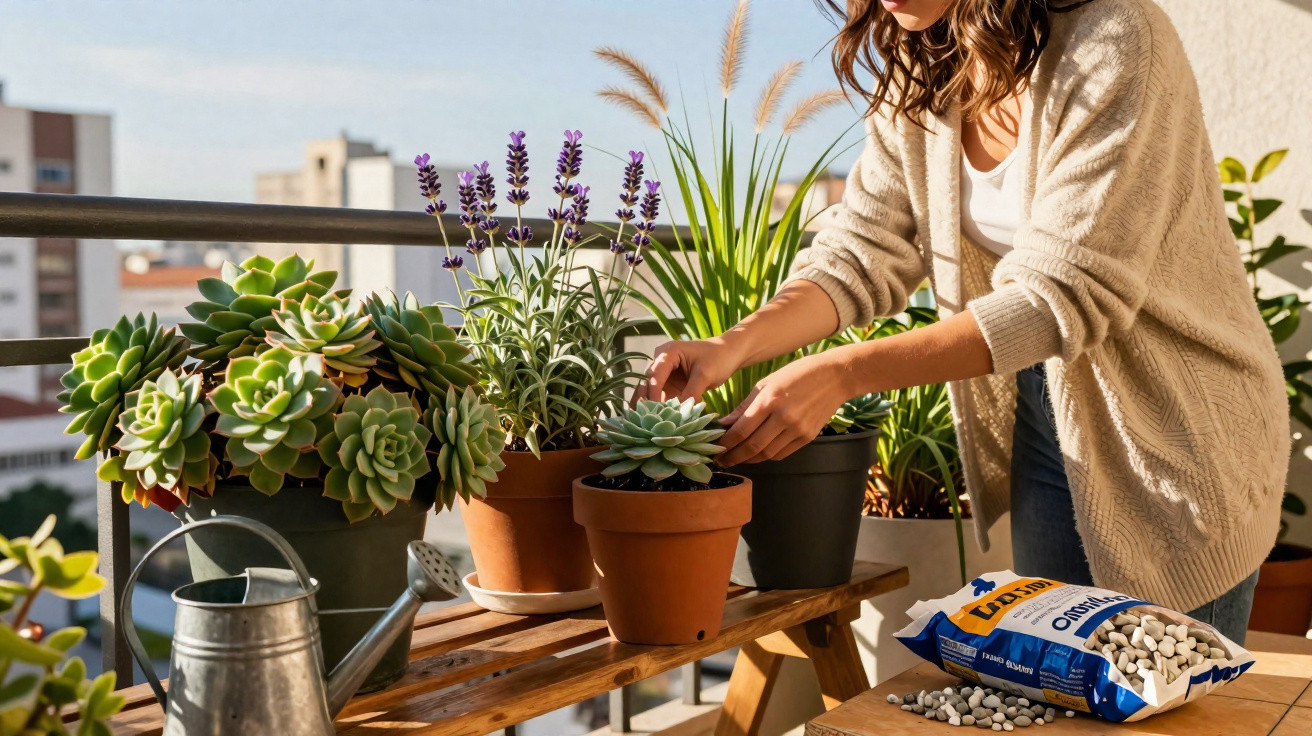
With winter arriving in the South and South-East of Brazil, flat owners face a familiar dilemma: which plants can withstand the cold on a balcony without dying, wilting or demanding the daily attention that busy routines do not allow? The good news is that some species have evolved to endure low temperatures, chilly winds and reduced sunlight without losing their vitality. Three stand out for their beauty, resilience and exceptionally low maintenance during July and August.
Why is winter so challenging for plants on a flat balcony?
A flat balcony presents at least three winter weather challenges that are not found in an open garden: cold winds are stronger on higher floors, there are fewer hours of direct sun because of the sun's lower seasonal position, and, in some areas of the South and South-East, temperatures can vary by as much as 20°C between early morning and midday. Common tropical plants, including ixora, arrowhead vine and many varieties of ficus, simply cannot cope with this combination without developing yellow leaves, shedding heavily or suffering dieback at the tips.
Selecting plants that developed in cold climates or places with major temperature fluctuations removes much of this difficulty. The aim is not to make a tropical plant survive the cold, but to make winter work in favour of species designed for it.
- Houseleek (Sempervivum): an alpine succulent that withstands frost and extreme temperature changes, growing in a rosette shape and reproducing independently through side shoots.
- Lavender (Lavandula angustifolia): an aromatic Mediterranean shrub that copes with cold, drought and intense direct sunshine, flowering more vigorously when planted in autumn.
- Ornamental grasses (Poaceae family): fine-leaved, clump-forming plants that move in the breeze, stay green through winter and require virtually no care.
- Reduced winter watering for all three: growth slows in cold weather and compost dries more slowly, so watering should be less frequent than it is in summer.
- Direct sunlight remains essential in winter: all three need at least four hours of direct sunlight to remain vigorous and withstand low temperatures more effectively.
Sempervivum: the alpine succulent that tolerates frost and barely needs watering
Its scientific name reveals its purpose: Sempervivum literally means “always alive” in Latin. Native to the European Alps, this succulent developed to live in conditions that would quickly kill any tropical plant: severe frost, nutrient-poor stony ground, constant wind and unforgiving high-altitude sunshine. Those extreme conditions are absent in Brazil, meaning it can grow even more easily there.
It forms compact rosettes, with fleshy leaves that retain enough water to last through long intervals without watering. Over time, the plant produces side shoots known as “pups”, which create small rosettes around the parent plant. This produces an attractive colony-like display in shallow pots or arrangements with stones. In pots with effective drainage and compost blended with sand, it needs almost no attention between waterings; in winter, watering can be limited to once every ten days or even less often.
Lavender: fragrant, cold-hardy and more floriferous when planted in autumn
Lavender is among the most extensively studied plants for climatic resilience. Researchers at Colorado State University have documented that English lavender (Lavandula angustifolia) has physiological mechanisms that enable it to tolerate both intense cold and extended drought. This makes it particularly suitable for balconies exposed to cold winter winds and strong summer sunshine.
How to grow lavender in a balcony pot and ensure abundant flowering
Four rules that determine lavender's success in a flat
Compost with excellent drainage: lavender does not tolerate waterlogged roots in any season. Use compost mixed with coarse sand or perlite, in a pot with a generously sized drainage hole at the base. At least six hours of direct sun: without plentiful sunlight, lavender grows weakly and rarely flowers with its characteristic abundance. Place it in the sunniest spot on the balcony. Moderate, infrequent watering: wait until the compost has dried out completely before watering again. In winter, the interval may extend to 15 days or longer.
Light pruning after flowering: once the blooms have faded, remove the flowering stems by up to two-thirds of their length. This encourages new side shoots, which will create denser flowering the following season. Never cut into the woody section of the stem; prune only the green, flexible growth. Lavender planted or repotted in autumn establishes its roots more efficiently over winter, arriving in spring ready for exceptional flowering.
Lavender's fragrance is another advantage beyond its appearance. The flowers' natural scent has widely documented calming properties, turning the balcony into a space that encourages rest. On bedroom balconies, lavender is also one of the few plants to combine beauty, hardiness and sensory benefits, with no maintenance expense beyond moderate watering.
Ornamental grasses: movement, texture and reliable greenery even in the deepest cold
Ornamental grasses belong to the same botanical family as lawn grasses and bamboos, which already says a great deal about their toughness. The ornamental varieties most commonly used on Brazilian balconies include blue fescue (Festuca glauca), which has blue-grey leaves in a compact clump, and Pennisetum, whose long, arching leaves form an elegant green cascade in tall pots.
The visual appeal of these plants lies in their movement: their slender leaves react to every breeze with a gentle sway that no other balcony plant can replicate. On more open balconies exposed to winter winds, this quality-which would be a problem for other plants-becomes a visual effect highly valued by modern landscape designers. Ornamental grasses are largely self-sufficient: they need moderate watering, partial to full sun, and a close trim at the end of winter to encourage fresh growth.
The winter care measure that applies to all three plants
One simple adjustment makes a difference for each of these three plants in winter: water less frequently than in summer. Lower temperatures slow plant metabolism, while the compost takes far longer to dry. Continuing a summer watering routine through winter leaves excessive moisture around the roots, the main reason cold-hardy plants die when they are grown in pots.
Comments
No comments yet. Be the first to comment!
Leave a Comment