
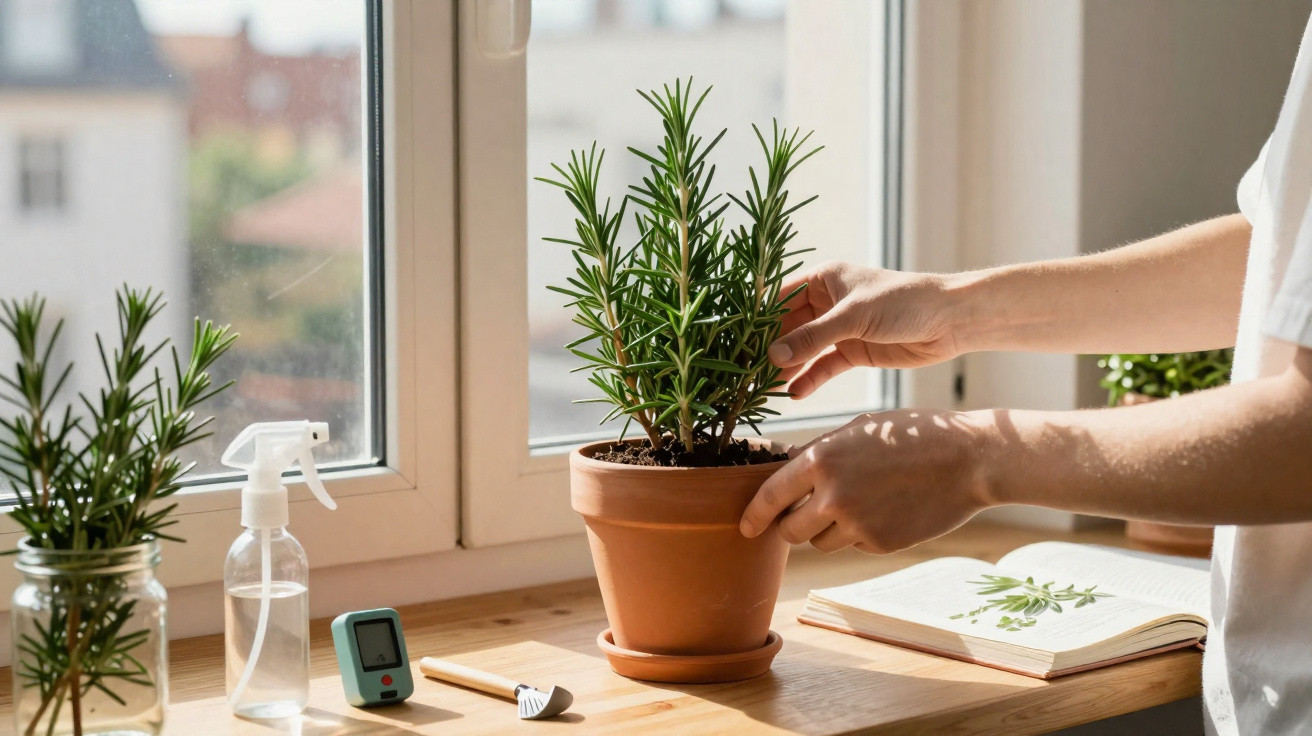
Rosemary indoors should be placed in the brightest, best-ventilated spot available, ideally beside a window that receives direct sunshine for several hours. This Mediterranean herb loses fragrance, develops leggy stems and wilts easily if it is kept in a dark corner, in waterlogged compost or in a stuffy room.
Where is the best place to put rosemary?
The ideal position is beside a very sunny window, preferably one facing a direction that gets direct sunlight for much of the day. Rosemary thrives in warmth and bright conditions, with fast-draining compost, because its roots cannot cope with being continually wet.
In a flat, a covered balcony, windowsill or worktop near glazed patio doors will generally suit it better than a dark kitchen. A pot may look attractive as part of the décor, but if it receives too little light, the leaves will become less vigorous and their scent will weaken.
How many hours of light does rosemary need?
Rosemary requires at least 6 hours of strong light each day, and many growing recommendations suggest 6 to 8 hours of direct sunshine to keep the plant compact and fragrant. Where natural light is inadequate, a grow light can make up for some of the missing sun.
The following signs indicate that light levels are below what the plant needs:
- long, thin, widely spaced stems;
- leaves that release less fragrance when touched;
- growth leaning towards the window;
- leaves dropping from the inner part of the plant;
- greater susceptibility to fungal problems and pests.
How should ventilation and watering be adjusted for potted rosemary?
Rosemary benefits from air moving around its stems. Stuffy conditions encourage mould and powdery mildew, especially when the plant receives too little light and the compost takes a long time to dry out.
Watering rosemary should only be done once the top layer of compost feels dry to the touch. The pot must have drainage holes, its saucer should not hold standing water, and the growing mix should be light, containing sand, perlite or a compost designed for Mediterranean herbs.
Which mistakes most often kill rosemary in a flat?
The most frequent mistake is treating rosemary as a tropical houseplant. It does not like constant misting, damp shade or a large pot filled with heavy compost.
To prevent leaf loss and root rot, follow these precautions:
- do not allow water to remain in the saucer;
- avoid bathrooms, humid utility rooms and kitchens without sunlight;
- do not water according to a fixed schedule;
- do not use a closed decorative pot with no drainage;
- turn the pot each week so it receives even light;
- lightly prune the tips to encourage fresh growth.
How can rosemary stay fragrant for longer?
Potted rosemary becomes bushier when it has direct sunshine, moving air and moderate watering. The plant produces and retains its aromatic oils more effectively when it grows in bright conditions, with healthy roots and compost that dries between watering.
Correct positioning is the care factor that makes the greatest difference indoors. By the sunniest window, in a well-drained pot and away from excess moisture, rosemary will keep its tough leaves, intense fragrance and stems suitable for harvesting in the kitchen.


Comments
No comments yet. Be the first to comment!
Leave a Comment