
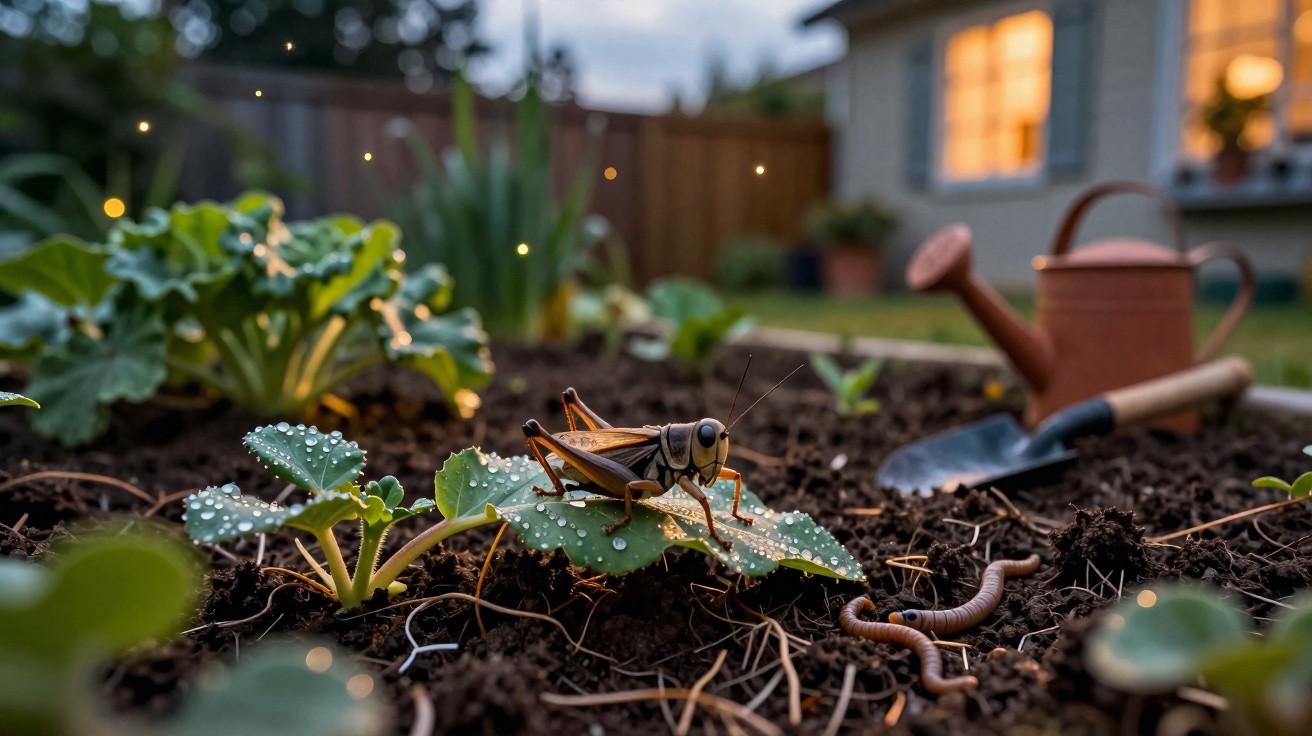
Crickets chirping in the garden at night often points to dense vegetation, soil that retains some moisture, and an area where fewer pesticides are used. Their song is not random: it shows that the space provides shelter, food and the basic conditions these insects need to contribute to its natural balance.
Why do crickets chirp more at night?
The sound made by crickets is produced chiefly by males, which rub sections of their wings together to attract females and establish their presence in a territory. At night, the surroundings are quieter, humidity rises, and their chirping is easier to hear in the garden.
This habit also helps them avoid some daytime predators. In beds containing leaves, stones, dry twigs and ground cover, crickets can hide during the day and emerge more safely as temperatures fall.
What does cricket chirping reveal about the soil?
Crickets are more commonly found in soil with moderate moisture, organic matter and small natural hiding places. A garden that is entirely dry, compacted and heavily treated with chemicals is unlikely to support a stable population of these insects.
Their presence is often accompanied by a number of signs:
- small accumulations of dry leaves;
- beds covered with vegetation or mulch;
- soil that does not become completely parched overnight;
- other insects and small natural predators nearby;
- reduced use of insecticides in the garden.
Why does the presence of crickets indicate natural balance?
Crickets form part of the garden food chain. They provide food for birds, lizards, frogs, spiders and other animals that help maintain the natural control of insects in the environment.
Crickets also contribute to the breakdown of organic material. By feeding on plant debris, fallen leaves and small remnants, they help convert this material into nutrients that return to the soil.
What benefits do crickets bring to the garden?
When present in balanced numbers, crickets support the recycling of organic matter and show that the garden is not sterile. They belong to a living system with active soil, shelter for small animals and less reliance on chemical products.
Their main benefits include:
- helping to break down leaves and plant remains;
- providing food for birds and other garden animals;
- indicating moisture and organic matter in the soil;
- forming part of the biodiversity of healthy gardens;
- showing that the environment still provides shelter for beneficial insects.
When does cricket chirping stop being a good sign?
Cricket chirping is generally positive when it comes from outdoor spaces with vegetation and living soil. It becomes a problem when large numbers enter the home, damage young seedlings or gather in excessively damp places near walls and drains.
A balanced presence in the garden suggests a more natural environment, with organic matter, controlled moisture and life in the soil. Rather than removing crickets straight away, it is worth considering the context: if the plants are healthy and there is no infestation, the night-time sound may simply indicate that the garden is functioning as a small ecosystem.






Comments
No comments yet. Be the first to comment!
Leave a Comment