
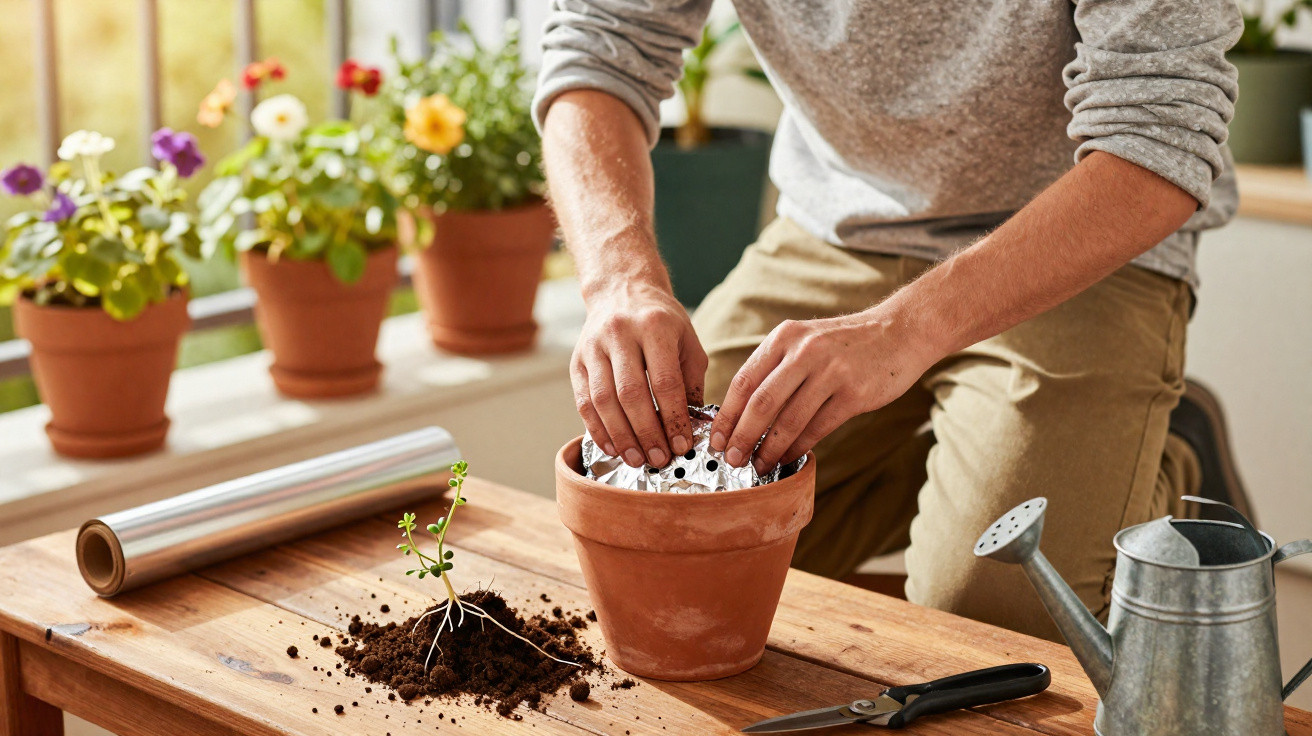
Putting aluminium foil at the bottom of a plant pot is a common home-growing practice, often used as a household solution for several purposes. Its cultivation benefits, however, are limited and depend on how it is applied. Although it is inexpensive and readily available, it works chiefly as a physical barrier and must be used carefully so it does not hinder plant growth, particularly by causing excess moisture.
What does putting aluminium foil at the bottom of a plant pot mean?
Putting aluminium foil at the bottom of a plant pot usually means lining some or all of the container’s internal base before adding the drainage layer and growing medium. The shinier side is generally positioned upwards, touching the stones, expanded clay or soil.
In practical terms, this layer forms a barrier between the growing medium and the pot. Depending on the type of pot and the way the foil is fitted, it may limit some moisture loss. It can also help retain the growing medium and protect more delicate materials, such as wood or porous ceramic. Indoors, some people also use aluminium to reflect a small amount of available light into tall or dark pots, although the effect is usually slight.
What is aluminium foil in a plant pot used for?
The most straightforward use of aluminium foil is to stop growing medium from falling through drainage holes, particularly when pots have large openings or during the first watering after planting. It may also be used to protect the inside of decorative pots or reflect a limited amount of light, though these effects are modest.
In certain arrangements, aluminium foil is combined with other materials to organise the pot’s interior more effectively and retain moisture. In these cases, it is commonly paired with:
- Decorative stones or expanded clay placed over the foil layer;
- A looser, better-aerated growing medium above the drainage layer;
- Pots without saucers, in an attempt to keep water contained inside the pot.
If the aim is to improve pot drainage, specialists generally advise giving priority to a suitable growing medium, containers with drainage holes, and materials such as expanded clay, gravel or perlite. These factors have far more influence on root health than aluminium foil.
What care is needed when using aluminium foil in plant pots?
Drainage is the main concern: if the foil completely covers the holes, water can build up and encourage root rot. For this reason, it is advisable to shape the foil into a perforated or cut “tray” that allows surplus water to drain freely. Aluminium foil should never replace a pot with drainage holes or a suitable growing-medium layer.
A few practical measures can help prevent waterlogging and fungal diseases in the roots when aluminium foil is used.
- Keep the drainage holes partly clear by making slits or perforations in the foil.
- Add a substantial drainage layer, such as expanded clay or gravel, on top of the foil.
- Avoid using it for species that need the growing medium to dry quickly, including many cacti and succulents.
- Monitor how long the growing medium takes to dry between waterings and adjust the watering schedule.
When is it worthwhile using aluminium foil in a plant pot?
Aluminium foil is generally more useful in particular situations, such as decorative pots without drainage holes that hold an inner plastic pot with normal drainage. Between the two containers, the foil can protect furniture and flooring without directly affecting the roots.
Some people use aluminium foil temporarily to help contain the growing medium while repotting, although this is not considered essential. In low-light locations, foil can complement other lighting strategies, but it does not replace basic care such as selecting an appropriate growing medium, carefully controlled watering and correct pot placement. These remain the most important factors in keeping plants healthy.
Comments
No comments yet. Be the first to comment!
Leave a Comment