
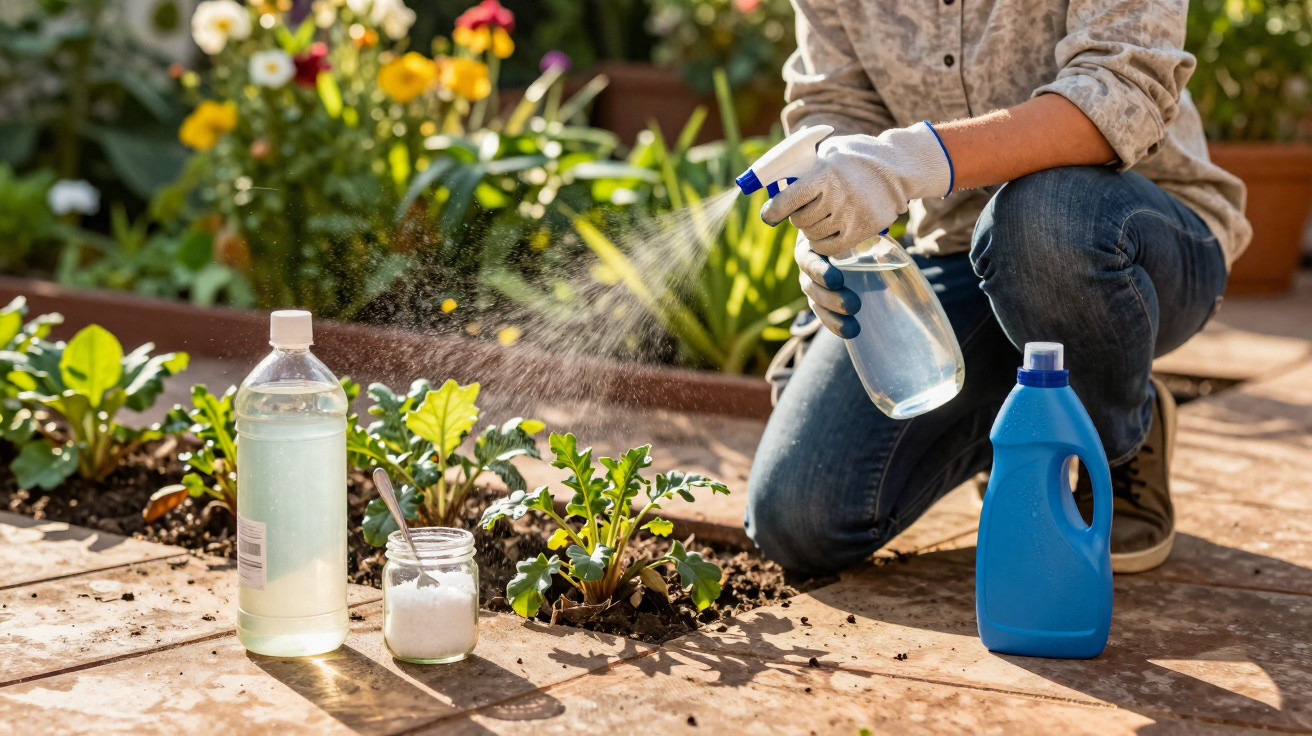
In many households, caring for plants and outdoor spaces has taken on a different approach. Alongside watering, pruning and arranging pots, many people are looking for more natural ways to tackle the persistent weeds that keep appearing. Rather than relying solely on chemical weedkillers, residents are turning to a straightforward homemade herbicide made from kitchen staples: white vinegar, washing-up liquid and salt, used to control unwanted plants in particular parts of the garden.
How does white vinegar work as a natural herbicide in the garden?
White vinegar is the mixture’s “main star” because of the acidity of its acetic acid. It works on exposed areas of the plant, including leaves and young stems, by damaging cell structures and speeding up water loss, rapidly drying out the treated area.
The acetic acid concentration in standard shop-bought vinegar can already affect smaller or more delicate plants, especially when it is applied repeatedly. As it is a contact herbicide, it primarily affects above-ground growth and does not always destroy the roots completely, so further applications may be needed if new shoots emerge.
How can you safely prepare a vinegar, washing-up liquid and salt mixture?
The recipe contains three basic ingredients: a larger quantity of white vinegar, a small amount of neutral washing-up liquid and a portion of table salt. Around 3.5 litres of vinegar, one tablespoon of washing-up liquid and one cup of salt are generally used to treat heavily weeded areas on pavements and between paving joints.
The washing-up liquid acts as a surfactant, allowing the vinegar to spread more evenly and stick to the leaves more effectively. Salt, meanwhile, acts as a drying agent by drawing water from plant cells. However, too much can damage the soil, so it is best used in places where nothing will be planted afterwards, such as pavement cracks and gaps between slabs.
How do you apply vinegar herbicide effectively and practically?
Once the ingredients have been combined, many people pour the liquid into a garden sprayer or spray bottle for easier targeted use. Shake the container thoroughly before each application, then spray the weeds directly, soaking their leaves and young shoots to maximise contact.
To manage its everyday use and prevent issues elsewhere in the garden, follow a few basic guidelines:
- Treat only the weeds that genuinely need removing.
- Avoid spraying lawns, vegetable plots and ornamental plants you want to keep.
- Choose dry days with no rain forecast for the next 24 hours.
- Repeat the treatment if the plants start growing again after a few days.
What environmental and safety precautions should you take when using vinegar?
Although it is a simpler alternative to many commercial products, vinegar still needs to be used carefully around soil and nearby plants. In mixed beds, it may be better to use a very focused spray, a brush or a sponge, preventing splashes from reaching healthy, sensitive species.
Salt build-up is another important consideration. In growing areas, many people reduce the amount of salt or leave it out entirely, accepting that more applications may be necessary to avoid harming future roots. Wearing gloves and clothing that covers the skin, as well as keeping the mixture away from children and animals, helps maintain a well-kept garden while using this homemade option as a practical aid for weed control.


Comments
No comments yet. Be the first to comment!
Leave a Comment