
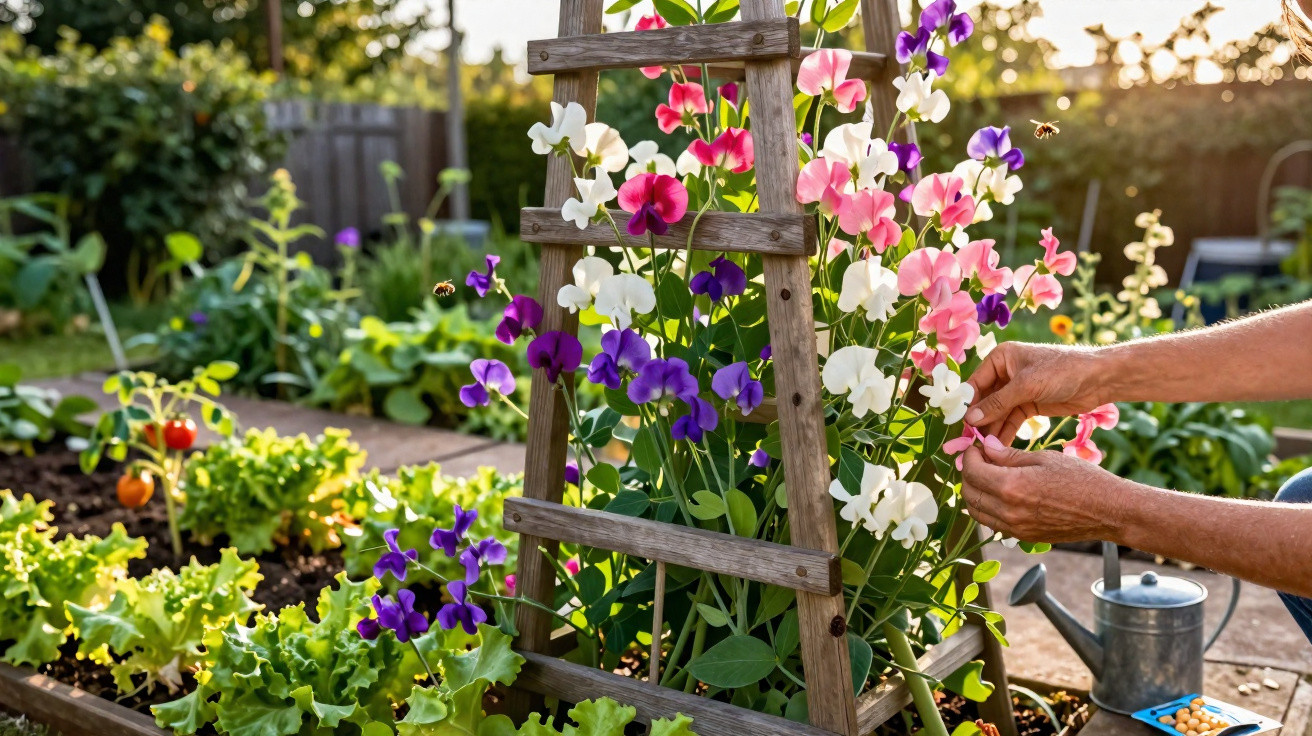
A beautiful, sheltered outdoor space depends on choosing the right plant species. The climbing plant known as the sweet pea is an excellent option for covering structures, creating a dense barrier that enhances and scents the surroundings in an entirely natural way.
How does the sweet pea work in the garden?
The ornamental use of this plant offers far more than visual appeal in residential outdoor areas. Grown correctly, it produces thick foliage that works as effective plant protection, making it ideal for covering structural features such as railings and old walls.
As well as providing a striking aesthetic benefit, its dense stems form a highly effective physical obstacle. This robust network of intertwined growth substantially reduces direct wind flow and can help limit the unwanted spread of certain pests in the garden.
How can a delicate flower deter invasive insects from the garden?
Some species have distinctive aromatic properties that confuse insects’ senses, preventing them from attacking crops more… Read more
Why is the right support important for growth?
As an inherently climbing species, it requires a sturdy structure to support its tendrils as it grows upwards. Fitting a durable trellis or securing guide wires along the surface ensures the plant develops in a healthy way.
Without suitable training, the stems are likely to spread across the ground, reducing the barrier effect the homeowner expects. A support guides the growth upwards, filling gaps in the railing and making the coverage of your new fence entirely harmonious.
Below is a video from the RHS – Royal Horticultural Society YouTube channel that explores the points discussed in this topic in greater detail:
How do scented flowers transform the outdoor space?
The standout feature of this ornamental species is undoubtedly the powerful fragrance released by its colourful petals. This sweet scent can fill the entire outdoor area, creating a pleasant atmosphere that makes time spent in the garden more enjoyable and relaxing.
As well as pleasing residents, its distinctive perfume acts as an effective biological signal within the local ecosystem. It attracts beneficial pollinators, including bees and butterflies, which support the development of other plants and strengthen the natural balance against attacks from harmful insects.
Sweet Pea Growing Guide
Essential items
To create a healthy, flowering barrier, gather these essential items:
- Selected Lathyrus odoratus seeds for the initial planting;
- A trellis or sturdy supporting frame to direct vertical growth;
- Fertile soil enriched with organic matter, along with regular watering.
Which care steps are essential for ornamental growing?
Successful development of this climbing plant relies directly on several consistent climate and care conditions. It needs direct sunlight for much of the day to flower profusely, as well as well-drained soil rich in the essential nutrients needed for its support.
Watering should be regular, keeping the soil consistently moist without waterlogging the delicate roots. Pruning away faded flowers and dry leaves encourages further blooms, extending the effect of the fragrant barrier created in the environment.
Careful attention to practical details improves growing results and ensures lasting benefits for the outdoor area:
- Choose positions with plenty of direct sunlight;
- Check soil moisture regularly to avoid excess water;
- Secure young stems carefully to the available supports.
How does this plant barrier protect vulnerable plants?
Creating a dense living fence forms a physical shield around delicate varieties. By making access more difficult for pests, the sweet pea reduces the need for chemical pesticides and supports a more ecological, safer approach to care.
In this way, incorporating this climbing plant into the outdoor-area plan delivers several benefits that combine practicality with beauty. The garden gains active biological protection, while residents enjoy a distinctive flowering display and a delicious fragrance spreading throughout the space.


Comments
No comments yet. Be the first to comment!
Leave a Comment