
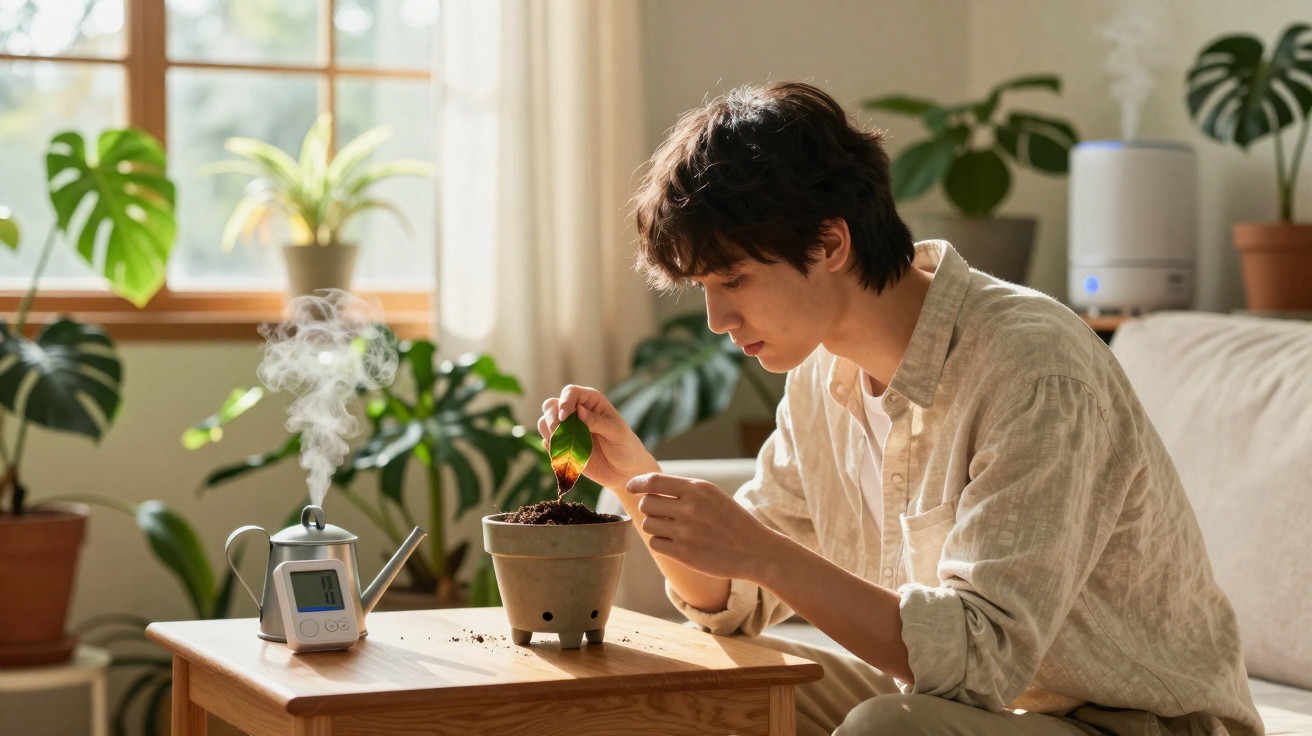
Growing beautiful tropical plants indoors calls for continual attention to their surroundings. When the air becomes excessively dry, ornamental foliage starts to deteriorate, developing crisp edges and curled leaves that clearly signal the urgency of restoring suitable humidity.
How do damp sponges help protect your plants?
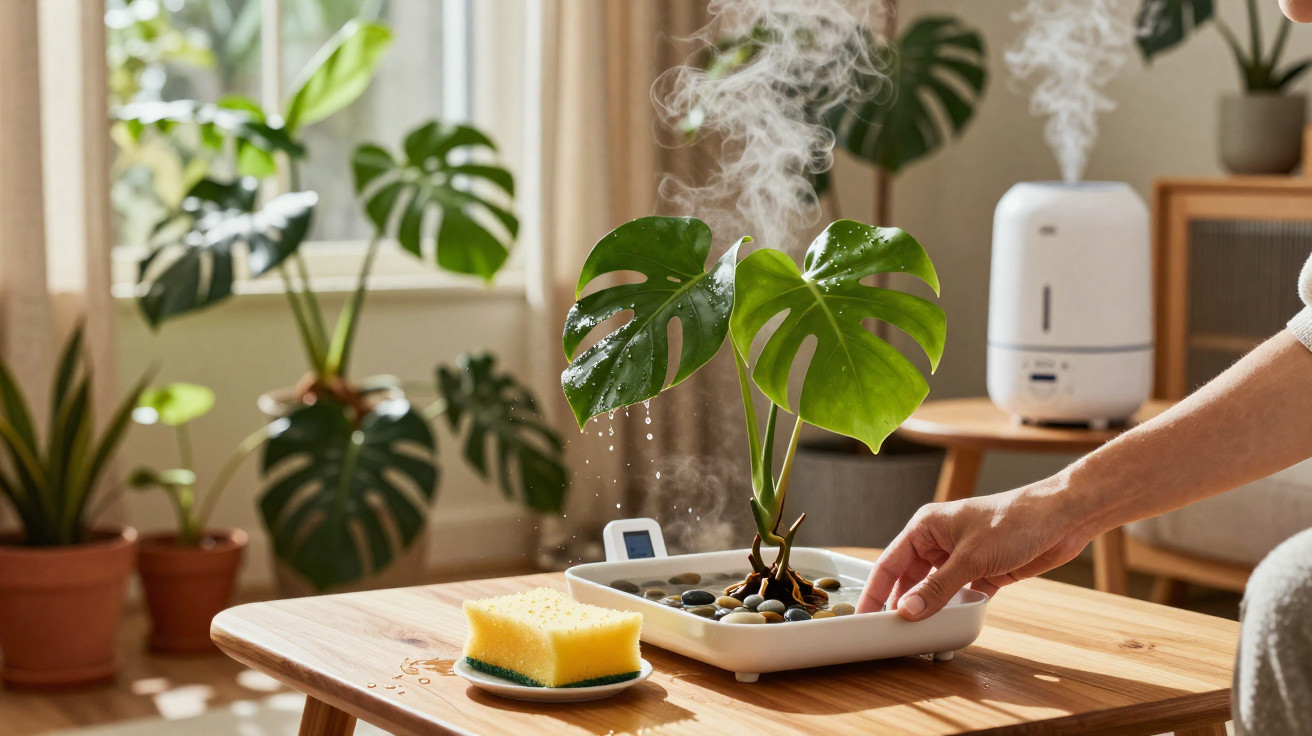
Placing clean, moistened sponges close to plant pots is an excellent practical option. This straightforward method encourages steady water evaporation, helping to raise humidity locally around the cultivated ornamental foliage.
This approach is particularly useful in enclosed spaces where dry air is consistently present. However, it is important to stress that this measure does not replace the regular watering plants require, nor a good electronic humidifying device.
Why do plants weep droplets from their leaves?
This intriguing phenomenon happens under particular soil and air humidity conditions, revealing a surprising biological process that… Read more
What alternatives can raise air humidity?
Another common way to address dryness is to mist water directly onto the leaves each day. As well as refreshing tropical species, this removes accumulated dust, significantly improving photosynthesis and healthy respiration.
Because sprayed water evaporates quickly, specialist ceramic containers are available to retain moisture. Unglazed clay pots without drainage holes help keep their outer walls consistently damp, making them ideal for the development of attractive orchids and epiphytic plants.
Below is a video from the Spagnhol Plantas YouTube channel that explores the points discussed in this topic in greater depth:
How do you create an effective humidity tray?
For those seeking reliable, long-lasting humidity, creating a pebble tray is recommended. Fill a wide saucer with fine pebbles or sphagnum moss, then add water carefully to avoid forming an exposed liquid layer.
The pot should rest directly on this damp pebble base without coming into contact with the collected water. This simple precaution prevents unwanted root rot, while evaporating water produces an excellent protective microclimate for the upper leaves.
Home Humidity Kit
Essential components
To create the ideal environment and protect ornamental foliage indoors, gather these basic items:
- A wide saucer with extended edges to provide an excellent surface area for water evaporation;
- Fine pebbles or quality sphagnum moss to cover the saucer base completely;
- Clean water added sparingly to prevent exposed layers of liquid from forming.
Why does the size of the saucer affect the microclimate?
Choosing a saucer that is proportionate to the pot is crucial for achieving the intended results. Using containers that are too narrow drastically limits the evaporation area, preventing the required amount of water from reaching the foliage in a stable and efficient way.
Providing a broad rim around the plant maximises relative humidity in the growing area. This precaution is essential in regions that experience lengthy dry spells, helping to shield home collections from the severe impact of dry weather.
When planning this simple technique for indoor settings, it is worth prioritising several essential practical measures:
- Select suitable containers that extend beyond the diameter of the pot base;
- Check the water level regularly to keep the pebbles damp;
- Avoid excessive water build-up to prevent insects appearing.
When does using humidifiers become essential?
Although home methods such as damp sponges and humidity trays work well, their benefits are strictly localised. When overall humidity in the home reaches critical levels, these small individual measures may not be enough to save the most sensitive and demanding tropical species.
In such extremely dry conditions, combining manual solutions with an electric humidifier will produce excellent results. This sensible combination stabilises the air indoors, supporting healthy growth and ensuring the full survival of your ornamental foliage.
Comments
No comments yet. Be the first to comment!
Leave a Comment