
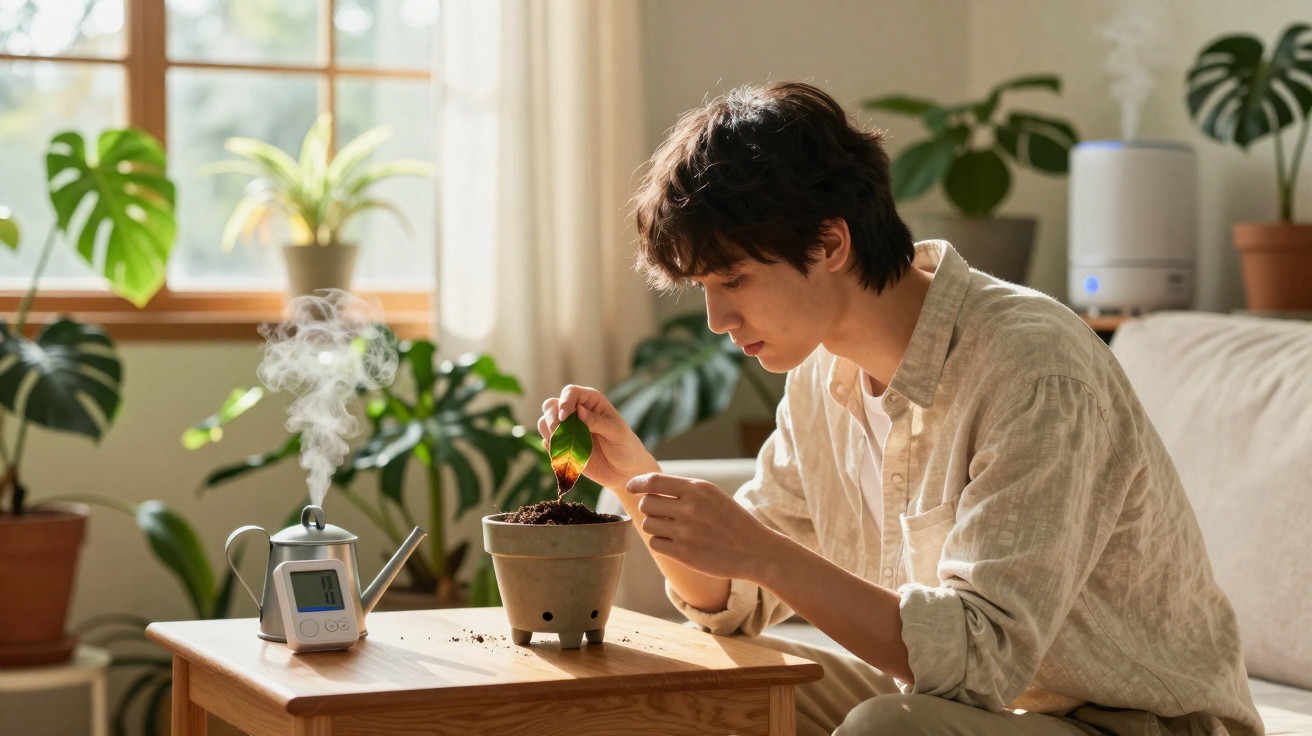
Brittle tips on houseplant foliage are a clear warning sign that calls for prompt action. Knowing the underlying reasons for this damaged appearance helps growers avoid serious mistakes in the care routine for their species.
Why do leaf tips become dry?
Dark colouring around the edges often points to severe water-related stress affecting an indoor plant. Insufficient watering, or faster evaporation caused by excessive heat, prevents nutrients from reaching the upper extremities properly and damages the cellular structure.
Alternatively, the problem may be directly linked to an excessive build-up of harmful minerals in the soil. As water evaporates, concentrated fertilisers scorch the most delicate plant tissues, creating a brittle appearance that seriously harms the healthy development of your plant.
How can you save a pothos with dry tips?
When the stems of this species start to darken, the real cause may involve factors that are very easy to correct before… Read more
How does air humidity affect leaves?
The very dry atmosphere in enclosed or air-conditioned rooms quickly removes natural moisture from green surfaces. Without the protection of consistently humid air, the edges become dehydrated within a few days, showing a strong need for an adjustment to the growing environment.
To address this common issue, place pots close together or use small trays containing pebbles and water. These straightforward measures raise local humidity around the plants, shielding foliage from drying out and preserving its original vigour.
Below is a video from the Minhas Plantas YouTube channel that explores the points discussed in this topic in greater depth:
What is the impact of overwatering on roots?
Although it may seem contradictory, supplying too much water can also cause dehydrated tips to appear on upper leaves. Excess moisture completely saturates the growing medium, preventing ideal aeration in the root zone and causing the feared rotting of the essential absorption system.
Without healthy roots functioning properly, the plant entirely loses its ability to pump vital fluids to its extremities. This internal failure produces visible signs of dryness, misleading owners into increasing watering and drastically worsening the clinical condition.
Quick Diagnosis
Warning signs
Monitor these three main factors in the pot:
- Deep moisture in the growing medium;
- The effectiveness of the drainage holes;
- The presence of unpleasant odours in the soil.
How can sun scorch be identified?
Direct exposure to intense sunlight without proper acclimatisation burns the leaf tissue of species that are sensitive to light. The damage usually appears quickly as very dry, scattered patches, showing the urgency of a change in position within the garden.
Moving pots to places with filtered light or partial shade stabilises the health of a plant affected by this high radiation. Trimming away dead sections with clean tools refreshes its overall appearance, allowing new growth to regain its shine and beauty.
Consider these essential steps to prevent further scorching on your plants:
- Research the light requirements of the species;
- Acclimatise it to sunlight gradually;
- Use shade netting during critical hours.
What is the importance of correct drainage?
Pots without holes, or with blocked outlets, retain dangerous amounts of liquid at the bottom of the container for prolonged periods. This physical blockage stops watering water from draining away, disrupting the oxygen flow required to maintain root vitality and health.
Adding a firm layer of expanded clay or gravel before putting in the soil greatly improves rapid drainage. This simple gardening practice prevents hidden rot in the structural base, ensuring leaves remain green and free from patches or completely dry tips.
Comments
No comments yet. Be the first to comment!
Leave a Comment