
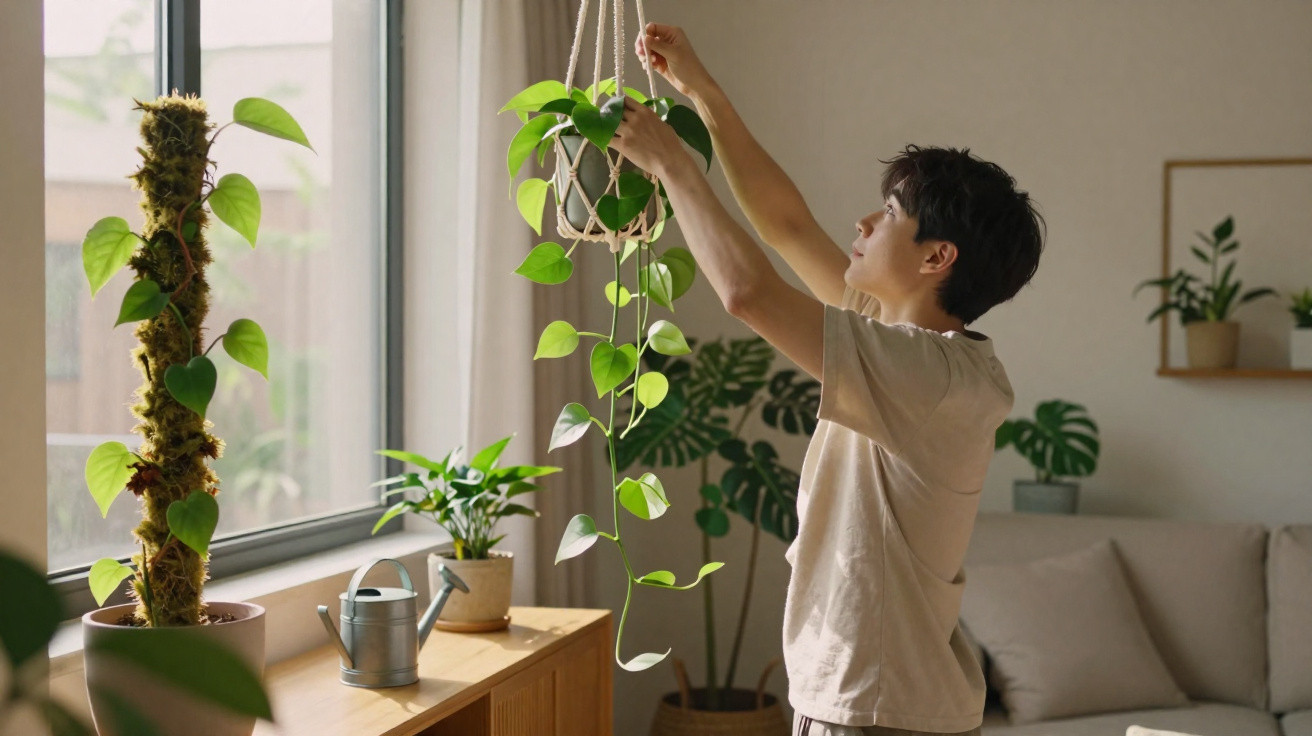
Growing pothos at home has become a popular option for anyone wanting a greener living space without demanding maintenance. This climbing plant, with its striking leaves, adapts to various areas of the home provided it receives suitable light and a few essential considerations regarding ventilation, humidity, support type and careful monitoring of its growth.
Where should you grow pothos at home for stronger growth?
The best place to grow pothos at home is somewhere with plenty of bright, indirect light and moderate temperatures. The species enjoys brightness but can suffer in strong direct sunshine, particularly in very warm areas or by unprotected north-facing windows.
Living rooms, well-lit hallways, home offices and sheltered balconies are all suitable options. Pothos also adapts well to ventilated kitchens and bathrooms, as long as it receives natural daylight for several hours each day and is not placed directly beside intense heat sources.
Which room is best for keeping pothos healthy indoors?
When choosing where to grow pothos at home, many people start with the living room, which often combines good light, air circulation and room for different supports. Here, the plant can be placed on shelving, high shelves or in wall niches, allowing its stems to develop attractively.
The bedroom, bathrooms with windows and bright kitchens can also work well for the plant, provided it gets gentle light and is not subjected to continual draughts. Hanging holders, bedside tables positioned away from the window and the tops of cupboards are commonly used in these spaces. Keep the plant some distance from hobs, ovens and air-conditioning vents.
How should pothos be positioned, and which routine care makes a difference?
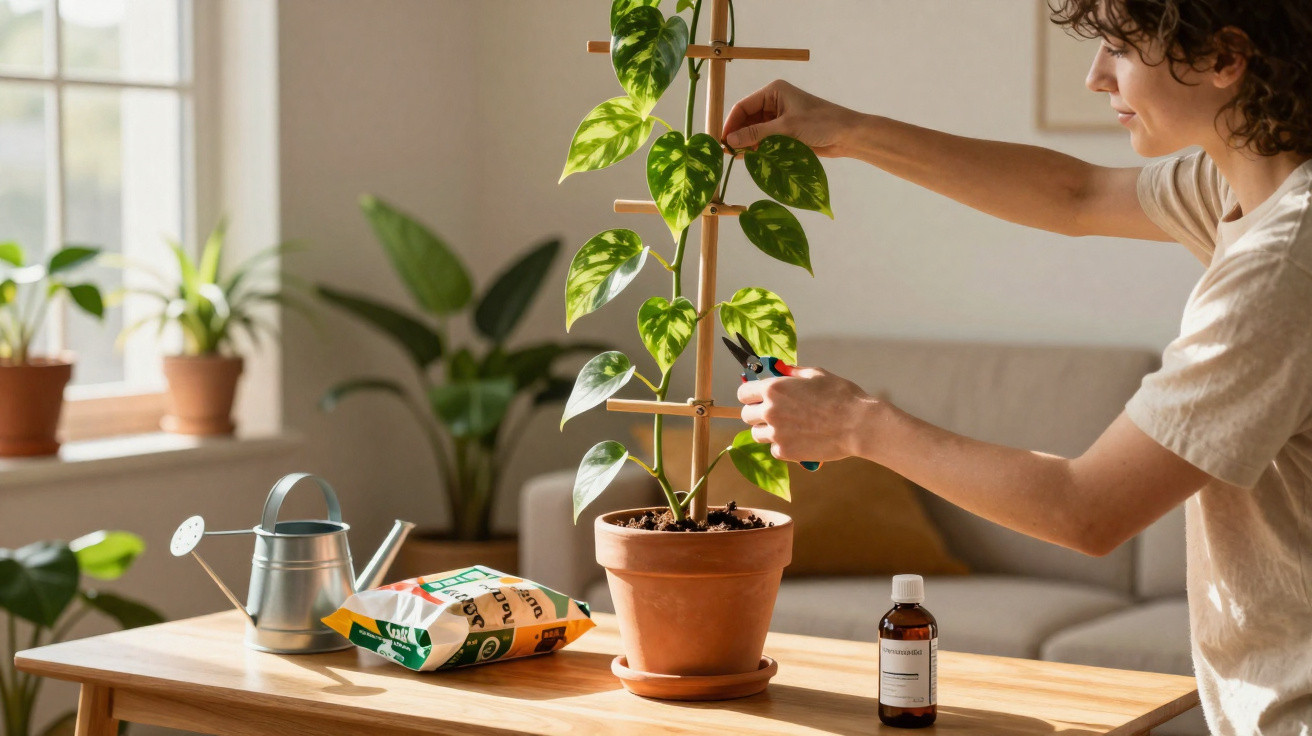
As well as selecting the right room, the position of the pot has a direct effect on the plant's health. Pothos is a climbing plant and, indoors, it is often grown as a trailing plant, placed on elevated surfaces or trained up vertical structures. This affects both the size and sturdiness of its leaves.
These different training methods make better use of space in the home and help recreate the species' natural conditions, especially when denser, more eye-catching foliage is desired. Here are some common ways to arrange pothos at home:
- Trailing: Ideal for high shelves, macramé hangers and pots suspended from the ceiling.
- Supported: Suitable for the tops of cupboards, media units and sideboards, allowing the stems to cascade down.
- Trained vertically: Uses stakes, trellises or coconut-fibre poles for the plant to climb upwards.
Once you have decided where to grow pothos at home, light, water and soil must work together. Use a light, free-draining growing medium, water only when the surface feels dry to the touch, and favour spaces with diffused brightness. Avoid both excessive shade and harsh direct midday sun.
Where should pothos not be grown indoors?
Certain areas of the home can hinder pothos development, even though the plant is considered hardy. Places with almost no natural light, permanently closed windows or no minimum level of ventilation encourage fungal problems, pests and weak, stretched, pale leaves.
It is also important to avoid very hot spaces or areas receiving a direct flow of air from air conditioning, as well as surfaces immediately beside hobs and heaters. On balconies exposed to strong sunshine throughout the day, the plant needs to be set back or shielded with curtains or screens to prevent scorching. Watching how the leaves respond during the first few weeks makes it easier to adjust its position and find the most balanced spot in the home to keep pothos looking attractive for many years.
Comments
No comments yet. Be the first to comment!
Leave a Comment