
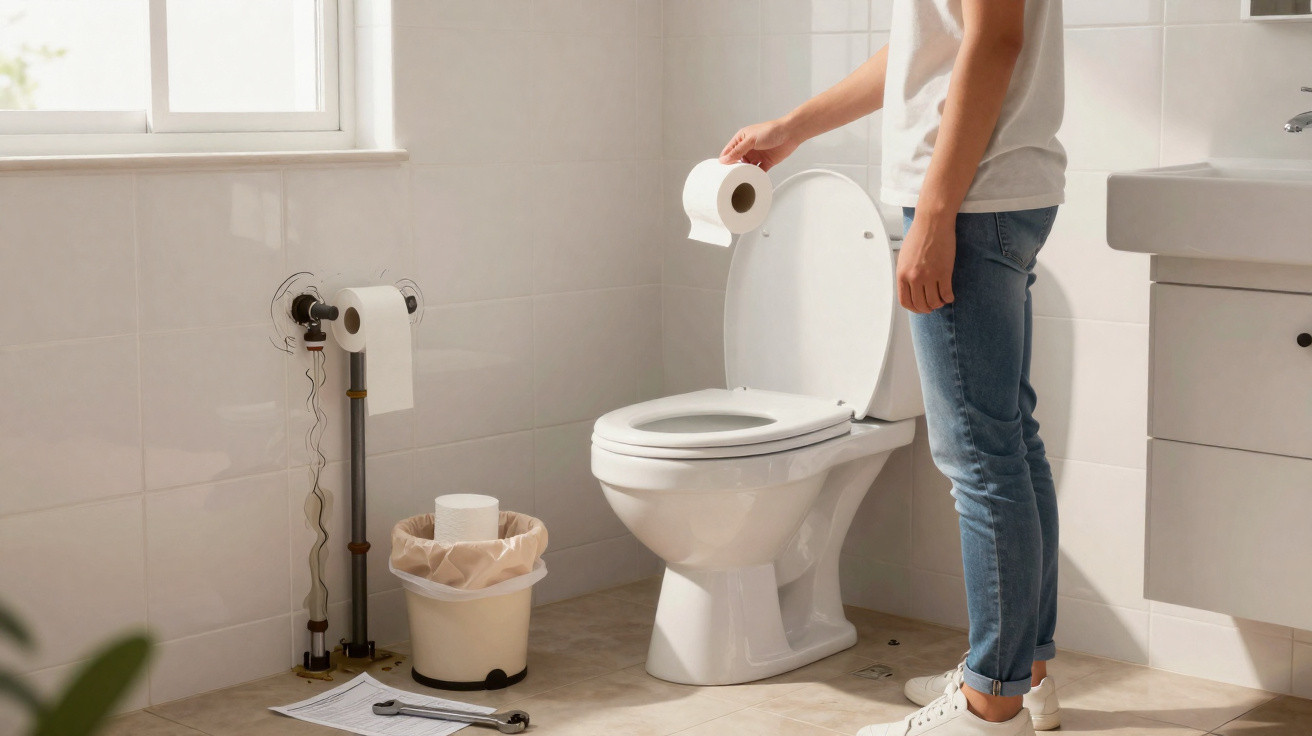
If you grew up flushing toilet paper down the loo without a second thought, you are not alone. The issue is that, in Brazil, this widespread habit can lead to blocked pipes, unpleasant smells and an expensive call-out from a plumber.
What Brazilian plumbing keeps hidden
Most domestic plumbing in Brazil was designed to carry away only liquids and organic waste, which break down quickly on contact with water. Toilet paper, although made to disintegrate, does not always break down quickly enough to travel through the system without leaving residue behind.
Add pipe layouts with tight bends and sections that have too little gradient, and the result is an ideal route for fibres to build up. Flush pressure also matters: cisterns and elevated water tanks deliver considerably less water than the high-pressure systems used in other countries.
- Narrow diameter: slimmer pipes allow paper fibres to collect more easily.
- Low flush pressure: there is less force to push the paper through the entire pipe system.
- Two- or three-ply paper: it is stronger and takes longer to break apart in water.
- A household septic tank: the bacteria that process sewage take much longer to digest cellulose.
- Wet wipes in the loo: even supposedly “flushable” wipes almost never break down in water.
Does this affect your everyday life?
It does, and significantly. A straightforward blockage can leave you unable to use the bathroom for hours, require an emergency plumber call-out and create an unplanned bill for that month.
In homes with septic tanks, the issue is even less obvious: material steadily settles at the bottom of the tank unnoticed, until the septic tank needs emptying far sooner than expected, at a much higher cost than anticipated.
The point few people stop to consider
A septic tank relies on bacteria to break down the organic matter in waste. The crucial point is that the cellulose fibres in toilet paper are far more resistant to this digestion than the rest of the material.
What happens at the bottom of the septic tank
A build-up nobody sees
Undigested paper settles on the tank floor, gradually reducing the available space for normal waste treatment.
Over time, this can mean needing a septic tanker sooner than planned and, in extreme cases, cause overflow and contaminate the soil around the home.
That is why even paper that seems to “break down well” in the toilet can behave very differently once inside a septic tank.
When the cost arrives at your door
Clearing a blocked pipe or emptying a septic tank early is not cheap, and the worst part is that the problem usually occurs without warning, often at the most inconvenient possible time.
Replacing this habit with a lidded bin beside the loo costs far less than repairing the plumbing or arranging an emergency septic tank clean.
The impact beyond the bathroom
When paper reaches treatment plants, it must be mechanically separated before processing can continue. This adds extra costs and, in areas without adequate treatment, can result in waste going directly into rivers and streams.
Ultimately, understanding why toilet paper is not suited to Brazilian plumbing is less about following rules and more about avoiding hassle, unnecessary expense and an environmental impact that often goes unnoticed in daily life.
Did you enjoy learning the reason behind this common habit? Share this with people who also flush toilet paper down the loo without knowing the risks.
Comments
No comments yet. Be the first to comment!
Leave a Comment