
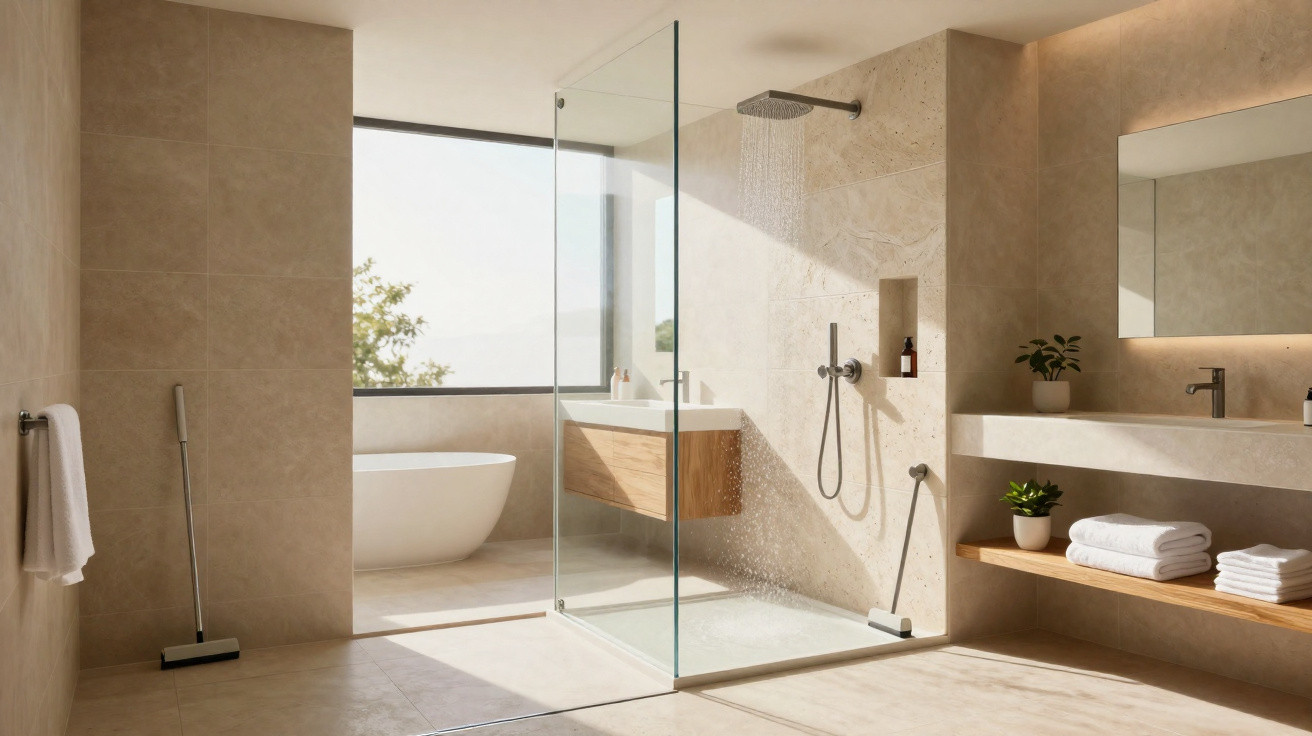
For decades, a tempered-glass shower enclosure with tracks and rubber seals was the standard solution in Brazilian bathrooms. In 2026, however, it is losing ground to a simpler, more hygienic approach that can dramatically change the look of the room without an expensive refurbishment: the open bathroom, without a glass partition, where the shower area blends into the rest of the room and a linear drain is fitted in the floor. This change permanently addresses the three complaints most often associated with a conventional shower enclosure.
The three traditional shower enclosure problems leading people to abandon it
Anyone living with a glass shower enclosure knows the weekly cycle of frustration. The first issue is mould in the door seals and tracks. It emerges as dark marks in corners and joints, withstands standard cleaning products, and returns within days even after it has been removed. The second is limescale building up on the glass after every shower. These white, cloudy marks are caused by minerals deposited by the water and, over time, leave the glass looking permanently dirty, regardless of how often it is cleaned.
The third drawback is more subtle, but no less important: the enclosed feeling created by glass walls in the bathroom. In small spaces, which make up most Brazilian flats, an enclosure forms a visual barrier that splits the room and reduces the sense of space. Removing that barrier visually transforms the same room without altering a single wall.
- No more mould in rubber seals: without seals or tracks, the places where fungus consistently develops simply no longer exist in the bathroom.
- No limescale marks on the glass: removing the glass permanently eliminates the issue of white limescale stains that no product removes easily.
- An immediate sense of space: continuity between the shower zone and the rest of the bathroom makes the room feel larger without changing its actual dimensions.
- Far quicker cleaning: with no awkward corners, tracks or glass surfaces to clean, keeping the bathroom hygienic becomes considerably simpler.
- Greater property appeal: modern, well-planned bathrooms without a conventional shower enclosure are among the features most sought after by buyers and renters in 2026.
How an open bathroom works and what replaces the glass partition
In an open bathroom, the shower area is defined only by the location of the water outlet and by the floor gradient towards the drain, ensuring water runs away without spreading into the rest of the room. The linear drain - a long channel installed beside a wall or within the floor - is the technical component that makes the concept possible. It efficiently collects water across the entire wet area, replacing the central point drain used in many conventional shower enclosures.
The result is an uninterrupted floor, with no step into the shower enclosure and no physical division between the shower and the rest of the bathroom. Those wanting some visual separation can choose a fixed glass panel without a door, which distinguishes the space without introducing the rubber seals and tracks associated with a conventional enclosure. Another option is a half-height masonry wall that complements the finish of the wall tiles.
How day-to-day cleaning changes with this type of bathroom
The difference to the cleaning routine is immediate and tangible. With no seals to scrub, no tracks from which to remove residue, and no glass on which to tackle limescale, cleaning the shower area means simply rinsing it and using a cloth or mop on the floor, which slopes towards the drain. The time many people spend each week scrubbing enclosure corners with brushes and specialist products simply disappears from the routine.
What must be planned before removing the shower enclosure
Three technical aspects determine whether the refurbishment will work:
Floor gradient: a minimum fall of 1% to 2% towards the drain is what ensures water drains away rather than spreading through the bathroom. Without the correct gradient, water pools on the floor and enters the dry area.
Waterproofing: the full wet area, including walls and floor, must be waterproofed before the final finish is installed, preventing leaks that may only become apparent months after the work is completed.
Adequate ventilation: without enclosure walls to contain steam, it spreads throughout the room. An effective extractor fan or a well-positioned window is therefore needed to prevent excessive humidity across the whole bathroom.
A professional must assess all three points before work begins. A poorly completed conversion from a shower enclosure to an open bathroom can cause damp and water-ingress issues that cost far more to put right than the original refurbishment. When planned correctly, though, it is a change that transforms the bathroom permanently and requires no maintenance in the years that follow.
Another benefit that becomes apparent over time is the reduction in moisture retained around the sides of the bathroom. In a conventional enclosure, water left between the glass and wall after a shower creates a consistently damp setting that encourages fungal growth. Without this build-up, the bathroom dries faster and the room as a whole remains healthier between cleans.
Is this change suitable for every bathroom, or are there restrictions?
The concept works well in bathrooms of any size, although the planning required must match the available space. In very small bathrooms, where the toilet and basin are close to the shower area, waterproofing and the floor gradient must be calculated carefully to ensure water does not reach adjacent furniture or electrical fittings. Larger bathrooms offer greater design freedom, with an even more striking visual result.
The trend reached Brazil through European interior-design projects and is already appearing regularly in new flats launched by developers in 2025 and 2026. For anyone with an old shower enclosure who is considering refurbishment, replacing it with the open concept is one of the changes offering the best balance of cost, visual impact and practical benefit in everyday home life. Share this with someone who is tired of cleaning mould from their shower enclosure every week.


Comments
No comments yet. Be the first to comment!
Leave a Comment