
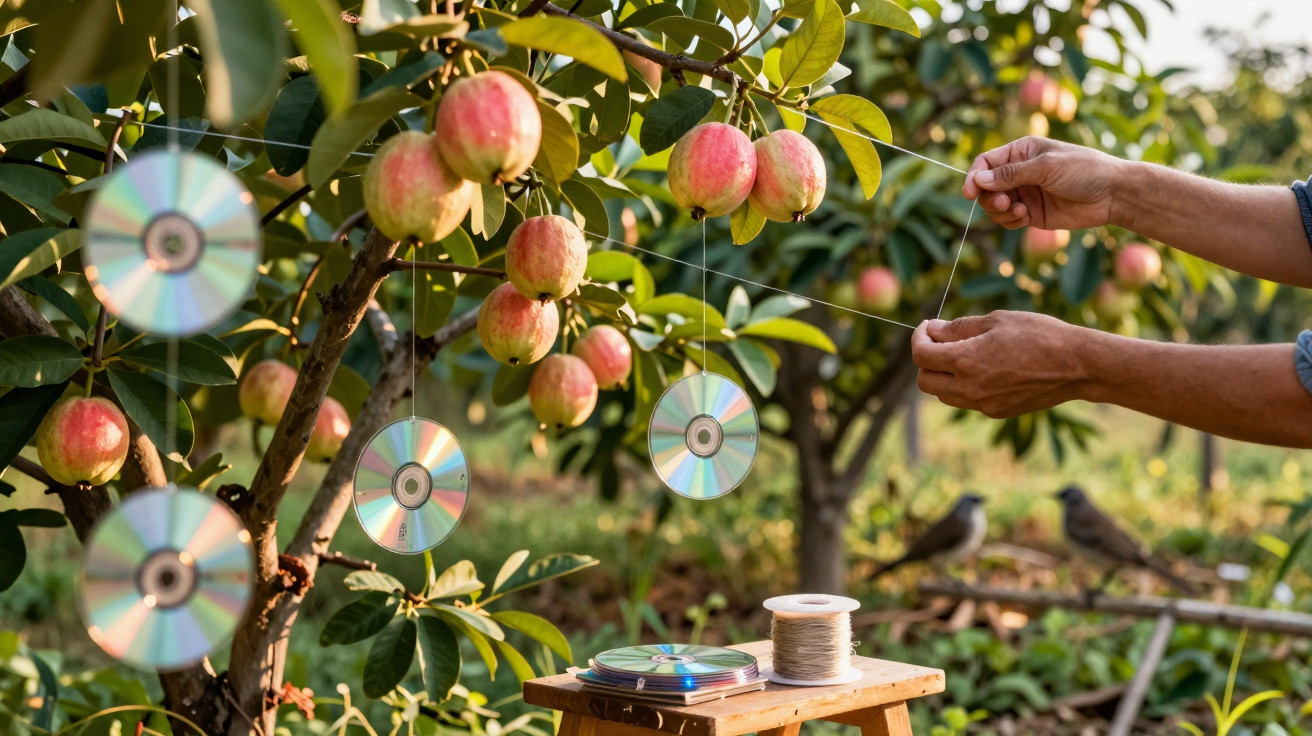
Growing guava trees at home can attract birds when the fruit is ripening. To safeguard the crop sustainably, many growers use inventive approaches that deter birds without causing any harm or injury to these flying animals.
How do old CDs help protect guava trees?
Hanging unwanted discs from the branches creates an effective visual scare device in the orchard. As the wind moves them, the CDs spin and reflect sunlight, deterring fruit-eating birds in the area.
The flashing reflections provide a powerful visual signal that makes it harder for birds to approach without hurting them. It is an inexpensive additional barrier, particularly suitable for anyone wanting to protect a crop of ripe guavas.
How can you protect a lemon tree with aluminium foil?
Suspending metallic strips from citrus branches produces a striking reflective effect that can discourage pests and hungry birds because… Read more
What is the biological explanation for CDs working?
According to biology specialists, the circular shape of the item closely resembles a structure known as an eyespot. This visual feature looks like the large eyes of natural predators, frightening smaller species that visit your home vegetable garden.
In the natural world, butterflies and other insects use this same evolutionary mechanism to deter possible threats and ensure their survival. When a bird spots the moving central circle, it retreats because it fears an attack by this supposed animal.
To learn more about how effective this environmentally friendly orchard barrier can be, watch the full video below from the Horta Mineira YouTube channel. It shows in practical, entirely biological terms how these discs scare away birds:
How should reflective discs be installed correctly?
The discs should be attached to branches using materials that can withstand the weather. Durable line is recommended so that the wind can move the objects freely, providing continuous protection for the guava tree.
With the right preparation, old discs will begin spinning at the slightest breeze. This straightforward method prevents winged intruders from landing, avoiding the loss of leaves needed for plant photosynthesis.
Installation materials
Essential assembly kit
To set up the visual scare device correctly on the guava tree, gather the following items:
- Old CDs or unwanted DVDs;
- Rain-resistant nylon fishing line;
- Scissors to cut the line to the required length.
Why is fishing line recommended for hanging the discs?
The choice of fastening material affects how long this orchard technique lasts. Ordinary string should be avoided because rain causes it to rot, weakening the line in persistently bad weather.
By contrast, nylon line made for fishing is highly resistant to moisture and fungal growth. This transparent plastic remains intact for extended periods, maintaining effective protection for your fruiting guava tree.
For the best practical results when using this visual scare device in a small home orchard, consider the following list of the main mechanical benefits of using this type of fishing line correctly:
- Greater resistance to heavy rainfall;
- Allows the wind to move the suspended disc easily;
- Visually unobtrusive, preserving the tree’s appearance.
How can birds be stopped from becoming accustomed to CDs?
To prevent this behavioural habituation, regularly move the discs to different positions on the branches. This ongoing adjustment renews the visual signal, ensuring birds remain away from the tree throughout the ripe production stage.
In addition, use this technique as supplementary protection during the harvest season. Combining these reflections with other sustainable measures helps secure an abundant harvest, protects the welfare of wild fauna and keeps your orchard fully protected from attacks.

Comments
No comments yet. Be the first to comment!
Leave a Comment