
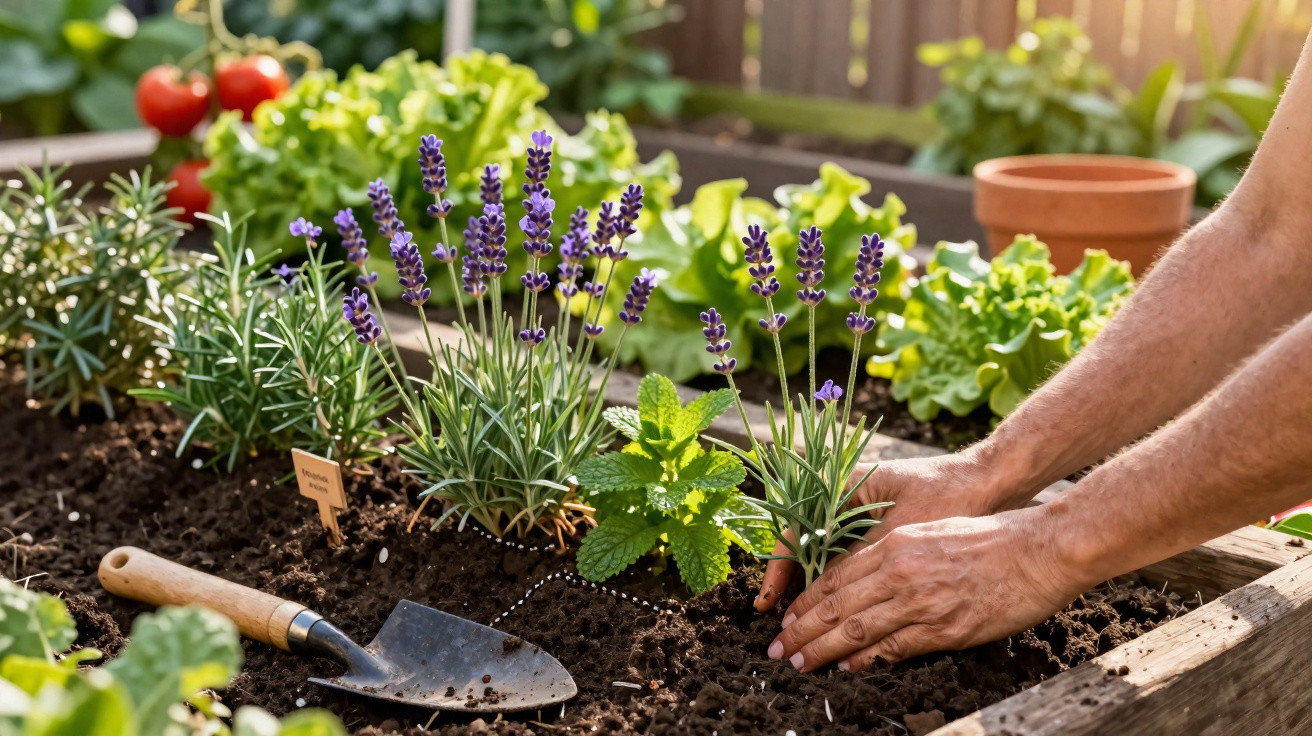
In many home gardens, ants can become a persistent problem, particularly when they protect aphids, damage fresh shoots or enter vegetable plots. Rather than using pesticides, repellent plants offer an effective alternative. They create a natural barrier that helps manage these insects while adding ornamental, aromatic and ecological value to the space.
Which plants help keep ants away from the garden?
Some of the most effective species for establishing a natural barrier against ants are aromatic and medicinal plants, including mint, rosemary, lavender, citronella and basil. Their essential oils produce strong scents that ants find unpleasant, reducing the movement of these insects through beds and pots.
Sage, thyme, rue, and certain varieties of carnation and calendula can also be used. As well as deterring ants, many of these plants attract pollinators, assist with the control of other pests and enhance the garden with varied colours and textures.
Watch a video on the Guia das Plantas YouTube channel featuring 7 plant species that keep ants away from the garden:
How do plant scents form a natural barrier against ants?
These plants release aromatic substances into the air and soil, disrupting the chemical trails that ants rely on for navigation. In an environment filled with powerful scents, worker ants struggle to find food and make their way back to the nest, so they tend to redirect their routes towards less troublesome areas.
Mint and citronella contain compounds such as menthol and citronellal, whereas rosemary and lavender are rich in cineole and linalool. These substances interfere with communication between ants, gradually moving colonies away from protected areas and limiting damage to young seedlings, vegetables and more delicate ornamental plants.
- Mint: has a powerful fragrance and is excellent along vegetable plot edges or in pots placed near walls.
- Citronella: grows in dense clumps and is suited to garden corners and thoroughfares.
- Rosemary: creates long-lasting, structured borders that help define planting beds.
- Lavender: favours full sun and combines a pronounced scent with decorative flowers.
- Basil: widely used near tomatoes and peppers, where it protects tender new growth.
How should you grow ant-repellent plants in the garden?
For the natural barrier to work effectively, light levels, soil and watering all need attention. Rosemary, lavender, citronella, sage and thyme prefer full sun, while mint and basil can cope with partial shade in very hot locations. Soil should drain well and be enriched with organic matter, with waterlogging avoided as it weakens the plants.
Mint spreads quickly, so it is often grown in pots that can then be arranged as borders. Rosemary and lavender, on the other hand, develop into more structured shrubs that are ideal for edging paths. Gentle, regular pruning encourages fresh growth and increases the release of fragrance, strengthening the repellent effect over time.
How should a natural barrier against ants be positioned in the garden?
Strategic placement is vital when protecting the garden. Repellent plants can be arranged in rings or strips around vegetable plots, delicate pots and recently planted seedlings, forming an aromatic “belt” that makes it harder for ants to cross into the middle of the bed. In smaller spaces, large pots of citronella or rosemary placed beside doors and walls can help block entry routes.
In larger areas, it is worth watching ant trails for a few days and strengthening these points with single or double rows of aromatic plants. Over time, the combination of suitable species, proper care and monitoring of insect activity creates an ongoing defence system that avoids poisons while keeping the garden more balanced and interesting to observe.




Comments
No comments yet. Be the first to comment!
Leave a Comment