
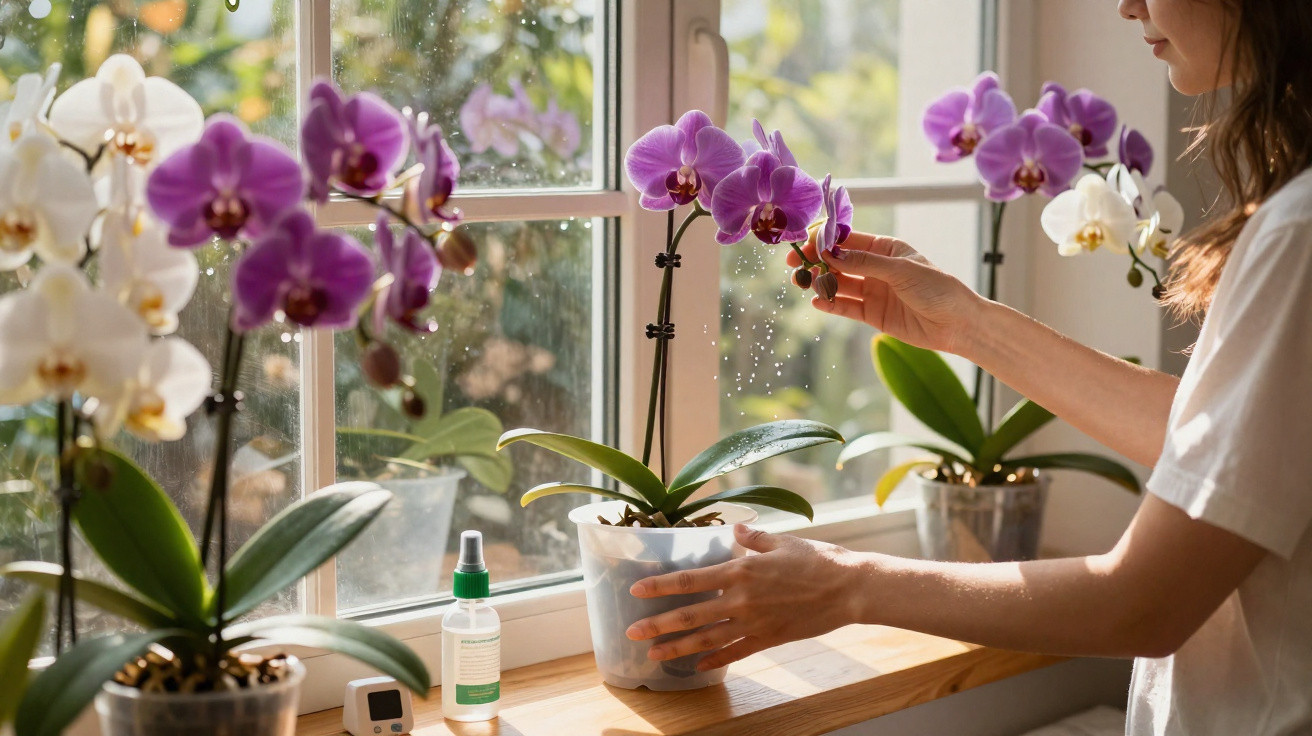
To keep an orchid flowering for additional weeks, the key is to combine bright indirect light, steady temperatures, correct watering and restrained feeding. Most orchids sold for indoor settings are Phalaenopsis varieties, which bloom best with sufficient brightness, well-aerated roots and slight temperature changes from day to night.
What makes orchid flowers last longer?
Blooms remain attractive for longer when the plant is kept away from harsh direct sunshine, strong draughts, continual air conditioning and excessive heat. Specialists stress that light is vital for a Phalaenopsis to bloom again, while insufficient light is among the most frequent reasons for a lack of new flower spikes.
While it is in bloom, position the orchid somewhere bright, where the light is softened by a curtain or where it is close to a well-lit window. Direct sun during the hottest part of the day can scorch the leaves and cause the flowers to wilt sooner.
What is the ideal balance of light and temperature?
An orchid needs bright indirect light in daytime, along with a modest fall in temperature overnight, to encourage future flowering. Specialists explain that a difference of around 5.5°C between day and night matters for the flowering of many orchids, particularly those grown at home.
In practical terms, keep the plant in a bright room during the day and somewhere slightly cooler at night, without exposing it to severe cold. This change helps the plant recognise its natural cycle and supports the development of new flower spikes.
How should you water an orchid without making flowers drop early?
Watering should thoroughly moisten the growing medium without ever leaving the pot waterlogged. Orchids require ventilation around their roots; standing water causes the roots to rot and leaves the plant without the strength to support its flowers.
One guide advises keeping water away from the plant’s crown and blooms, and watering in the morning so that the leaves and roots can dry before nightfall. The same source notes that, after flowering, the plant enters a resting period and requires less water and no fertiliser for roughly one month.
Which fertiliser helps extend orchid flowering?
During active growth and flowering, feed lightly but consistently. Plants that are actively growing or in bloom should be fertilised every third or fourth watering, using a commercial orchid fertiliser according to the label instructions.
A common mistake is applying too much fertiliser in the belief that it will produce more flowers. In reality, overfeeding can burn the roots, build up salts in the growing medium and weaken the plant. With orchids, smaller regular amounts generally work better than strong doses.
What should you do after the flowers fall?
Once the flowers have dropped, inspect the flower spike. If it remains green and healthy, some Phalaenopsis orchids may produce a new branch from it. The guidance is to cut the spike above an unused node, below any dry or dead section, provided that viable nodes remain.
If the spike is brown, dry or yellowing, cut it close to the base with clean scissors. This enables the plant to channel its energy into its leaves and roots, readying it for a stronger flowering display in the next cycle.
Which mistakes shorten orchid flowering?
A few straightforward measures can prevent blooms from wilting prematurely:
- do not place the orchid in strong direct sunlight;
- do not wet the flowers or the centre of the plant while watering;
- avoid leaving a saucer of collected water beneath the pot;
- do not move the plant to a different position every week;
- do not over-fertilise;
- do not place it near cold draughts or intense heat.
What is the secret to new orchid flowers appearing?
The secret to a flowering orchid is keeping the plant healthy even after its flowers have fallen. Bright indirect light, healthy roots, light feeding and a rest period all help prepare the next flower spike.
For flowers that last longer, care for the orchid as a living plant rather than a decorative arrangement. When its surroundings provide brightness, balanced temperatures and watering without excess, its blooms last more weeks and the plant has the energy to repeat the display in the following cycle.




Comments
No comments yet. Be the first to comment!
Leave a Comment