
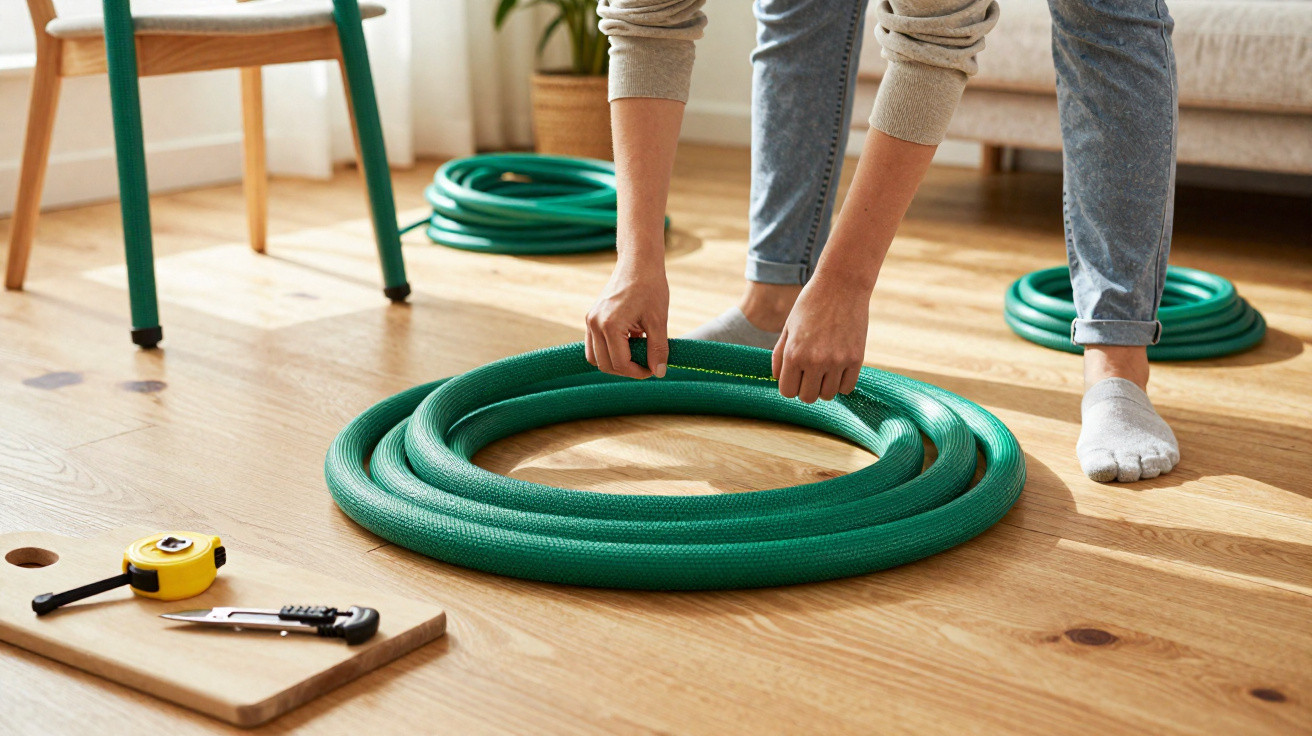
That broken hose left in the garden may look like rubbish, yet it can still be extremely useful. Usually made from rubber or flexible PVC, it stands up well to water, sunlight and friction. Rather than throwing it away, consider turning the material into something practical for the home. With a few cuts, some cleaning and a little creativity, an old hose can become a useful item at virtually no cost.
Why is it worth reusing a broken hose?
A garden hose is generally durable because it is designed to withstand outdoor use. Even when it has holes or cracks in certain places, many sections may still be suitable for reuse. Instead of sending the entire hose to the bin, cut away the damaged areas and use the intact lengths in straightforward projects.
As well as saving money, this habit cuts household waste. An item that appears beyond repair may simply need a new purpose. The hose may no longer be suitable for watering, but it can still protect, organise, decorate and make everyday jobs easier.
How can you turn a hose into a durable mat?
One particularly practical option is to make a mat for an outdoor area. A hose works well for this because moisture does not easily damage it, and it can be cleaned with water. The mat can be placed on a patio, in the garden, at the entrance to the house or near the utility area.
To make one, clean the hose thoroughly, trim off the badly damaged ends and coil the remaining material into a circular or oval shape. As you form the coil, secure each loop with cable ties, coated wire or strong cord. The key is to fasten it tightly so the mat does not come apart during use.
How can a hose be used for protection and organisation?
A second idea is to turn hose sections into protective covers and organisers. Simply cut shorter pieces and make a slit along one side, allowing them to fit over cables, corners, tool handles or supports that hurt your hands. The material provides a simple, long-lasting protective layer.
Hose pieces can also secure plants to stakes, organise thick cables in the garage or cover the ends of objects kept in storage. As the material is flexible, it can be adjusted to a range of shapes with little effort.
What precautions should you take before cutting?
Before you begin, wash the hose and allow it to dry. Then place it on a solid surface and use sturdy scissors or a craft knife very carefully. Rubber can slip while being cut, so never try to cut it while holding it in the air.
When making long cuts, mark the hose first with a pen to keep the size even. It is also important to discard any sections that are extremely brittle, dried out or mouldy. Reuse works best when the selected pieces remain clean and flexible.
Where do these ideas work best around the home?
A hose mat is best suited to outdoor spaces, where its water resistance is especially useful. Smaller sections, meanwhile, work well in the garage, utility room, garden, storage area and even inside tool cupboards. They are simple solutions that can prevent unnecessary purchases.
The key is to see a broken hose as a raw material. It may have lost its original purpose, but it can still be used to create useful mats, protective covers and organisers. In just a few minutes of work, something that would have gone in the bin gains value and becomes part of the household routine again.



Comments
No comments yet. Be the first to comment!
Leave a Comment