
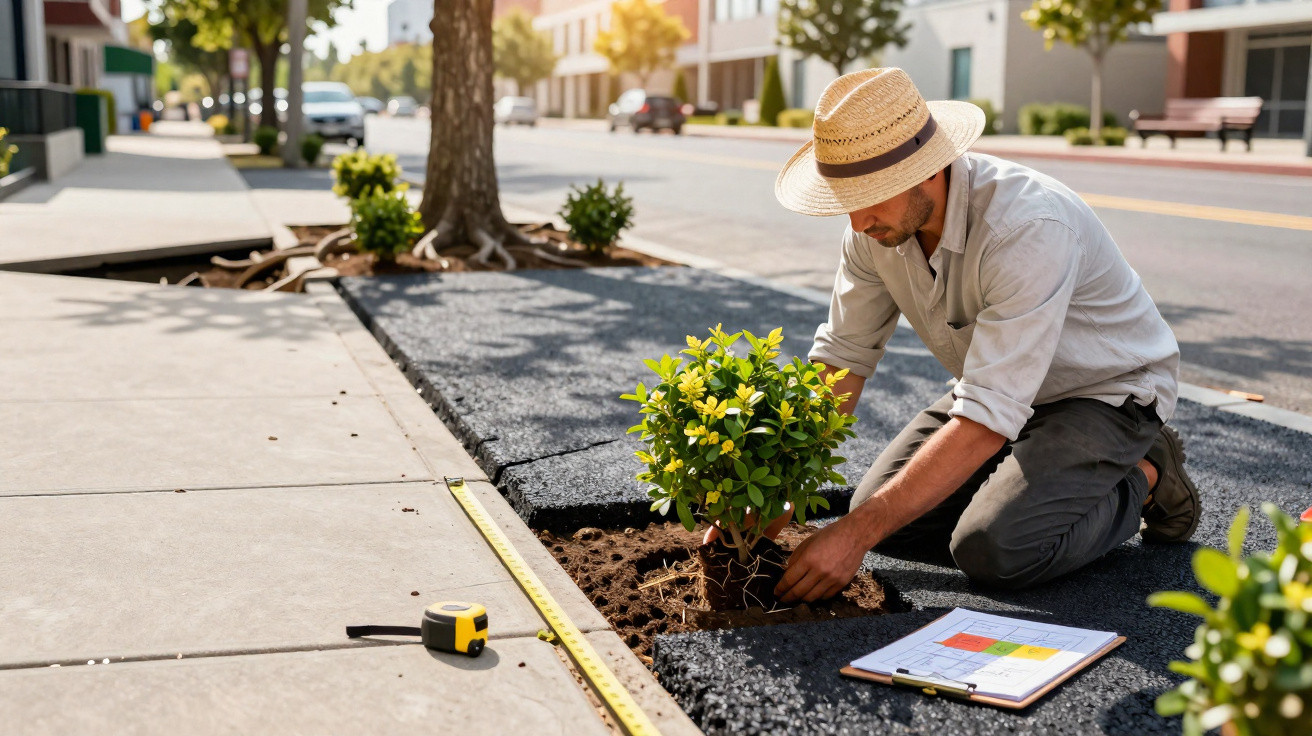
Choosing shrubs for pavements and public squares may sound straightforward, yet it often becomes a real puzzle in practice. Everyone wants an attractive, flower-filled and welcoming street, but no one wants cracked paving, roots pushing slabs upwards or trouble with pipework. The good news is that a lovely garden can be created outside a home or in a public area with shrubs whose roots are less aggressive, protecting the paving while making the surroundings cooler and more pleasant.
Why do aggressive roots endanger pavements and pipework?
Plants each develop differently below ground. While some shrubs send their roots deeper into the soil, others spread sideways close to the surface - precisely where pavement concrete is laid.
In narrow planting strips, more aggressive roots can gradually force up the paving, crack blocks, create hazardous uneven surfaces and even reach pipes, drains and underground cables. In most cases, the issue begins with an unsuitable species being chosen and planted too close to walls, inspection chambers, lamp posts and driveway entrances. This can later lead to repair costs and disputes between neighbours.
Which less aggressive-rooted shrubs are best for public spaces?
For those seeking colour and flowers throughout the year without constantly repairing paving, it is worth giving preference to shrubs with more contained roots that suit the local climate and withstand everyday sunshine and rain. These shrubs work well on pavements, in public squares and in small urban gardens, provided they receive sun and watering during dry spells.
- Ixora (Ixora coccinea) – A compact shrub with generally manageable roots and rounded clusters of colourful flowers (red, orange, yellow and pink). It prefers warm conditions and direct sun.
- Dwarf hibiscus – Compact varieties with more controlled canopies and roots, producing large, striking flowers that are ideal for a tropical look in a limited space.
- Dwarf golden dewdrop (Duranta repens ‘Golden’) – Known for its golden-yellow foliage, it creates low hedges and usually has less troublesome roots when regularly pruned.
- Azalea (Rhododendron simsii) – A medium-sized shrub with relatively contained roots in well-drained soil, offering abundant blooms in autumn and winter.
- Miniature roses and small rose bushes – With unobtrusive roots and several flowering periods throughout the year, they are perfect for narrow beds and front gardens.
How should shrubs be planted and spaced correctly?
Selecting the right species alone is not enough: planting must encourage roots to grow downwards rather than outwards. On pavements, small planting beds are often made along the green verge, and the size of the planting hole directly affects how the roots behave.
The hole should be, on average, twice the width of the root ball, with soil loosened thoroughly around the sides and enriched with well-rotted organic matter. It is also important to leave 40 to 60 cm between shrubs and walls, posts or utility access chambers. Shrubs should be spaced 0.8 m to 1.5 m apart, depending on the intended size, preventing both excessive shading and too much competition for room.
Which maintenance measures prevent pavement problems?
Once planting is complete, the key is to follow a simple but regular care routine. Shrubs with less invasive roots do not require major work, but they benefit from small measures that extend the life of the pavement and keep the garden looking tidy.
Light pruning to manage height and width, moderate fertiliser application once or twice a year, and watering without waterlogging will already make a substantial difference. Regularly checking the surrounding area for cracks, paving that is beginning to lift or unusual slopes helps identify any issue early. At that stage, it can still be addressed through pruning, adjustment or transplanting, preserving the balance between attractiveness, safety and practicality in public spaces or outside the home.

Comments
No comments yet. Be the first to comment!
Leave a Comment