
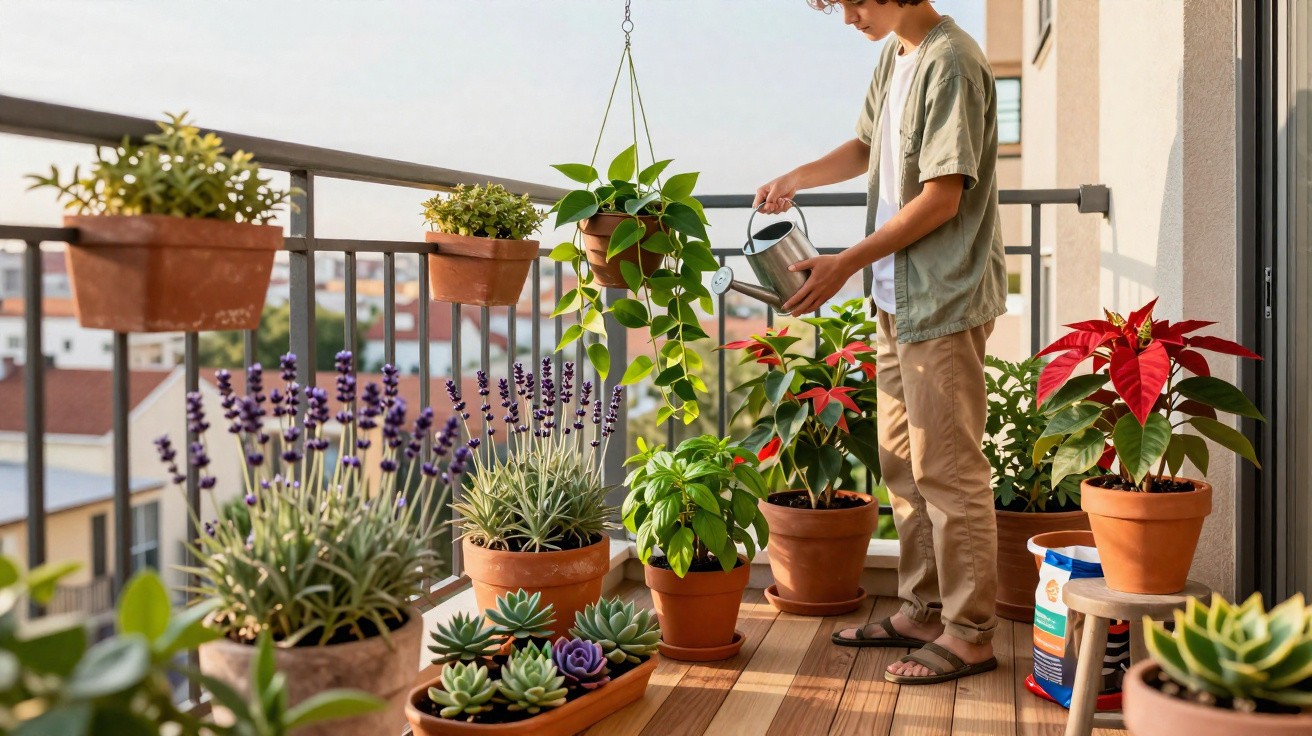
Having a small balcony does not mean giving up a lovely green corner, with pleasant scents and the feel of a retreat. Even with limited room, you can create a charming, lively mini garden by choosing suitable plants and pots, and using a few straightforward organisation ideas while considering each species’ light, watering and growth requirements.
What are the best plants for a small balcony?
For a compact space like this, an attractive, practical and low-maintenance combination can include devil’s ivy, lavender, various succulents, basil and anthurium. Each can occupy a different type of spot: hanging, floor-standing, on shelves or in narrow planters.
Devil’s ivy (Epipremnum aureum) is the adaptable, hardy climbing plant of the group. It copes well with partial shade and is ideal for medium-sized hanging pots. Lavender brings fragrance, delicate flowers and a need for more direct sunlight and well-drained compost. Succulents are compact and convenient: they store water in their leaves and thrive in small pots, making them ideal for anyone with a busy routine.
How should you choose pots, water and position balcony plants?
Choosing the right pot size makes a major difference to the development of each plant, preventing cramped roots and waterlogged compost. In general, devil’s ivy and anthurium perform best in 20 to 30 cm pots, basil in medium pots, lavender in deeper containers, and succulents in shallow pots. Every container should have excellent drainage.
For watering, follow a simple approach without overdoing it, always checking the compost and foliage. When arranging the area, divide the balcony into light zones: the sunnier outer edge, a partially shaded middle section, and an inner area that receives only indirect light. Place each plant according to what it needs.
- Devil’s ivy: medium pots, partial shade, water 2 to 3 times a week, keeping the compost slightly moist.
- Lavender: a deep pot, gentle direct sun, water 1 to 2 times a week, with very well-drained compost.
- Succulents: shallow pots, plenty of sun or bright light, water every 7 to 10 days.
- Basil: a medium pot, good light, frequent watering, almost daily in hot weather.
- Anthurium: a 25 to 30 cm pot, partial shade, water 2 to 3 times a week and lightly mist the leaves.
How can you combine heights and colours for a harmonious display?
Using different heights is the key to keeping a balcony tidy rather than cluttered. Floor pots, narrow shelves, wall supports and ceiling hooks can all free up walking space while creating an airy look. Considering the colours of foliage and flowers also helps build a balanced setting.
One arrangement idea is to place an anthurium in a medium pot in a corner as the focal point; position lavender in the brightest spot; grow basil in planters on the balcony rail; suspend devil’s ivy from the ceiling to create a cascade of leaves; and group succulents in small pots on a shelf. This creates a mix of heights, volume and texture that enhances even the smallest balcony.
What general care keeps a small balcony garden thriving all year round?
Care begins with the growing medium: avoid hard, compacted soil and choose mixes containing organic matter, coarse sand and a drainage aid such as perlite or carbonised rice husk. This is useful for most species grown on balconies, particularly in places with heavy rain or strong winds.
When feeding plants, use moderate amounts on a regular schedule: apply light organic nutrients every 40 to 60 days for devil’s ivy and anthurium, feed basil monthly, use occasional fertiliser for lavender, and fertilise succulents very sparingly, 2 to 3 times a year. Watching for plant signals - yellow leaves, dry tips or stalled growth - makes it easier to quickly adjust water, light or nutrients, keeping your green corner attractive and healthy throughout the year.
Comments
No comments yet. Be the first to comment!
Leave a Comment