
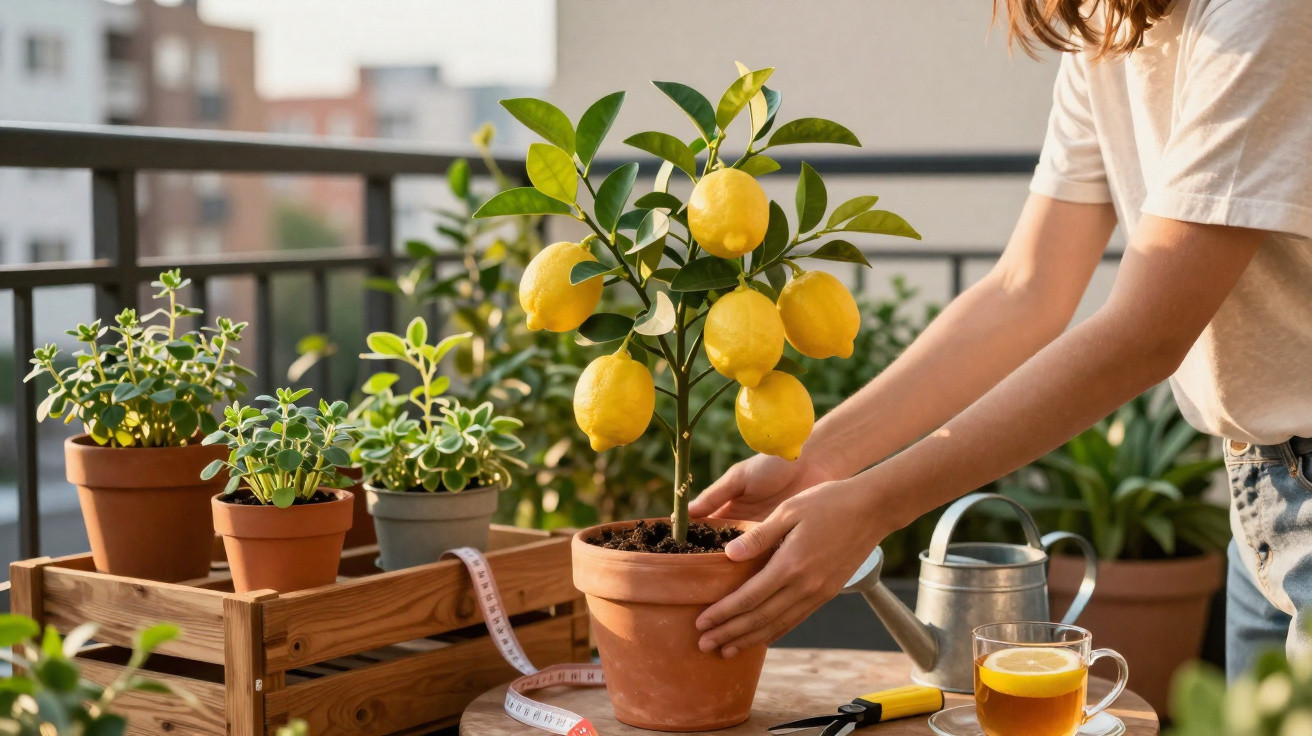
Among fruit tree options for limited spaces, the dwarf lemon tree is becoming increasingly popular on balconies, in compact gardens and even in bright indoor areas. It makes it possible to pick fresh fruit without needing a large garden, while filling the space with a citrus fragrance.
What is a dwarf lemon tree and why is it so compact?
A dwarf lemon tree is a small citrus variety, suited to smaller settings and container growing. It generally reaches between 1.5 and 3 metres in height, depending on the graft, the container used and the care it receives.
Its canopy is usually rounded and compact, making both pruning and lemon picking easier. Its root system is less invasive than that of larger trees, lowering the risk of damage to paving, paths and pipework. This makes it a suitable choice for balconies, terraces and small patios.
Watch a video on the YouTube channel Grandad João's Potted Fruit Trees, which explains how to keep a dwarf lemon tree small while achieving a plentiful fruit harvest:
How to care for a dwarf lemon tree at home
For healthy growth, a dwarf lemon tree requires at least six hours of direct sunlight each day, along with good airflow. In flats, placing the pot on an east- or north-facing balcony can work well; in ground-floor homes, open verandas and sunny passageways are also suitable.
Watering should keep the compost moist but never waterlogged, and the pot must always drain well. In addition, several routine measures help the plant remain healthy and productive over the years:
- Use a light, fertile, free-draining growing medium, with a drainage layer at the bottom of the pot.
- Feed regularly with products containing nitrogen, phosphorus and potassium, supplemented with organic matter.
- Check leaves and branches frequently for pests such as aphids, scale insects and spider mites.
- Prune every year in late winter or early spring, removing dead and crossing branches, as well as shoots from the rootstock.
When does a dwarf lemon tree begin producing fruit?
With suitable light, climate and nutrition, the dwarf lemon tree usually has its main flowering period in spring, with fruit ready to harvest in summer. In mild-climate regions, further flowering commonly occurs in summer and sometimes in autumn, providing an almost continuous crop.
To sustain this pattern, prolonged water stress, nutrient deficiencies and serious pest infestations should be avoided. In small urban gardens, mineral oil or diluted mild soap are often used, together with the manual removal of heavily affected leaves, always following guidance intended for home gardens.
Is a dwarf lemon tree suitable for every type of home?
The dwarf lemon tree adapts well to many types of home, from small back gardens to flats with an entertaining balcony. In very cold places with frequent frosts, it may need protection during low-temperature periods by moving the pot nearer to a sheltered area or using temporary covers.
In hot-climate towns and cities, the main priorities are watering and protection from strong winds, which can knock off flowers and fruit. For medium-sized balconies, a sturdy pot holding at least 40 to 50 litres is recommended. It provides adequate room for the roots and allows the plant to offer light shade, fragrant flowers and lemons for almost the whole year, without requiring extensive space.
Comments
No comments yet. Be the first to comment!
Leave a Comment