
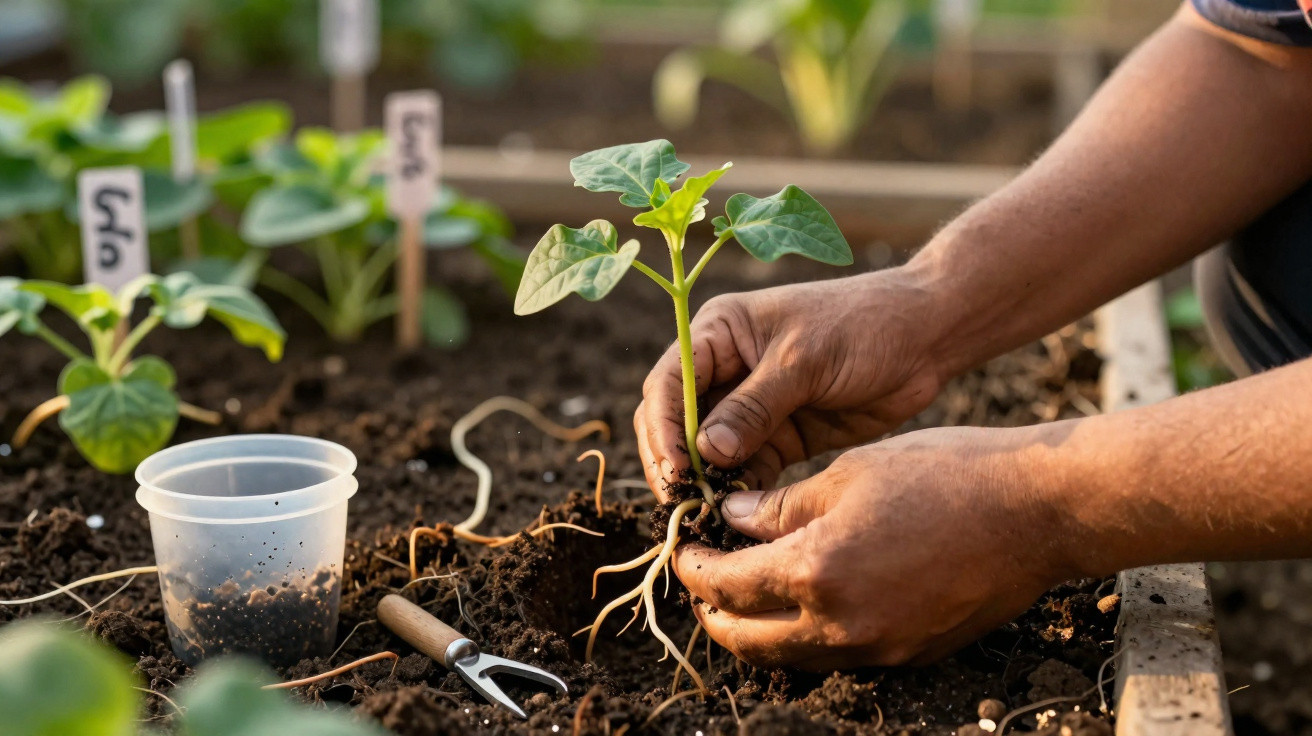
When small plant seedlings begin to lose their vigour on the garden bench in spring, it is time to act immediately. This pale colouring shows that they have run out of room and that healthy development has become completely stalled.
Why do seedlings suddenly stop growing?
Seeds sown in small containers often suffer from the physical restrictions of this limited setting. As time passes, attractive yellow leaves provide a clear indication that the root system has reached its maximum capacity for expansion.
To spot this hidden issue without harming the delicate structure of the plants, home growers can look for several highly recognisable visual clues. Carefully check the main symptoms below that reveal exhausted growing space and help save your crop.
- Stunted growth: The plant simply stops producing new leafy growth.
- Marked discolouration: Lower leaves start to lose their usual bright green shade.
- Rapid drying: The growing medium loses moisture very quickly because of the excess root fibres.
How can you identify root binding in containers?
Once the soil plug is removed from plastic seed trays, the true condition of the plant base becomes visible. Fine roots commonly create a dense, impenetrable wall, stopping water from moving through and nourishing the system properly.
This suffocating tangle prevents the uptake of essential nutrients in soil prepared for home planting. As a result, the plant structure quietly declines, requiring swift intervention before the specimen suffers severe and irreversible damage.
To learn more about correct propagation and the management of fruiting plants in restricted containers, it is worth following the practical advice shared by the Fruit in Pots YouTube channel:
What is the phenomenon known as a root ball?
This issue occurs when the underground system grows in continuous circles inside its container. The formation of a so-called root ball creates a thick barrier that prevents efficient exploration of fresh growing medium after final transplanting into the bed.
The danger of gradual root suffocation
How roots strangle themselves in a pot
When the branches can no longer find open space to extend into, they begin circling around their own axis and form a compact spiral.
This process removes the necessary contact with oxygen and prevents the correct absorption of any essential nutrient added to the soil.
To stop this constriction from permanently interrupting the healthy cycle of your home planting, urgent preventive care is absolutely essential. Review the key recommended actions for reversing this critical situation in the evidence-based list below.
- Carefully prune surplus tips showing excessive curling.
- Gently loosen the root ball by hand before moving the plant into another pot.
- Use containers of a suitable size to allow unrestricted sideways expansion.
Which techniques help free trapped roots?
Physically handling the lower structures demands great patience so that the vital fibres feeding the upper part of the plant are not broken. Making small lengthways cuts in the compact root base encourages healthy new branching and improves nutrient uptake.
After creating room in the old root ball, complementary practices ensure recovery takes place without water stress. The following essential procedures and steps are needed to manage this process in complete safety.
- Moisten the growing medium before handling it to reduce physical friction.
- Use fully sterilised tools to prevent unwanted contamination.
- Keep the specimen out of direct sunlight during the first hours after treatment.
How can continuous growth be ensured after transplanting?
The period after repotting requires regular moisture monitoring to secure establishment in the newly prepared space. Providing a well-aerated growing medium rich in organic matter will allow the new root fibres to spread with full vigour and freedom.
Finally, remember that daily observation prevents the silent return of this invisible problem beneath the soil surface. By maintaining this careful routine, your home-grown crops will remain strong and richly coloured throughout every season of the year.

Comments
No comments yet. Be the first to comment!
Leave a Comment