
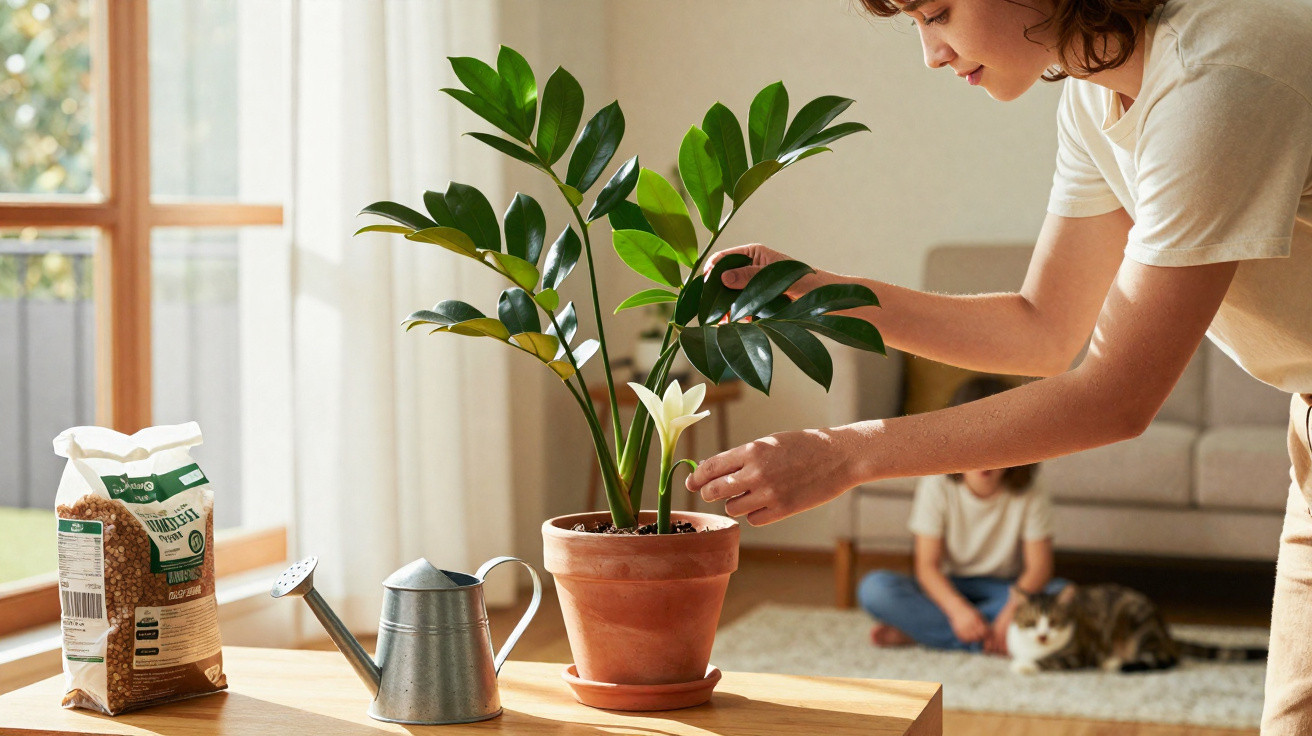
A zamioculca can flower, although this is uncommon indoors. In mature plants, plentiful indirect light, infrequent watering and a pot that is suitably sized for the roots provide better conditions for a discreet inflorescence to emerge, almost concealed at the base.
What does a zamioculca need in order to flower?
Flowering relies chiefly on the plant being mature and stable. A zamioculca that has recently been divided or repotted will usually direct its energy towards roots and leaves, whereas a well-established specimen may set aside resources to produce its small floral structure.
Bright indirect light supports photosynthesis without scorching the leaves. The plant copes with low light, but simply surviving does not mean it will flower; to develop buds, it must build up energy over many months in stable domestic growing conditions.
The most favourable conditions are:
- Light: plenty of bright, indirect light, with no strong sun falling directly on the leaves.
- Maturity: mature, well-established plants flower more readily.
- Watering: water only once much of the growing medium has dried out.
- Pot: a suitably proportioned container, without excessive room around the rhizomes.
- Stability: minimal repotting and consistent care throughout the year.
What does a zamioculca flower look like?
The zamioculca belongs to the Araceae family and originates in tropical Africa. Its flower is a pale spadix surrounded by a greenish spathe, emerging close to the soil and remaining partly hidden among the foliage stems.
Unlike the anthurium, which is grown for its striking inflorescences, the zamioculca produces small flowers in cream, greenish or yellowish shades. The structure is generally only a few centimetres long and can easily go unnoticed, as it develops beneath the glossy foliage and has little ornamental value.
How should you water it and choose a pot without harming the plant?
Place the plant near a bright window, sheltered from the strongest direct sunlight, and use a freely draining growing medium. Water thoroughly only after much of the mix has dried, as the rhizomes retain water and can rot in waterlogged conditions.
Choose a pot that fits, rather than one that is tight
Too much space increases moisture retention. Choose a container only a few centimetres wider than the rhizome mass. Replace the pot if it becomes distorted, cracks or no longer drains properly.
The pot does not need to squeeze or distort the roots; it simply should not be excessively large. Overly roomy containers hold moisture for longer and encourage overwatering, while a proportionate size keeps drainage predictable and the plant stable.
To maintain suitable conditions:
- use a pot with clear drainage holes for water to escape;
- prepare a light, free-draining growing medium that does not become compacted;
- allow the compost to dry partly before watering again;
- do not leave standing water in the saucer or decorative outer pot;
- shield the leaves from intense direct sunlight;
- avoid repeatedly moving the plant from place to place.
What can prevent a zamioculca from flowering?
Light feeding during the growing period can support leaves and roots, but excessive fertiliser will not force flowering. Built-up salts can burn the roots and upset the growing medium, so follow the label instructions and stop feeding when the plant is dormant.
It is also unwise to repot frequently simply to encourage growth. Each transplant can harm fine roots and disrupt the stability of a mature plant. Once the flower has dried, cut its stem off close to the soil with clean scissors, taking care not to damage new shoots.
Common mistakes include:
- keeping a zamioculca in a permanently dark corner;
- watering on set days without checking the moisture in the compost;
- using pots that are too large for a small plant;
- applying concentrated fertiliser in an attempt to force flowers;
- repotting or dividing the rhizomes too often;
- expecting a showy bloom like that of an anthurium.
What care is needed around children and animals?
Anyone familiar with easy flowering plants for beginners should understand that the zamioculca calls for different expectations. Its flowering is rare and understated, so the main aim should remain healthy foliage, rather than pursuing blooms at any cost.
The plant contains calcium oxalate crystals, which can irritate the mouth, eyes and other mucous membranes through contact or ingestion. Wear gloves when cutting damaged sections, wash your hands afterwards, and keep the zamioculca out of reach of children and animals.

Comments
No comments yet. Be the first to comment!
Leave a Comment