
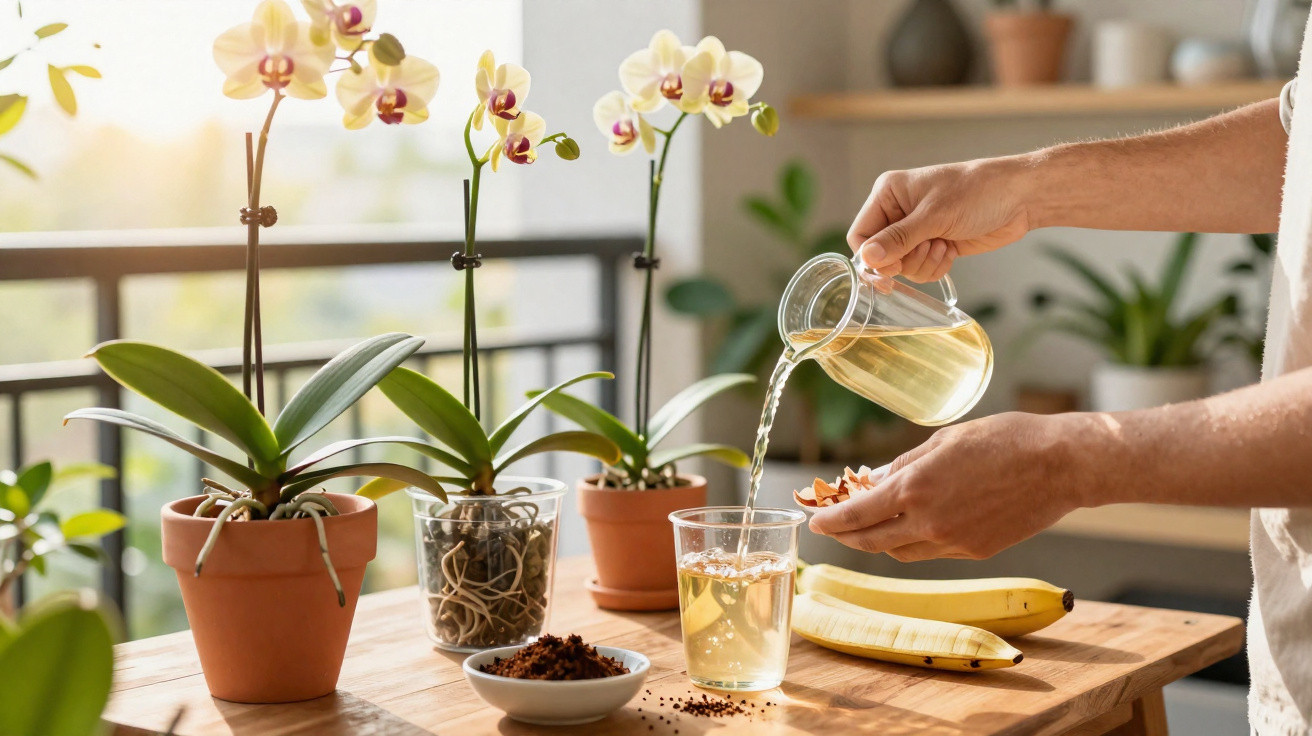
Orchids respond well to mild natural fertilisers that are heavily diluted and carefully applied to damp growing medium. As many species have sensitive roots and grow in pine bark, fibre or charcoal, too much fertiliser can lead to salt build-up, dry tips and scorched roots. The best feeding routine combines gentle nutrition, controlled frequency and careful monitoring of leaves, roots and flower spikes.
Which natural fertilisers work best for orchids?
Orchids can be fed with natural fertilisers such as well-diluted worm castings, a small amount of bokashi, banana peel tea, unsalted rice water and bone meal used very sparingly. The key is to avoid concentrated mixtures, overly fermented preparations or anything applied directly to dry roots.
Of the homemade options, weak liquid feeds are the safest. They distribute nutrients through the growing medium without creating a heavy layer over the roots. Solid organic fertilisers should only be used in very small amounts, fully matured, and kept away from direct contact with new shoots.
How can you prepare natural fertiliser without scorching orchid roots?
Preparation should follow one straightforward principle: for orchids, underfeeding is usually better than overfeeding. Their roots need oxygen, balanced moisture and a clean growing medium; an overly strong mixture can darken new root tips and halt growth.
These ratios provide a safe starting point:
- Liquid worm castings: combine 1 tablespoon with 1 litre of water, stir thoroughly, strain and apply to an already damp growing medium.
- Banana peel tea: steep 1 clean peel in 1 litre of water for 24 hours, strain, then use only a small amount when watering.
- Rice water: use the first water from rinsing rice, with no salt added, and dilute it with an equal part of clean water.
- Bokashi: place a few granules around the edge of the pot, never touching exposed roots or the plant’s crown.
How often should each orchid fertiliser be applied?
Application frequency depends on the plant’s growth stage. During active growth, when new roots, leaves or shoots emerge, an orchid makes better use of a light feed. The amount should be reduced during dormancy, very cold weather or immediately after repotting.
A cautious schedule prevents build-up in the growing medium:
- Liquid worm castings: every 15 days, always well strained.
- Banana peel tea: once a month, in a small dose.
- Diluted rice water: every 20 to 30 days.
- Bokashi: a small amount every 45 to 60 days.
- Bone meal: only for mature plants, in a minimal quantity and away from exposed roots.
What signs show that orchid fertilising is working?
Well-fed orchids do not transform overnight. Results appear as roots with green or pale tips, firm leaves, active new shoots and fuller pseudobulbs in species with this structure.
Before flowering, the plant may produce a more vigorous flower spike when it receives suitable light, proper watering and balanced fertilising. Fertiliser helps, but it cannot replace filtered light, ventilation and a growing medium that dries at the right interval between waterings.
When should you reduce the dose or stop fertilising orchids?
Reduce the dose if brown root tips, unexplained yellowing leaves, crusts on the growing medium or a strong smell from the pot appear. These signs point to excessive organic matter, poor drainage or a concentration that is too high for roots that need to breathe.
The safest approach is to flush the growing medium with clean water occasionally, pause fertilising for several weeks, then resume at half strength. For orchids, steady growth, pale roots and firm leaves are more valuable than strong fertilising intended to rush flowering.
Comments
No comments yet. Be the first to comment!
Leave a Comment