
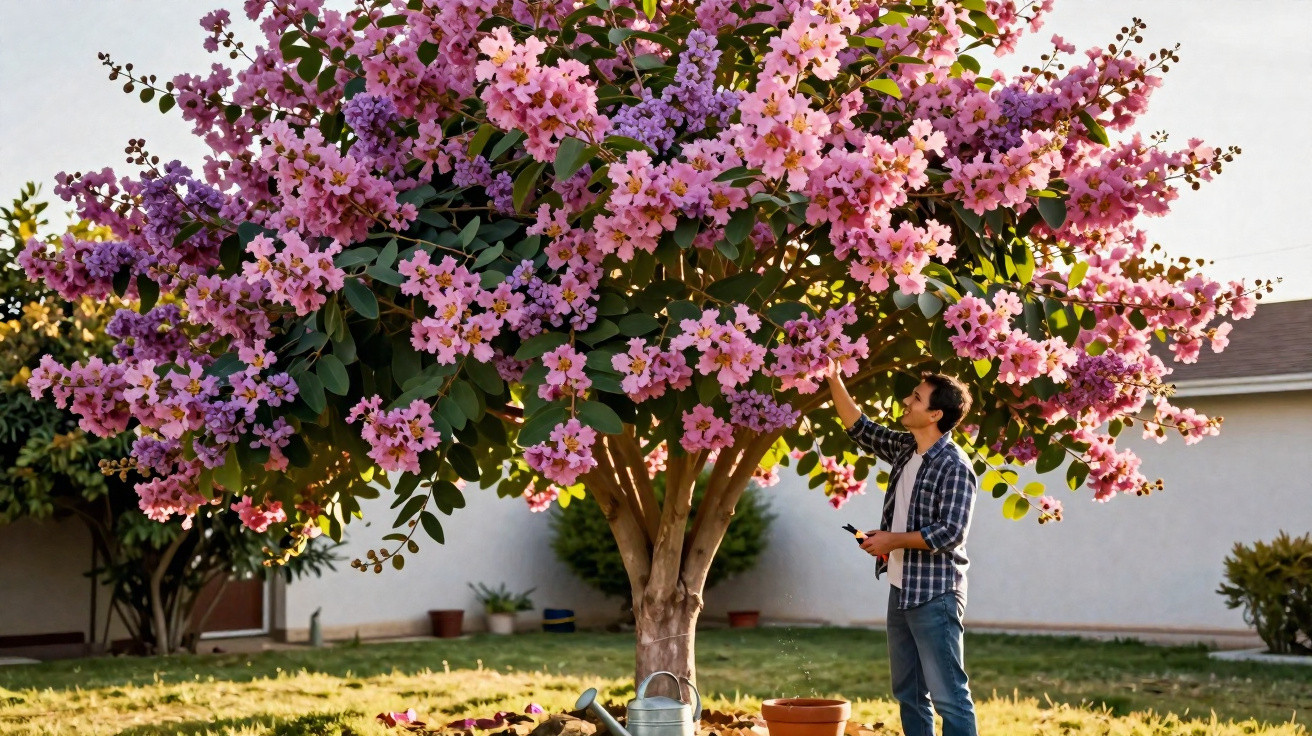
For anyone seeking a high-impact shrub for the garden, the priority is often a species that brings together beauty, resilience and long-lasting flowering. A favourite among many gardeners is Lagerstroemia indica, known as crape myrtle or extremosa. According to the variety and growing conditions, it can reach around 3 metres in height and stay in bloom for approximately 120 days, covering its branches with clusters of pink, white, red, lilac or purple flowers. It also adapts well to different climates and requires little care once established.
Why is Lagerstroemia so popular?
Lagerstroemia’s standout feature is its extended flowering period. Throughout summer and into part of autumn, it produces a profusion of flowers, becoming a focal point in gardens, along pavements and in parks.
Its decorative bark is another appealing trait. It naturally peels away over time, exposing a smooth trunk in varying shades. Even when it is not flowering, the plant continues to provide landscape interest.
How can Lagerstroemia be grown for more flowers?
For abundant flowering, extremosa needs plenty of light. It should ideally be planted where it will receive at least six hours of sunshine each day, in fertile, well-drained soil.
Light pruning during its dormant period can also encourage new shoots, which will bear the following season’s flowers.
- Full sun for most of the day.
- Fertile soil with good drainage.
- Regular watering while the young plant becomes established.
- Fertiliser rich in organic matter.
- Light pruning at the end of winter.
- Enough room for the canopy to develop.
What are the benefits of growing extremosa?
Alongside its long flowering season, this plant has good heat tolerance and can withstand short dry spells once mature. It can be grown as a specimen, forming a small ornamental tree, or used in rows and large flower beds.
Its blooms also attract bees and other pollinating insects, helping to increase garden biodiversity. In many areas, its leaves take on red and orange tones before falling, adding an extra decorative effect in autumn.
- Prolonged flowering.
- Can grow to around 3 metres tall.
- Attracts pollinators.
- Good heat resistance.
- Ornamental bark on the trunk.
- Needs little maintenance once established.
Is this species worth planting?
For those wanting a colourful garden for several months of the year, extremosa is an excellent option. With good sun exposure, properly prepared soil and occasional pruning, it rewards cultivation with abundant flowering and vigorous growth.
When grown in ideal conditions, this ornamental tree can remain one of the garden’s main highlights for many years, needing only basic maintenance.




Comments
No comments yet. Be the first to comment!
Leave a Comment