
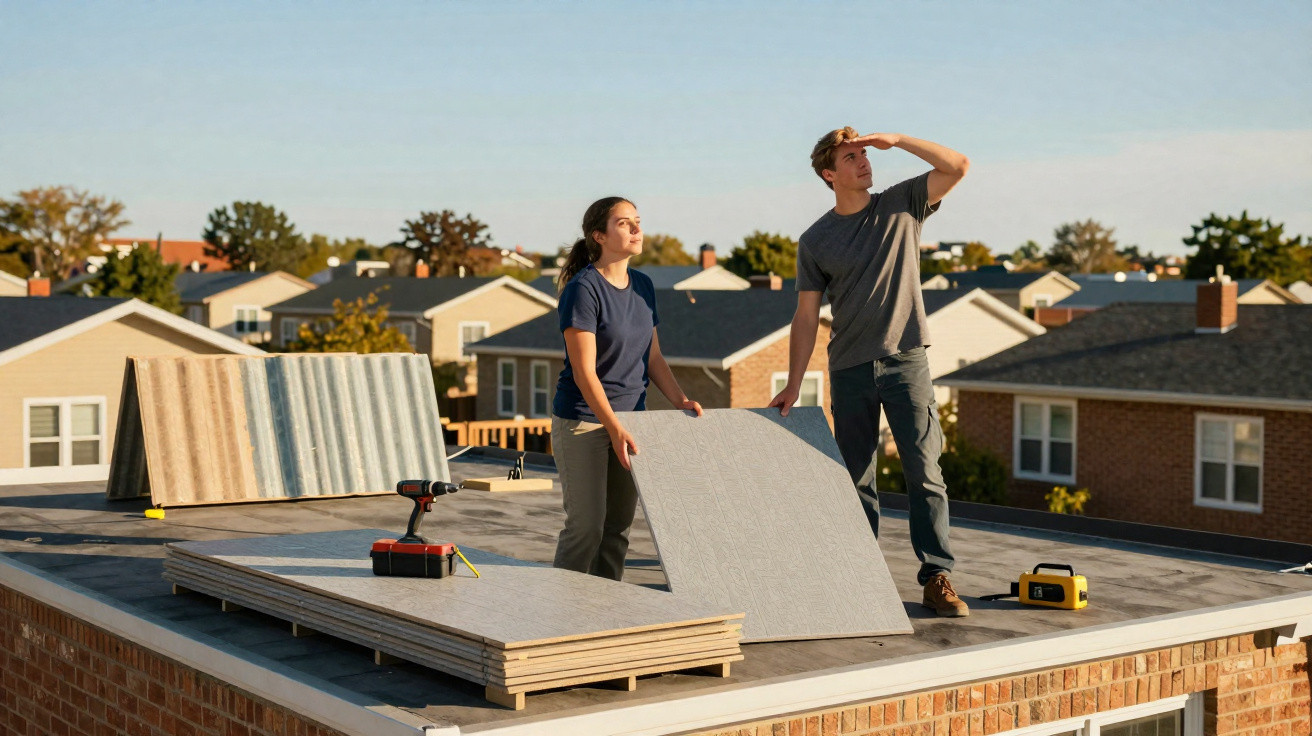
Replacing inadequate roofs with environmentally friendly alternatives can radically change conditions in vulnerable communities. An innovative technology uses recycled waste to produce durable modular panels, providing thermal comfort and effective protection for thousands of low-income families.
How did this sustainable roofing technology emerge?
The innovative system, known as ModRoof, was created in India by ReMaterials, a company founded by Hasit Ganatra in Ahmedabad. The initiative began in Gujarat to address housing challenges faced by vulnerable households living with inadequate metal structures.
Many homes in informal settlements had metal or lightweight cement roofing sheets that became intensely hot under strong sunshine. Residents also had to endure unbearable noise during storms, as well as ongoing financial repairs throughout the year.
- ModRoof: The name of the modular roofing system designed to transform affordable housing.
- ReMaterials: The company responsible for developing and distributing the technology in India.
- Hasit Ganatra: The founding creator who sought an affordable alternative to extreme heat.
What materials are used in these eco-friendly panels?
The composition of the eco-friendly modules centres on the intelligent reuse of widely available resources. The technology brings together discarded recycled cardboard and natural plant fibres, such as coconut husk, giving practical new purpose to materials that would otherwise be sent to landfill or disposed of informally.
Alongside recycled inputs, the industrial mixture contains specific adhesives and special waterproofing additives. The finished product is made up of highly lightweight standardised panels, finished with a protective external coating that provides rigidity and long physical durability.
How does the ModRoof installation process work?
Its modular format makes the components much easier to transport and handle. Each panel measures exactly fifty by fifty centimetres and is fitted in sequence directly onto a supporting framework of wood or metal beams.
Practical Modular Engineering
Sealing against leaks
Applying a high-quality waterproof sealant between adjoining panels ensures that the system is joined securely. This seal completely prevents rainwater from entering the homes.
Because it is a standardised system, individual panels also make targeted maintenance straightforward. If one particular area wears out, only the damaged component needs replacing, without taking apart the entire structure.
This simplified engineering greatly reduces reliance on large bespoke components and specialist labour. The optimised assembly method was designed to suit narrow alleyways and irregular buildings, as set out in the practical steps below for the process.
- Securing standard-sized panels side by side to the beams.
- Carefully applying the sealing product to the module joints.
- Easily replacing individual worn components over time.
What are the main benefits for residents?
For families, the clearest benefit is the substantial improvement in indoor thermal comfort. Technical data linked to the manufacturer shows that these panels can lower the indoor temperature of homes by up to six degrees Celsius, easing the stifling heat.
As well as cooling indoor spaces, the material's robust structure can withstand a concentrated load of approximately two hundred kilograms. This exemplary mechanical strength provides stability in severe weather conditions, alongside further significant advantages listed directly in this list of benefits.
- A reduction of up to six degrees in the indoor temperature of rooms.
- The ability to withstand a point load of around two hundred kilograms.
- The complete elimination of leaks and a significant reduction in rain noise.
What is the long-term social impact of this project?
The estimated service life of this eco-friendly system ranges from fifteen to twenty years. This extended durability enables low-income residents to spread their housing costs, as they can rarely afford improved roofing in a single payment during their lives.
This pioneering combination of industrial standardisation and sustainability demonstrates how discarded waste can take on valuable roles in social architecture. Hundreds of installed homes show that recycling can deliver practical resilience, greatly expanding the global discussion around environmentally responsible and widely scalable construction methods.
References: Combating Climate Change-induced Heat Stress: Assessing Cool Roofs and Their Impact on Household Indoor Ambient Temperature in the Urban Slums of Ahmedabad – PMC




Comments
No comments yet. Be the first to comment!
Leave a Comment