
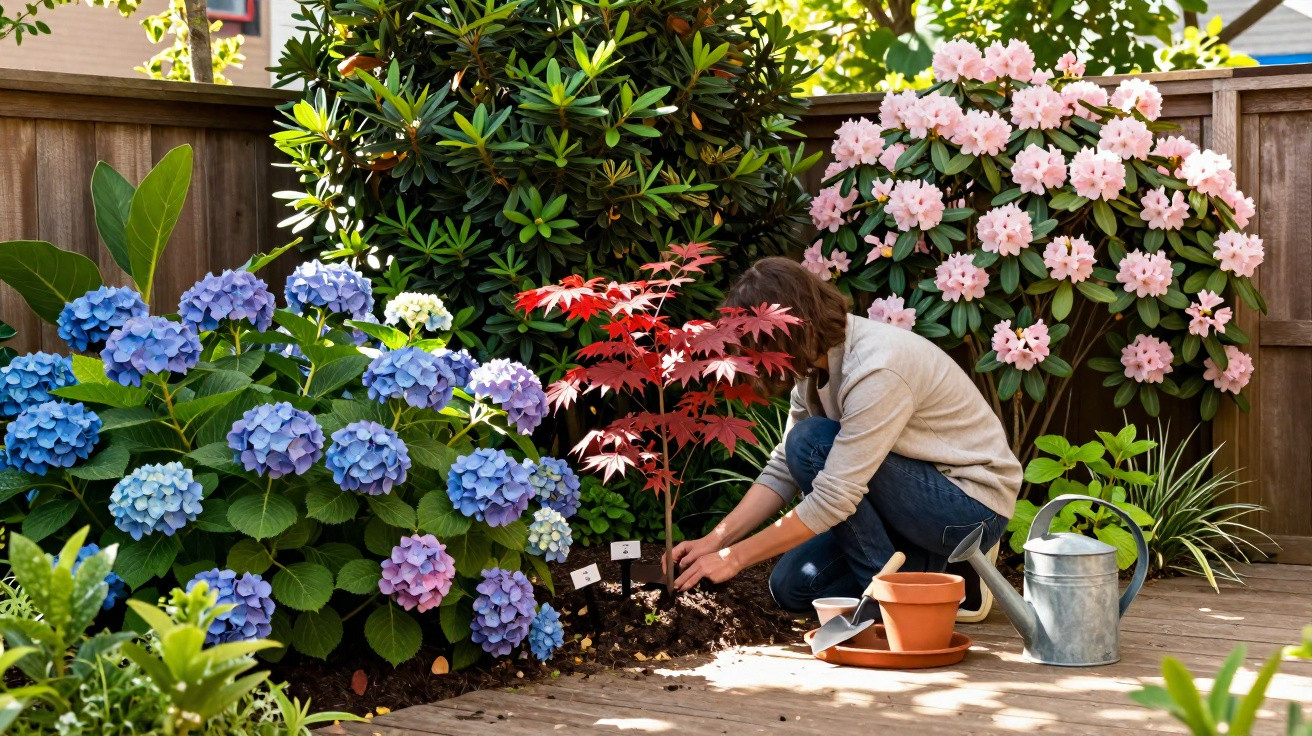
Shade beds are often dismissed as gloomy leftover spaces: bare, difficult to plant and lacking colour. Yet, with the right shrubs, an apparent problem area can become a peaceful, lush retreat. These five resilient species show how north-facing corners, ground beneath trees and areas beside house walls can be turned into real focal points.
Why shade need not be a drawback in the garden
It is worth first reconsidering what many people see as a disadvantage: the lack of sunshine. In fact, it creates a distinctive design opportunity. Rather than relying on the effects of traditional sun-loving perennials, shade plants bring structure, foliage colour, texture and the interplay of light and shadow to the fore.
“With carefully chosen shrubs, a ‘dead corner’ becomes a calm, cool garden space that is wonderfully pleasant, especially on hot summer days.”
Accepting the conditions of the site and selecting suitable species saves a great deal of frustration and maintenance. Instead of continually watering sun plants that have been scorched, you can create a largely stable, long-lasting planting scheme.
Cherry laurel: quick privacy screening for dark corners
Cherry laurel (Prunus laurocerasus) is among the most popular hedge shrubs in German-speaking countries, for good reason. It grows rapidly, retains dense cover throughout the year thanks to its evergreen leaves, and copes remarkably well with both partial and deeper shade.
It is especially useful for quickly screening narrow, relatively dark boundaries or north-facing patios from overlooking neighbours. Its performance in these positions is often underestimated.
- an ideal shrub for tall, dense hedges
- copes with low light far better than many other hedge plants
- tolerates hard pruning and can be shaped easily
It does still require some care. Left unchecked, it will soon form a broad, bulky hedge. Pruning twice a year - once in late spring and again in late summer - keeps it compact. Free-draining soil is also essential, as waterlogging damages the roots.
Hydrangeas: a burst of colour in shade beds
For abundant flowers in the shade, hydrangeas are hard to beat. Their large, rounded or loosely formed flower heads add colour to places otherwise dominated by green foliage.
Choosing the right hydrangea for each shaded spot
Not all hydrangeas are alike. For a permanently dark position, mophead hydrangeas (Hydrangea macrophylla) or rough-leaved hydrangeas (Hydrangea aspera) are the best choices. Both cope well with little direct light, provided the soil remains sufficiently moist.
Slightly brighter locations, such as dappled shade beneath an open tree canopy, are suitable for:
- oakleaf hydrangea (Hydrangea quercifolia)
- panicle hydrangea (Hydrangea paniculata)
These varieties tolerate several hours of daily sunshine, particularly in the morning or late afternoon. Intense midday sun combined with dry conditions, however, soon leaves them with drooping foliage.
“Anyone planting hydrangeas should remember one thing: they are dedicated ‘drinkers’. Consistently moist soil is essential.”
Humus-rich, slightly acidic soil and a thick mulch layer help retain moisture. Their flowers also attract numerous bees and butterflies, making them an important contribution to biodiversity, particularly in densely built-up residential areas.
Japanese maple: delicate elegance for shady spots
The Japanese maple (Acer palmatum) is something of a design star among shade-loving woody plants. Its finely cut foliage, which may be green, red or even two-toned depending on the variety, creates striking accents even without flowers.
Many varieties are happier in dappled shade than in full sun. Their delicate leaves can scorch quickly when exposed to intense sunlight for long periods. Beneath a tall tree, on a north-facing side or in partial shade between buildings, this shrub displays its qualities far more effectively.
Japanese maples are also excellent choices for large containers. They can turn the following spaces into stylish miniature gardens:
- north-facing balconies
- shaded roof terraces
- covered entranceways
A free-draining growing medium, a sheltered location and some winter protection for the root ball in the container are essential.
Fatsia: tropical character in an urban garden
For anyone seeking a more exotic look, fatsia (Fatsia japonica) is worth considering. Its large, hand-shaped leaves evoke tropical rainforest plants and instantly lend a holiday feel to a back garden.
Fatsia enjoys partial to full shade, copes surprisingly well with urban heat and is also highly suitable for containers. It makes its greatest impact beneath tall trees or beside walls where light is limited.
“A single well-positioned fatsia can noticeably enhance a dark entranceway or courtyard - almost like a natural sculpture.”
There is one important point for households with children or pets: the black berries that appear in autumn are enjoyed by birds but are considered poisonous to people and pets. For extra caution, prune off the flower heads in good time or position the plant where small children cannot easily reach it.
Rhododendron: clouds of flowers despite limited sun
Rhododendrons are now well established in the Central European climate. They favour cool, slightly acidic soils and dappled shade, thriving particularly well beneath tall trees that are not too densely planted.
Many modern varieties are remarkably hardy. They retain their glossy leaves during winter and produce impressive clouds of white, pink, red or purple flowers in spring. Their vivid colours are especially valuable during the transitional season, when little else is in bloom.
Like hydrangeas, rhododendrons benefit from a loose, humus-rich soil that holds moisture without becoming waterlogged. A layer of bark mulch or leaf mould protects their shallow roots and keeps the soil cool.
How this shade strategy enhances the entire garden
Using shade shrubs deliberately makes much more effective use of the garden. Rather than overcrowding sunny areas while leaving darker zones bare, you can create a layered plan: sun lovers at the front, shade specialists by the house wall, fence or beneath trees.
| Shrub | Ideal location | Main advantage |
|---|---|---|
| Cherry laurel | Partial shade to shade, boundary line | Fast-growing, evergreen privacy screening |
| Hydrangeas | Shaded beds with moist soil | Abundant flowers, valuable insect plant |
| Japanese maple | Dappled shade, sheltered from wind | Elegant foliage colours and autumn colour |
| Fatsia | Partial shade, protected courtyards | Exotic appearance, large leaves |
| Rhododendron | Beneath tall trees, acidic soil | Early, lavish display of flowers |
Appearance is not the only consideration; there are ecological benefits too. Shrubs filter fine particulate matter, capture CO₂ and stabilise the soil. Flowering species such as hydrangeas and rhododendrons provide food for pollinators, while evergreens such as cherry laurel offer birds shelter and nesting sites.
Practical advice for successful shade planting
Before planting shaded areas, prepare the soil thoroughly. Compacted, dry ground beneath mature trees often needs:
- a generous addition of leaf compost
- deep loosening with a garden fork
- a permanent mulch layer to prevent drying out
Patience matters as well. Many shrubs establish more slowly in shade than they do in sun. A gentle start is rewarded with long life and reliable form. Targeted watering during the first two years after planting ensures successful establishment; after that, most of the species listed cope well with normal rainfall.
Combining shade shrubs with other plants
The result becomes particularly interesting when shrubs are paired with suitable perennials and ground cover. Hostas, ferns and epimediums, for example, work very well beneath hydrangeas and rhododendrons. They fill gaps at ground level and reinforce the calm, almost woodland-like atmosphere.
Japanese maple pairs beautifully with delicate grasses or low-growing evergreen plants such as cotoneasters. Fatsia has the strongest effect when the rest of the area is planted more simply - with uncomplicated green ground cover, for instance - allowing its large leaves to stand out.
Anyone who uses these five shrubs with purpose will soon see shaded areas differently. Apparent problem zones become quiet retreats with surprising variety, enhancing the garden visually, climatically and ecologically.

Comments
No comments yet. Be the first to comment!
Leave a Comment