
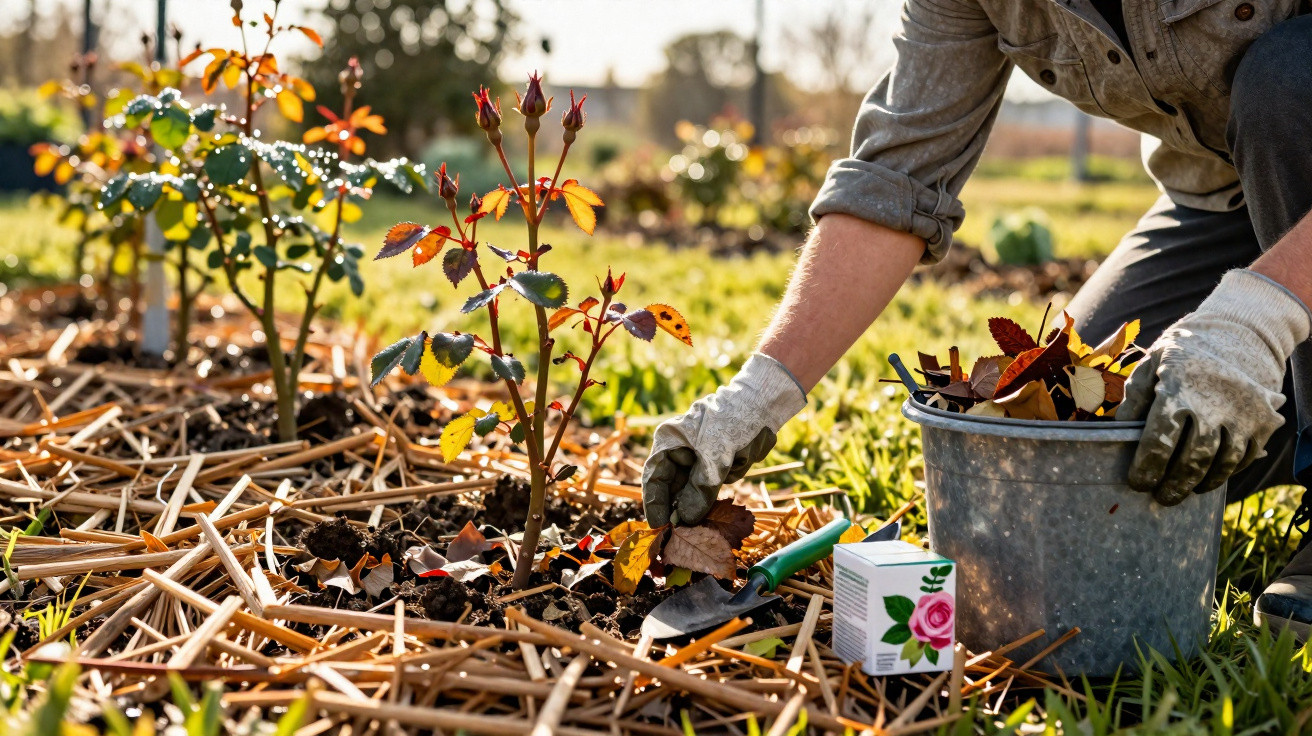
When rose leaves turn yellow in summer, bare shoots are left behind and the flowers appear undersized, the cause is often an avoidable mistake made in spring.
Many amateur gardeners wonder why their roses are troubled by black spots year after year while the neighbour’s bed remains healthy. The explanation is rarely down to having green fingers; it is almost always three straightforward tasks that should be completed in March – precisely when the responsible fungus emerges from its winter dormancy.
What really causes black spots on roses
Known as black spot disease, this is one of the most widespread issues in rose gardens. At first, its appearance seems harmless: small dark marks on the leaves, often surrounded by a yellow halo.
“Within weeks, a handful of inconspicuous spots can turn into bare, weakened roses that barely manage to produce flowers.”
Affected leaves yellow and drop prematurely, draining the plant’s energy. Although it will usually produce new growth, it remains noticeably weaker. During dry summers, these roses suffer from a lack of water more quickly, while aphids and other pests also find it easier to attack weakened plants.
The trigger is a fungus (Diplocarpon or Marssonina rosae). It does not spend the winter in the stem, but in fallen leaves and plant debris around the rose. The process begins with the first mild, damp days of spring: rain splashes spores from the soil on to fresh foliage, and wind carries them to other rose bushes. Temperatures of roughly 13 to 30 °C, together with several hours of wet leaves, are enough for the disease to spread rapidly.
March is the key month: break the cycle now
Anyone wanting healthy roses in summer needs to act much earlier. The crucial month is not June, at the height of flowering, but March, when plants are only just waking up. At this point, it is possible to determine whether the fungus will have an opportunity later in the year.
Three jobs are essential:
- Thoroughly clear the ground beneath the roses
- Apply a protective layer of mulch
- Feed and strengthen the roses purposefully
Remove old leaves: the dangerous fungal reservoir on the ground
The first task is easy but highly effective: clear away all dead material from around the base of the rose. Over winter, the following accumulates there:
- fallen, infected leaves
- small pieces of dead twig
- fragments of bark and weed debris
This is exactly the material that provides the fungus with winter shelter. Leaving it in place gives it a direct launch point for infecting new leaves. Therefore, in March – as soon as the ground is suitable for walking on – clean the area thoroughly:
- Collect every old leaf from beneath and within the rose, including those in the centre of the shrub.
- Remove pruned thin shoots and any weak remnants.
- Dig out weeds around the base so that the area is genuinely clear.
“Important: this material does not belong on the compost heap. The fungus could survive there and later return to the garden.”
It is better to dispose of it in the general waste bin or take it to a local green-waste collection site, where high composting temperatures make it more likely that the fungus will be destroyed.
Apply a mulch layer: protection from splash-back and drought stress
Once the soil has been cleared, move on to step two: spread mulch around the rose bush. It serves several purposes at once:
- It intercepts raindrops and stops spores splashing from the soil on to the leaves.
- It retains moisture in the soil and protects the rose from drought stress.
- It suppresses weeds that would otherwise take nutrients and water from the rose.
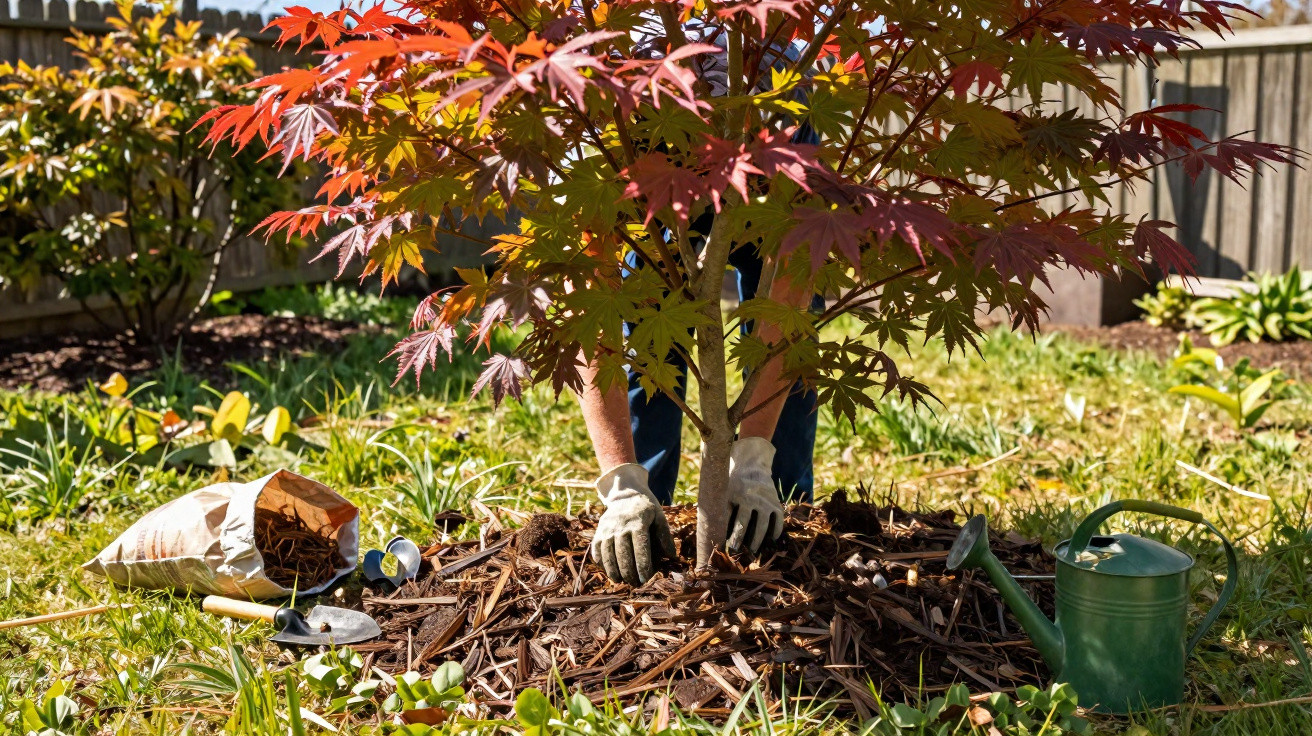
Suitable materials include mature compost, bark mulch, chipped prunings or a mixture of compost and bark. The important point is to make the layer deep enough – around 3 to 5 centimetres is a useful guide.
“Leave a gap of one or two finger-widths around the stem itself so that the bark does not remain permanently damp.”
Those who mulch in March generally need to water less in summer, and their roses grow more evenly. This is especially noticeable in hot years: mulched areas dry out far more slowly than bare soil.
Feed roses correctly: strong roses are less likely to become ill
The third step concerns nutrients. Roses are hungry plants. They produce a great deal of woody growth, numerous leaves and fresh buds over many months. All of this requires energy – and that energy is lacking if a plant enters the growing season underfed.
Late March, when buds are swelling and the first fresh shoots can be seen, is the ideal time for the first feed. Good options include:
- specialist rose fertilisers in an organic-mineral formulation
- mature compost, lightly worked into the soil
- slow-release organic fertilisers such as horn shavings combined with compost
A mineral rose fertiliser works more quickly, whereas organic options support living soil over the longer term. Many gardeners therefore choose a combination: a little mineral fertiliser to get started, with compost providing the basic nourishment.
| Task | Best time | Main benefit |
|---|---|---|
| Remove old leaves | Early to mid-March | Eliminates the fungus’s source of infection |
| Apply mulch | After clearing, in March | Protection against splash-back, moisture retention and weed control |
| Feed roses | Late March, when growth begins | Strengthens the plant and increases flowering power |
How natural rose strengthening can work
Many amateur gardeners also use plant-strengthening products, for example those made from nettles, algae or specialist clays. These products are generally diluted with water, then poured directly on to the soil or sprayed over the foliage.
A typical application might be a few millilitres of concentrate per litre of water, with the mixture then distributed around the root area. These products do not replace fertiliser, but they can increase resilience. As with people, a well-nourished, vigorous rose copes with fungal spores better than one that is exhausted.
Preventive care throughout the season
March establishes the foundation, but care during the rest of the year also matters. To keep black spot in check, follow a few basic rules:
- Do not repeatedly water over the leaves; water directly around the root area instead.
- Plant roses with enough space for air to circulate, allowing leaves to dry quickly.
- Remove spent flowering shoots regularly so the plant can focus its energy.
- At the first signs of spots, pick off affected leaves early and dispose of them.
In wet summers, the disease cannot always be prevented entirely, but the severity of infection can be reduced considerably. Gardeners who have cleaned thoroughly, mulched and fed their roses in spring often find that, while a rose may lose a few leaves, it remains vigorous and free-flowering overall.
If damage is already present: realistic expectations
If roses have stood in the same position for years and are frequently badly affected, patience is needed. One thorough clear-up in March can improve the situation significantly, but it will not restore a chronically weakened plant overnight. In some cases, hard pruning or even moving the rose and replacing the soil may help.
When planting new roses, consider disease-resistant varieties. Many modern cultivars carry certification marks for robustness and show far less black spot. Combined with the three March steps, this creates a very resilient system.
Why the effort in March is genuinely worthwhile
The three tasks – clearing, mulching and feeding – often take only a few minutes per rose. Yet the benefits continue throughout the season: stronger growth, more flowers, less stress after every rain shower and substantially lower fungal pressure.
“Anyone who spends ten minutes tending a rose in March saves many frustrating hours in summer dealing with yellow leaves and ailing shoots.”
For many gardeners, this makes the month a kind of service interval for the rose garden. Take a careful look once, work cleanly and provide sensible care – and there is a good chance that the roses will look in June exactly as imagined in winter: densely leaved, healthy and full of buds rather than black spots.


Comments
No comments yet. Be the first to comment!
Leave a Comment