
This is where the big mistake in the garden starts.
For many people, banana peels are simply ordinary kitchen waste. Seasoned amateur gardeners, however, see them as a free and fairly effective aid for balconies and garden beds. Used correctly, these yellow leftovers can visibly strengthen plants, encourage flowering and also reduce spending on fertiliser.
Why banana peels are so valuable in the garden
The real benefit of the peel lies in what it contains. It provides substantial amounts of potassium, along with smaller quantities of phosphorus, magnesium and trace elements. Potassium in particular has a key function in plant growth.
Potassium strengthens plant cells, promotes sturdy stems and better flower production, and improves resistance to stress and disease.
The peels also add organic matter to the soil. Microorganisms break them down gradually, creating humus that improves soil structure, helps it retain water and holds nutrients for longer. This is a genuine benefit for potted plants and depleted garden soil.
The most common mistake: simply pushing peels into the soil
Although it may seem tempting, fresh banana peels should not just be placed around plants or pushed into the soil. It appears convenient at first, but in practice it often causes problems.
- Fresh peels attract fruit flies.
- Mice or other animals may also be drawn in, depending on the garden.
- The peels break down slowly and can rot.
- They can cause unpleasant smells, especially in containers or on balconies.
For this reason, experienced gardeners recommend preparing the peels first: dry them, compost them or steep them in water. This allows the nutrients to reach the soil where they belong, without the unwanted side effects.
Banana peels in compost: the classic method
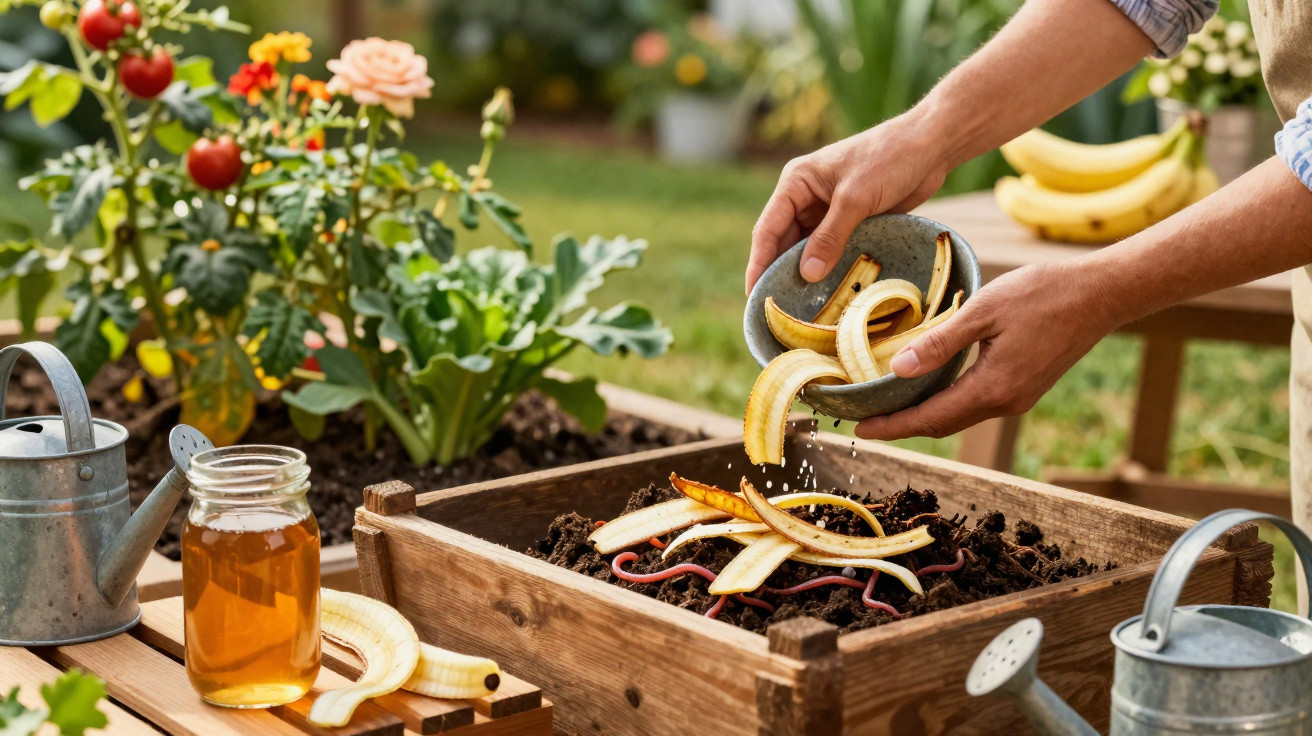
The simplest option is to add them to a regular compost heap or compost bin, where natural decomposition is already working at full speed.
How gardeners do it day to day
- Roughly chop the peels so that they rot down more quickly.
- Mix them with other kitchen waste, such as vegetable scraps, coffee grounds and tea bags.
- Layer them with dry materials such as leaves or cardboard.
- Keep the compost slightly damp, but do not soak it.
After a few months, the peels will have disappeared completely. What remains is dark compost that is rich in nutrients and soil life. It can be worked straight into beds or used as a mulch layer around perennials and vegetable plants.
Vermicompost: when earthworms help out
Anyone with a wormery can use banana peels there as well. The worms are particularly fond of breaking them down. The result is worm compost, often regarded as a kind of “luxury compost”.
It is important to cut the peels into small pieces and not add too much at once, so that the system does not become unbalanced. This approach is especially appealing for households with limited space, such as a city flat with a balcony.
Dried banana peels as a slow-release fertiliser
Drying is another surprisingly straightforward method. It turns banana peels into a fine powder that works as a slow-release fertiliser.
Step-by-step guide
- Wash the peels thoroughly and dry them off.
- Cut them into strips and spread them over a baking tray.
- Leave them to dry completely in the air or sunshine; alternatively, use an oven at a low temperature.
- Grind the dried peels into powder with a blender or pestle and mortar.
- Store the powder in an airtight container.
This powder can be mixed directly into potting compost, or scattered thinly over the surface and lightly worked in. Its nutrients are released into the soil gradually, making it ideal for plants that need regular but not excessive feeding.
Making liquid fertiliser from banana peels
Homemade liquid fertiliser is also very popular. It is easy to measure out and suitable for many houseplants and balcony plants.
Banana water recipe
- Cut 2–3 banana peels into strips.
- Put them in a large container and cover with water.
- Leave for 2–3 days, but no longer, so that the mixture does not spoil.
- Remove the peels, briefly boil the water, then allow it to cool.
- Dilute it with fresh water at a ratio of roughly 1:3 before watering.
The resulting banana water is regarded as a mild fertiliser that invigorates leaves and shoots without overwhelming the roots.
Many gardeners use it about every two weeks during spring and summer. Rather than spraying it directly onto sensitive leaves, it is better used for watering, to prevent sun-related scorching.
Which plants benefit most from banana peels
Not all plants require the same amount of potassium. Some, however, respond particularly well to the extra boost provided by banana peels.
| Plant group | Benefit of banana peels |
|---|---|
| Flowering plants (roses, geraniums, dahlias) | stronger flowers, sturdier stems |
| Fruiting vegetables (tomatoes, peppers, chillies) | better fruit formation, less blossom drop |
| Pot and container plants | slow, even nutrient supply |
| Houseplants with large foliage | stronger, deeper green leaves |
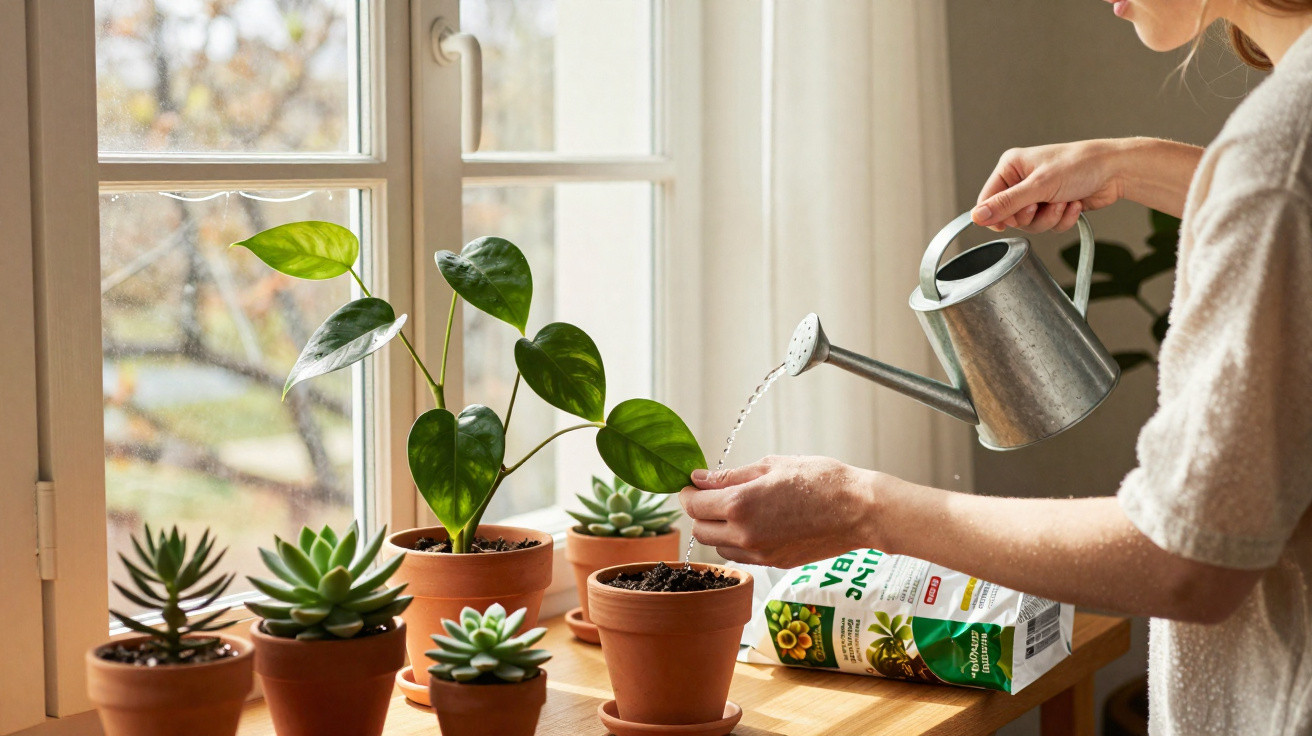
Plants that specifically prefer very low nutrient levels, including many succulents and herbs such as thyme, should receive banana peels only very sparingly, if at all.
How safe is their use, and what should you consider?
Banana peels are normally considered safe in a home garden. Even so, it is worth keeping a few potential pitfalls in mind:
- Use only well-decomposed or dried peels to prevent mould and unpleasant odours.
- Do not overdo it with potted plants, as too much organic material can compact the compost.
- Avoid heavily perfumed or treated banana products.
- Always dilute liquid fertiliser; never pour it undiluted onto dry soil.
Anyone concerned about pesticide residues is better off choosing organic bananas or washing the peels carefully. Residues are mainly found on the surface.
Getting more from bananas: zero waste in everyday life
Looking at the peel differently can quickly change how the entire fruit is used. For gardeners trying to minimise waste, it is an excellent example of a small but effective everyday habit.
The banana goes onto the breakfast plate, while its peel dries on the windowsill before later going into the compost or being turned into powder. This creates a cycle that is kinder to both the budget and the environment, while visibly benefiting plants in the garden bed.
With fertiliser prices rising, it is particularly worthwhile to try straightforward practical ideas like this. Banana peels do not replace a complete nutrient plan; they complement one. Combined with good compost, occasional organic fertiliser and suitable watering, they help create a stable system in which plants are less likely to struggle and harvests are more dependable.
Comments
No comments yet. Be the first to comment!
Leave a Comment