
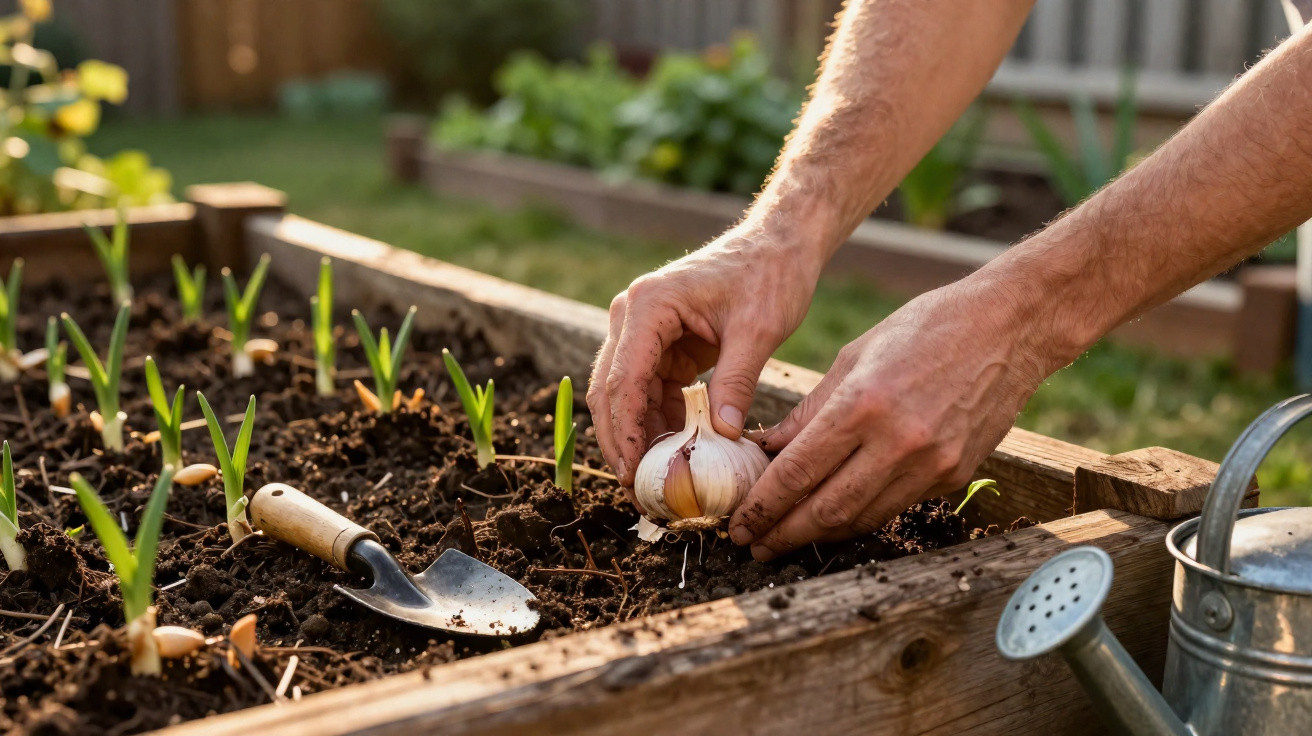
Anyone who enjoys cooking will almost always have garlic at home. It is less often planted in the garden, usually because people assume it requires complicated professional growing methods. Yet ordinary cloves bought in shops can produce surprisingly good results – provided you avoid one crucial mistake and follow a few basic rules.
Why supermarket garlic deserves a place in the bed
Garlic from a shop may not initially look like planting material. It has sat on a shelf, may have been stored for weeks and generally goes straight into the frying pan. However, these bulbs can become a surprisingly productive source of home-grown harvests.
“Every individual clove can – if selected and planted properly – produce a complete bulb for the following year.”
The appeal is obvious: supermarket garlic is inexpensive, available at any time and ideal for anyone wanting to try a garlic bed without much effort. The plant is considered hardy, does not need heavy feeding and prefers relatively poor, sunny positions. Once it has established itself, much of the work takes care of itself.
There is one drawback, though: some shop-bought garlic is treated to delay sprouting. Those cloves may then sit in the bed and do absolutely nothing. To avoid a frustrating outcome, it pays to look carefully at the selection, preparation and site.
How gardeners choose the right garlic bulbs
The first decision can determine success or failure. Not every bulb is suitable for planting. A little careful sorting can greatly improve your chances.
What to look for when buying garlic
- Ideally, choose certified organic garlic
- Select firm cloves with no soft patches or wrinkled skins
- Reject bulbs with dark marks or signs of mould at the base
- White or pink varieties generally perform reliably
At home, separate the bulbs carefully into individual cloves without peeling them. Their skins offer protection from rot and fungi in the soil. There is another useful professional tip: plant the large, vigorous cloves and use the small ones in the kitchen.
“Those who plant the thickest cloves usually harvest the largest bulbs – this is regarded as a simple rule of thumb among experienced gardeners.”
The worst mistake: unsuitable soil and excessive moisture
Garlic needs sunshine and a well-drained bed. Waterlogging is its enemy. Saturated, heavy soil can quickly lead to rot and persistent disease.
This is where the single mistake capable of ruining entire rows occurs: planting a whole area of supermarket garlic in a soggy bed that dries poorly. The outcome can range from rotting cloves to fungal problems that remain in the soil and harm later crops.
If your garden has heavy clay soil, it is better to create small ridges or raised beds around ten centimetres high. Water can then drain away at the sides, keeping the cloves dry enough to form roots without becoming mouldy.
Planting garlic correctly: spacing, depth and the cold trick
Once the bed is ready, planting technique matters. Just a few centimetres can affect root development and the eventual size of the bulbs.
How to set the cloves properly
- Place cloves in the soil with the pointed end facing upwards
- Planting depth: around 3 to 5 centimetres
- Spacing within the row: 10 to 15 centimetres
- Row spacing: approximately 20 to 25 centimetres, allowing air to circulate
- Water only lightly; do not create permanent wet conditions
One technique used by many experienced gardeners is a brief cold period. Put the cloves in the fridge for one to two weeks before planting. The cold mimics winter conditions and can encourage sprouting.
“Cloves that already show a small white or green shoot after their time in the fridge are considered especially promising.”
If nothing appears, there is no need to worry: use those cloves in the kitchen instead of allowing them to occupy valuable bed space.
Garlic care: minimal effort, significant results
Anyone familiar with tomatoes or courgettes is likely to appreciate garlic. It is regarded as an undemanding, easy-care plant, as long as the light and soil conditions are right.
Watering, hoeing and loosening are usually enough
In an average year, garlic plants manage without routine watering. Only during prolonged dry spells is a targeted drink worthwhile. Many gardeners stop watering altogether a few weeks before the intended harvest. This helps the bulbs dry properly and improves their storage life.
As garlic forms shallow roots, occasional and very gentle loosening of the soil surface is enough to suppress weeds and improve soil structure. Deep hoeing would damage too many roots.
Disease protection and crop rotation
To keep fungal diseases and rot at bay, remove leaves with noticeable rust spots early. Growing garlic in exactly the same place for several consecutive years increases the risk of stubborn soil-borne problems.
Within a crop rotation, alternate it with crops that have different requirements. Garlic should take a break after onions, leeks or other alliums. Alongside carrots, strawberries or roses, it can have an interesting additional effect: many gardeners report fewer pests in the immediate area.
“Garlic is regarded as a natural disruptive influence on certain insect pests – one reason to position it deliberately among ornamental and edible plants.”
It is not such a good companion for peas and beans, so keeping some distance is the better option.
Harvesting, storing and saving garlic for next year
Picking garlic at the right time determines how well the bulbs will keep. Harvest too early and they remain small; wait too long and they may split open.
How to recognise the ideal moment
- Around two thirds of the foliage has turned yellow and dried out
- The remaining leaves are still upright but no longer deep green
- The soil is relatively dry rather than wet
At this point, carefully loosen the soil with a garden fork and lift out the bulbs. Leave them to dry for several days in an airy, shaded spot before storing them in nets, bundles or boxes. The less moisture they carry into the storage area, the lower the risk of mould.
For the next planting round, set aside a few particularly attractive bulbs. By taking fresh cloves from the largest specimens each year, you gradually establish your own line, adapted to the soil in your particular garden.
What lies behind the bulb: a brief look at the garlic plant
Botanically, garlic belongs to the onion family and does not produce seeds that are useful in everyday cultivation. It is propagated almost entirely through cloves, also known as daughter bulbs. This explains why every single clove has the potential to develop into a complete bulb.
The plant is sensitive to continual wet conditions because its storage organs are tightly packed and poorly ventilated. That is precisely why the combination of free-draining soil, restrained watering and sound crop rotation matters so much.
Practical ideas for getting started with garlic
Those without a large garden can also try growing garlic in a sizeable pot or window box. A free-draining growing medium with a high proportion of sand or fine gravel remains essential, as does a drainage hole in the container. Compost dries out more quickly in pots, so water in small amounts rather than soaking it all at once.
It becomes particularly interesting when you trial different varieties and sources: a netted pack from the supermarket, a local bulb from a farmers’ market and a certified planting bulb from a specialist supplier. Within one season, this will reveal which option thrives in your own climate and which is better left for the cooking pot.
Comments
No comments yet. Be the first to comment!
Leave a Comment