
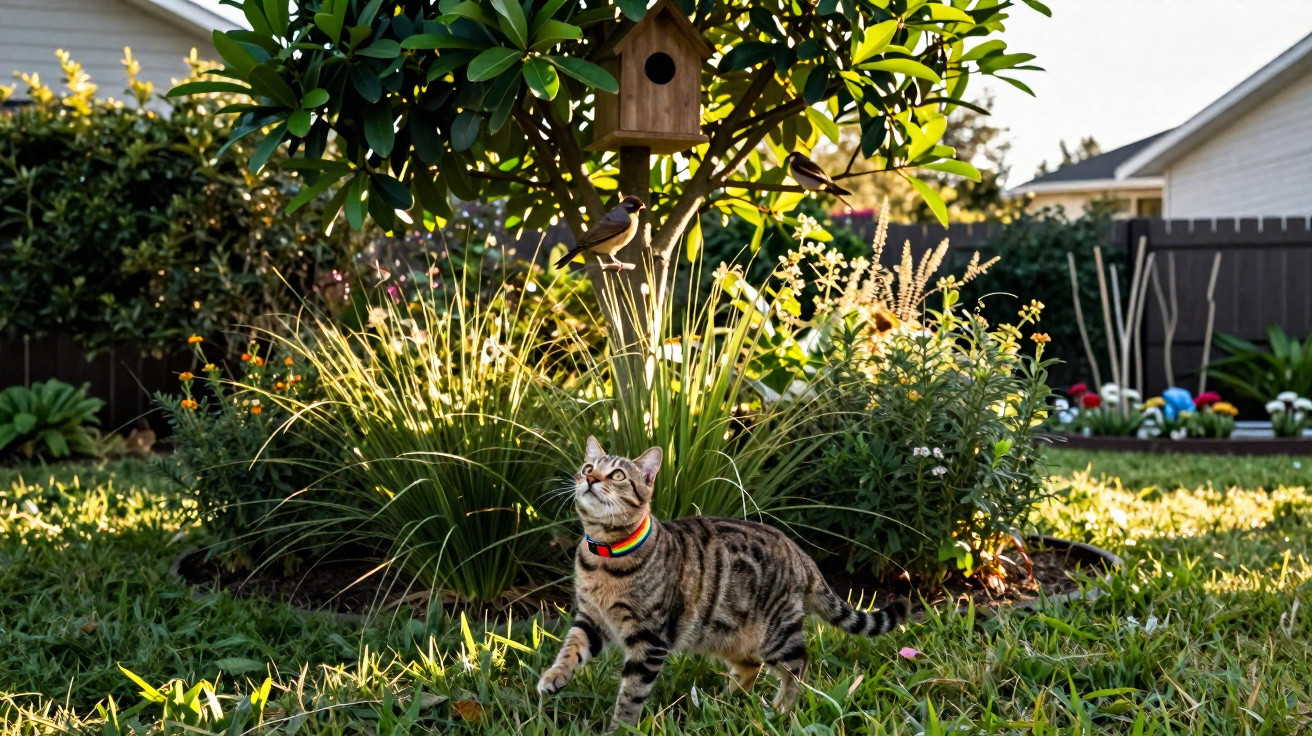
A simple approach can help cats and birds share the garden peacefully.
As soon as temperatures rise, garden life bursts into action: blackbirds pull worms from the soil, tits tirelessly feed their young – while somewhere, a cat prowls through the shrubs. For millions of pet cats, the garden becomes a hunting ground at this time of year. Yet this need not spell disaster for birdlife if owners make a few purposeful changes.
Why the garden becomes a hunting paradise for cats
Domestic cats may be well fed, but their hunting instinct remains strong. Even animals that seem relaxed indoors can instantly switch into stalking mode outside. Young birds are especially vulnerable between March and July. Many are still on the ground or clumsily making their way through low branches – precisely the places cats can reach easily.
One factor makes the situation worse: the “tidy” garden. What appears neat from a human perspective can become a dangerous trap for birds.
- closely mown lawn with no cover;
- leaf litter thoroughly cleared away;
- no piles of branches or twigs;
- shrubs cut back severely.
This leaves adult birds and fledglings without places to hide from attackers. Nests are clearly visible and escape routes are limited. While cats benefit from such surroundings, they are extremely hazardous for birds.
The more “perfect” and sterile a garden looks, the easier it is for the cat – and the worse the birds’ chances become.
The “3-2-1 refuge” principle: turning lawn into a protected space
A straightforward garden-design idea can reverse this situation: create an area that is deliberately structured without being over-maintained. It becomes a wildlife refuge that makes access more difficult for cats. Think of it as a “3-2-1 protected zone”.
Three layers that slow cats down
This protected area uses three planting layers. To a cat, they are confusing and unappealing; for birds, they provide ideal cover:
- Ground cover: dense, low-growing plants such as cranesbill or low sedges. These offer shelter to fledglings and insects.
- Thorny or dense shrubs: for example hawthorn, blackthorn, wild rose, barberry or hazel. They form a prickly obstacle that cats are reluctant to pass through.
- Small trees: a loose canopy breaks up sightlines. Predators find it harder to spot nests, while birds can use this layer as a safe lookout point.
The key is to leave this area largely undisturbed during the breeding season. Anyone who does not want to redesign the entire garden can begin with one corner – perhaps along the boundary or around an established tree.
Leave it untouched from March to July: small actions, major benefits
For birds, structure matters far more than perfection. Even a few easy measures can make a noticeable difference:
- leave at least one square metre of leaf litter beneath hedges;
- keep a pile of wood and branches in a quiet corner;
- leave a strip of grass to grow tall before the first mow;
- leave dead, hollow perennial stems standing until after the breeding season;
- cover bare beds with a thick layer of bark mulch or other organic material.
Half a wild square metre can often do more for fledglings than a perfectly maintained but bare lawn covering the whole garden.
Cat-safe nest boxes rather than buffets for cats
Nest boxes are a blessing – provided they are installed correctly. Many well-intended setups unknowingly turn into convenient self-service counters for a four-legged hunter.
The key rules for cat-safe nest boxes
- Height: around three metres above ground is a useful guideline.
- Distance from jumping points: do not place them with a direct route from walls, horizontal branches or shed roofs.
- Direction: face the entrance east or south-east to keep out rain and intense midday sun.
- No perch: the decorative perch beneath the hole gives cats an ideal point of attack and should be omitted.
- Entrance-hole distance: allow 15 to 20 centimetres between the opening and the inside floor, so that cat paws cannot reach the young.
One common mistake remains particularly damaging: placing nest boxes or feeding stations directly on hedges, walls or low trees that a cat can reach with one jump. This draws birds to exactly the place where they face the greatest danger.
Making the cat part of the solution – rather than only the problem
A cat’s hunting instinct cannot, of course, be eliminated completely. However, owners can reduce the opportunities their pets have. The answer lies in a mix of management, practical measures and a little training.
Planned outdoor access times
The highest-risk periods are the hours immediately after sunrise and shortly before dusk. Many bird species are particularly active then, and young birds may be leaving the nest for the first time. Keeping a cat indoors at these times, or allowing it outside only in a secure area – for example using CatNet or a cat-proof garden fence – can significantly cut the number of successful hunts.
A brightly coloured collar and gentle deterrents in beds
A brightly coloured collar – such as products specifically designed to alert birds – makes stealthy cats more visible sooner to many species. This gives birds a small but valuable head start for escape.
In the garden, carefully targeted scents and plants can also discourage cats from entering particularly sensitive areas:
- dried coffee grounds spread on the soil;
- citrus peel around vulnerable areas;
- strongly scented ornamental plants, such as Coleus canina, planted at the edges.
These methods are no substitute for a securely designed garden, but they can support it. In the longer term, neutering is also worthwhile: it reduces roaming and confrontations with other cats, which can often shorten the time spent in the hunting area.
Owners who keep an outdoor cat occupied, feed it well and provide play-based activity reduce the pressure to hunt everything that moves outside.
A key tree as a starting point: how the trick works straight away
Many owners feel overwhelmed by the prospect of reworking their whole garden. A practical first step is to focus on one “key tree”: the tree most frequently visited by birds, or one near which birds are already nesting.
A mini refuge can be created around this single tree in a short time:
- fit the trunk with a cat guard made from a metal collar or purpose-designed mesh rings;
- remove direct “cat ladders”, such as boards or furniture leaning nearby;
- plant dense shrubs or thorny bushes within a radius of one to two metres;
- leave fallen leaves in place instead of raking everything away.
The effect is often apparent by the following breeding season: birds seem more at ease, cats approach nests less often – and, when they do, birds have more cover in which to escape.
What owners should also know: risks, benefits and misconceptions
One widespread misconception is: “My cat hardly brings home any prey, so it cannot hunt very much.” Many cats eat their victims immediately or leave them hidden in shrubs. As a result, the real number of birds killed often goes unseen. This is exactly why a preventative approach is worthwhile, even when a cat appears harmless.
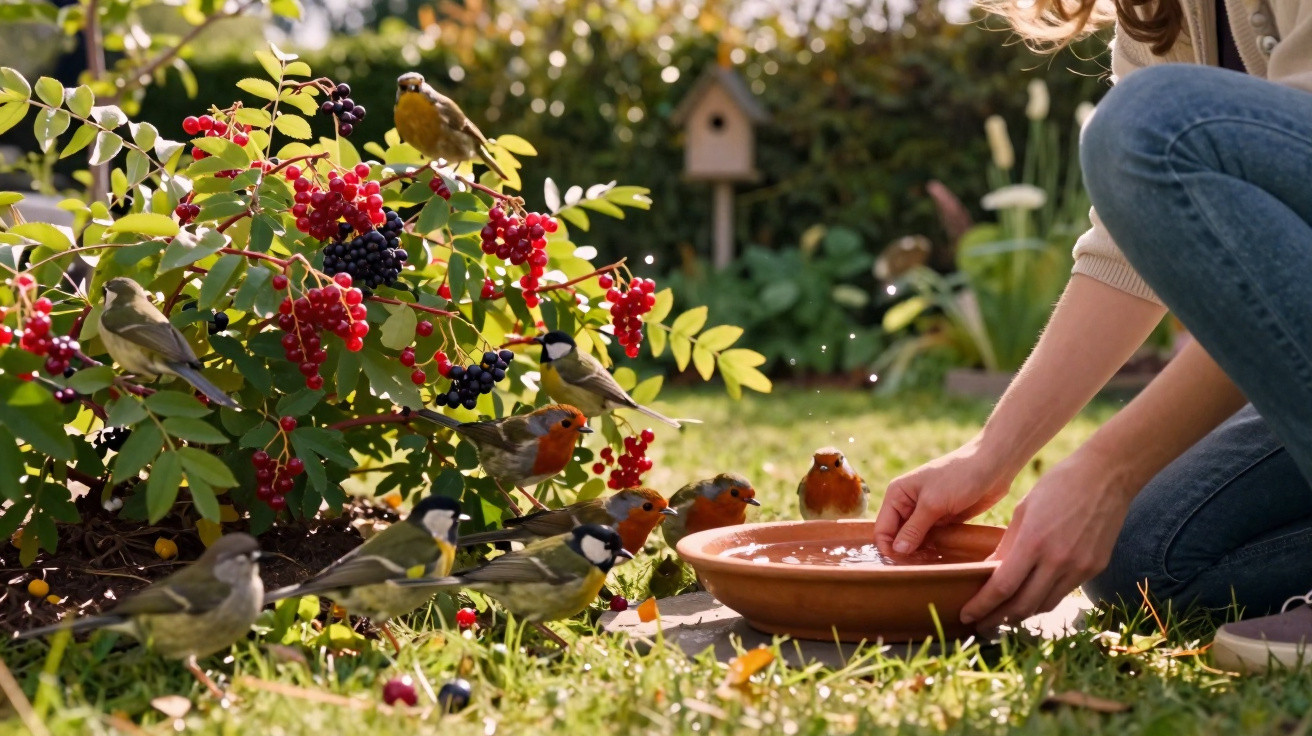
On the other hand, a bird-friendly garden creates several benefits in succession: more insects, more pollination, fewer aphids thanks to tits, and greater natural diversity. Children can experience genuine wildlife observation right on their doorstep – without a trip to the zoo.
Those who already have a highly “sterile” garden benefit twice over. Even small changes improve the microclimate: more humus in the soil, less need for watering, and more shade on hot days. The cat still has places to retreat to, but hunts less successfully.
Combining a structured refuge, thoughtfully installed nest boxes and clearly managed outdoor-access times establishes a new normal: the cat can still go outside, birds have a fair chance, and the garden changes from a battlefield into a living oasis.



Comments
No comments yet. Be the first to comment!
Leave a Comment