
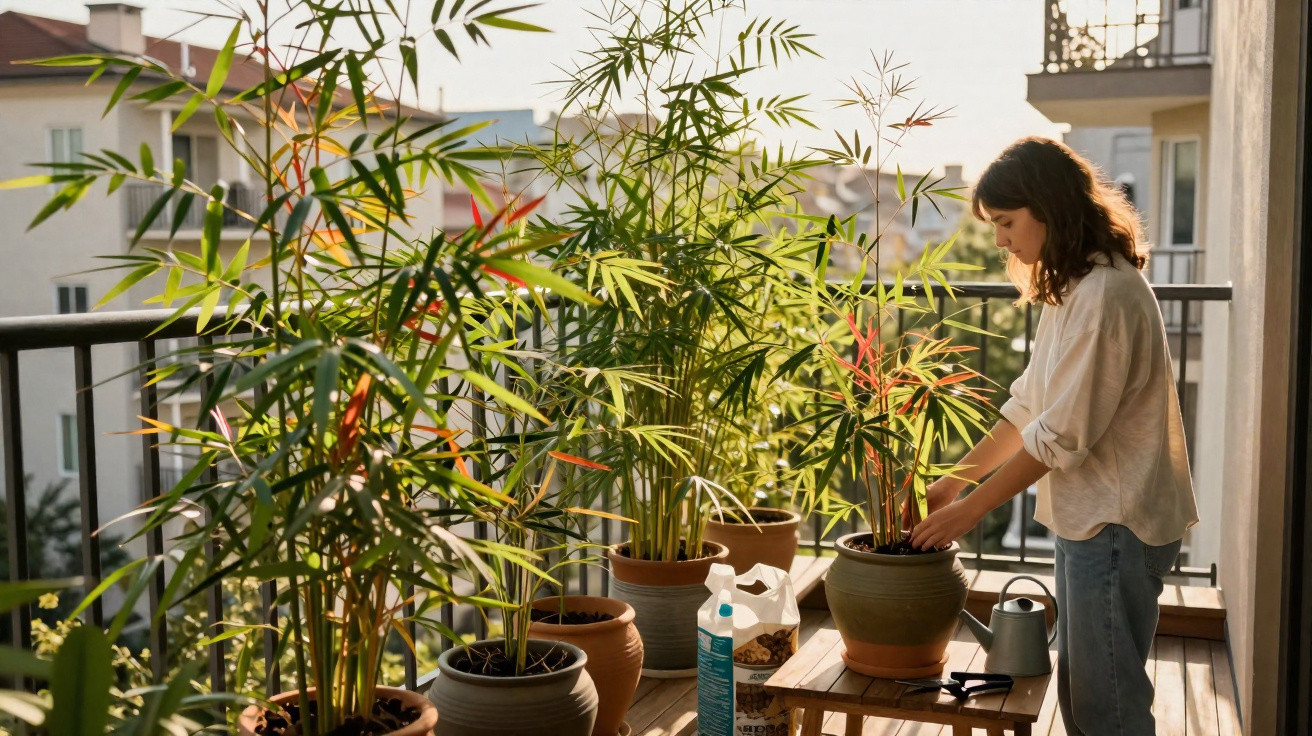
An Asian alternative scores highly for looks, resilience and lower maintenance.
Anyone who wants to bring greenery into city life often ends up choosing bamboo. It quickly creates privacy, looks exotic and stays evergreen – understandably. On balconies, however, this perennial favourite has its drawbacks: it is thirsty, its rhizomes can spread aggressively, and its containers are heavy. That is precisely where another Asian plant comes into its own. It remains compact, makes a visual statement and copes better with unpredictable weather. And yes, it quietly steals bamboo’s spotlight.
Why bamboo reaches its limits on balconies
Bamboo may look stylish, but growing it in a container is more demanding than many people realise. Some varieties need plenty of water, suffer from winter drought and produce invasive runners. Without a rhizome barrier, this can become troublesome in the garden; in a pot, the root ball can quickly turn into a concrete-like mass. That puts strain on your patience, your back – and your budget.
- High water demand during hot spells
- Many varieties produce runners, making a rhizome barrier necessary
- Large, heavy containers are required for stable privacy screening
- Winter sun and wind can cause damage when the root ball dries out
The plant that gives bamboo serious competition
The star is heavenly bamboo (botanically Nandina domestica). Its name is misleading: it is not true bamboo, but an evergreen to semi-evergreen shrub from East Asia. It grows upright and bushy, stays compact in a container and does not spread. Visually, it offers what many people appreciate about bamboo: delicate stems, fine foliage and clean lines. Depending on the variety, its leaves develop reddish tones through the seasons, delicate flower panicles appear in summer, followed later by red berries.
“Heavenly bamboo delivers the exotic look – without spreading rhizomes, XXL containers or the significantly greater maintenance effort.”
For urban balconies, it is an excellent match: slender growth, moderate water needs and very well suited to pots. It also adapts remarkably well to the changing conditions of a city climate. Many varieties tolerate frost down to around –15 °C, and even lower temperatures with some winter protection.
How heavenly bamboo thrives in a pot
- Position: Bright partial shade to a spot away from direct sun; avoid intense midday sun, particularly on south-facing balconies.
- Growing medium: Loose, humus-rich and free-draining. A mix of high-quality container compost, some bark humus and expanded clay works well.
- Pot: It must have drainage holes. A drainage layer of expanded clay prevents waterlogging.
- Watering: Keep evenly moist without saturating the compost. Water thoroughly in summer; in winter, give small amounts on frost-free days to prevent the root ball from drying out.
- Feeding: Apply an organic fertiliser or slow-release feed every 4–6 weeks from April to July.
- Pruning: Hardly necessary. Remove dead or weak stems in spring to keep the plant compact.
- Winter protection: Insulate the pot with hessian or a coconut-fibre mat, cover the root ball and choose a sheltered position.
Eco check: less water, less waste
Every resource matters on a balcony. Heavenly bamboo generally needs less water than thirsty bamboo varieties. As it does not require a rhizome barrier or XXL containers, less plastic and other material is needed. Its delicate flowers attract insects, while preventing the berries from ripening reduces potential risks to pets.
| Aspect | Bamboo (typically grown in a container) | Heavenly bamboo (Nandina) |
|---|---|---|
| Growth habit | Fast-growing, sometimes spreading | Compact, no runners |
| Water demand | High in hot weather | Moderate and easy to manage |
| Winter suitability | Sensitive to dry frost | Resilient with light protection |
| Care | Rhizome barrier/heavy container | Standard container care |
| Appearance | Evergreen, dense screening | Year-round colour, flowers, berries |
Heavenly bamboo varieties that work particularly well on balconies
Not every Nandina grows in the same way. Compact varieties are ideal for smaller balconies. Those who enjoy colour should choose forms with red autumn and winter foliage.
- Fire Power: Very compact, with intense red colouring in autumn and winter.
- Gulf Stream: Dense and rounded, with attractive foliage throughout the year.
- Obsession: Fresh reddish new growth, later becoming rich green.
- Twilight: Striking variegated foliage, better suited to sheltered locations.
A tip for planting in a row as a privacy screen: three to five plants in 30–40 cm pots create a calm, elegant line – considerably lighter and easier to maintain than traditional bamboo hedges in containers.
Strong combinations for low maintenance
For more depth, pair heavenly bamboo with hardy companion plants:
- Japanese sedges (Carex) for soft texture and winter greenery
- Fern varieties for partially shaded corners
- Miniature Japanese maples for autumn colour
- Spring bulbs planted across the container surface for an early burst of colour
Risks, limits and how to avoid them
Although heavenly bamboo is uncomplicated, a few points need attention. In cold pockets with prolonged frost, the leaves may scorch. A protected position and some horticultural fleece will resolve this. On south-facing balconies in full midday sun, the plant may become stressed – a partially shaded position and a thick mulch layer help prevent rapid drying.
The red berries look attractive but can be problematic for pets and some bird species. Where children or animals have access, it is safer to remove developing fruit after flowering. Anyone leaving the berries in place should provide alternatives at the bird feeder and remove them at the latest before periods of high bird activity.
In particularly exposed locations, such as areas above 700–800 metres, heavenly bamboo may shed its leaves. This is not a major problem: it produces fresh growth in spring and gains colour again as the weather warms.
Practical example: privacy screening without backache
A 4-metre city balcony, exposed to wind and facing south-west: rather than two large bamboo containers, each holding 60 litres and weighing more than 30 kg, it has five medium-sized pots planted with Nandina ‘Gulf Stream’. The result after one season: sufficient seated privacy, attractive foliage and watering manageable with two watering cans on each hot day. No cracked container and no shoots emerging into the neighbouring bed – but more room for a table and chairs.
How to identify good-quality plants
- Young multi-stemmed plants with firm, rich green to reddish foliage
- A well-rooted but not matted root ball
- No brown leaf tips or black spots
- A variety label stating mature height and frost tolerance
“Anyone tired of bamboo can achieve the same urban chic with heavenly bamboo – only lighter, more sustainable and easier on the nerves.”
Explained briefly: why the “alternative” often lasts longer
Balance is vital when growing plants in containers. Plants that do not outgrow and split their pots within a few months remain vigorous for longer. Heavenly bamboo grows steadily but slowly. It needs repotting less often and copes with pruning better than many bamboo varieties grown in containers. This saves time, compost and fertiliser – while preserving its appearance for years.
On many balconies, the trend is clear: an exotic look, but with a sense of proportion. Heavenly bamboo achieves precisely that. If it is positioned wisely, potted correctly and cared for moderately, it provides structure, colour and calm throughout the year – and before long, you may wonder whether that heavy bamboo container really needs to return.
Comments
No comments yet. Be the first to comment!
Leave a Comment