
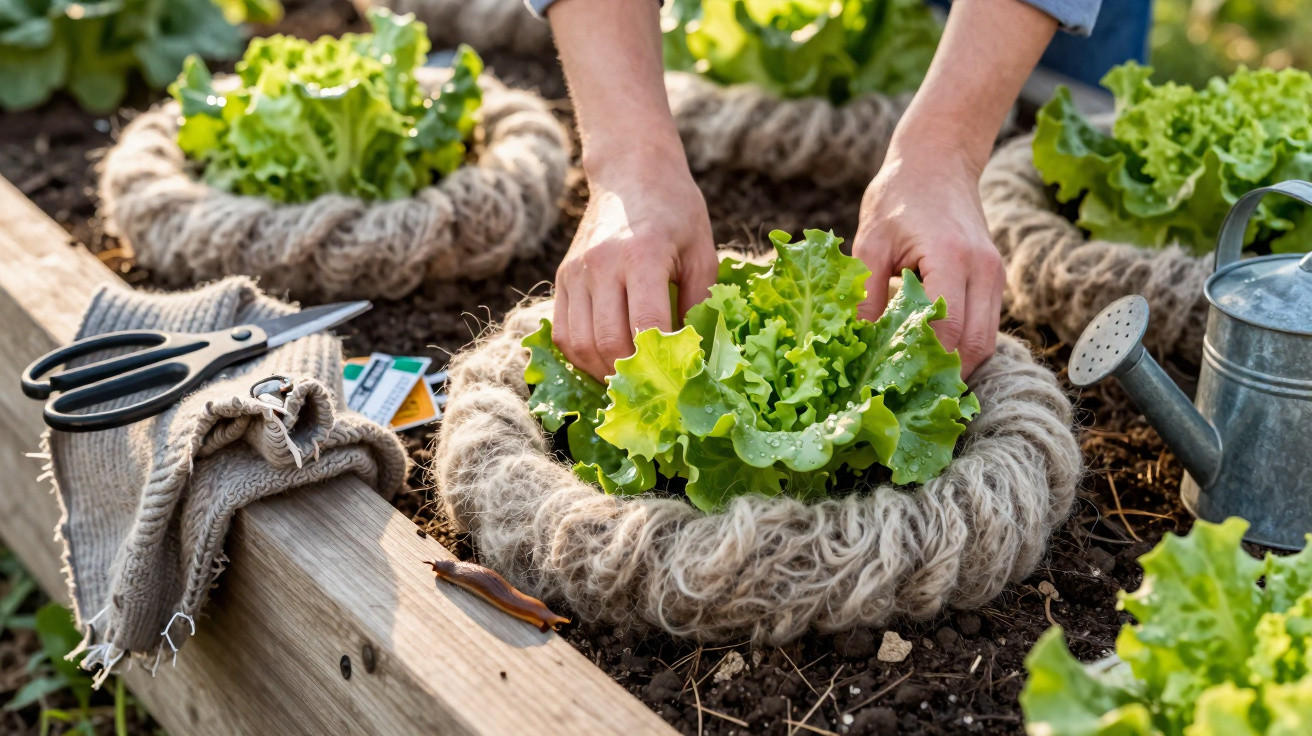
Many gardening enthusiasts know the frustration: lovingly planted lettuces, tender brassicas or young dahlias vanish overnight amid a chaos of slime trails. Rather than reaching for chemical treatments or repeatedly scattering fresh barriers, an unexpected answer is emerging from the old-clothes box. Worn wool jumpers can be turned into a surprisingly effective, long-lasting natural snail barrier.
The quiet pest problem: why snails drive so many gardeners mad
After a mild, damp winter or a wet start to spring, snails become especially active. They shelter beneath leaves, mulch and boards, then emerge at dusk. Their favourite targets include:
- young lettuces and Asian salad leaves
- spinach and chard
- newly planted brassicas
- hostas, dahlias and other perennials with soft foliage
For organic gardeners, this often presents a dilemma: poison pellets are out of the question, beer traps attract even more slimy visitors, and a nightly collection round is not everyone's idea of fun. Many therefore rely on a simple line of wood ash. It can work, but only while dry. After the first heavy shower, the protection is gone.
“The most effective snail deterrent in a wildlife-friendly garden remains an unbroken physical barrier placed directly around the plants.”
Why wool fibres can stop snails
Wool may sound harmless at first, but from a snail's perspective it is a thoroughly unpleasant surface. This is not a chemical effect; it comes down to the fibre's structure:
- Wool fibres have tiny scales on their surface.
- They can absorb substantial moisture, around one-third of their own weight.
- Their surface feels rough and “scratchy” to a slime-producing animal.
For a snail, this means that the slime which normally allows it to glide smoothly across the ground is absorbed by the wool. The fibres become dull and sticky, its body grips more firmly, and every centimetre takes considerably more energy. Many snails turn back before reaching the soft plants in the middle of the bed.
This protective shield works entirely mechanically, biodegrades naturally and is ideally suited to gardens where pesticides are to be avoided.
The crucial detail: an unbroken ring around every plant
For the method to work, one rule is essential: the wool strip must form a complete circle around the plant. Even a small gap is enough for a snail to squeeze through.
The approach is similar to other barriers, such as wood ash or copper tape: dependable protection comes only from a continuous ring placed directly around the base of the plant. Wool has one clear advantage over ash, however: after rain, it simply dries again and retains its rough texture. There is no need to reapply it.
Turning an old jumper into a durable snail barrier
Step 1: Choose the right jumper
Not every knitted jumper is suitable. A high wool content is important:
- at least 80 per cent wool, such as sheep's wool, alpaca or cashmere
- as little synthetic fibre as possible, ideally none
- no coated or felted surfaces
The jumper does not need to have been freshly washed - quite the opposite. Natural wool grease and any remaining scent can be additionally unsettling for some animals. Remove labels, zips, buttons and anything else that is not knitted material.
Step 2: Cut it into strips
Lay the jumper flat and use sharp scissors to cut strips roughly 10 to 15 centimetres wide. Their length depends on the plants you want to protect. A relatively short ring is enough for one lettuce, while large courgettes or perennial borders need longer pieces laid end to end.
Step 3: Position and secure the barrier
Arrange the wool strips in a closed circle around the plant, directly on the soil. The ring should touch the earth lightly and show no sizeable gaps. The denser the layer of fibres, the more uncomfortable it is for snails.
A simple fixing method is worthwhile to stop wind or birds from moving the strips:
- wire staples or pegs made from thick wire
- small stones or pieces of brick
- short wooden sticks pushed diagonally into the soil
In vegetable gardens, a wool collar around young courgettes or pumpkins has proved useful. Depending on the weather, one such band can last for about six months - in other words, an entire season.
“A wool ring laid once can provide protection throughout the season, even after heavy rain.”
Comparison: wool, ash or copper - which is really worthwhile?
Three methods are particularly widespread among gardeners troubled by snails: wood ash, copper tape and wool. Each option has advantages and disadvantages.
| Method | Advantages | Disadvantages |
|---|---|---|
| Wood ash | free, quick to scatter, fairly effective in dry conditions | washes away in rain and needs constant replacement |
| Copper tape | durable, neat appearance, well suited to raised beds | expensive, fiddly to fit, vulnerable to “bridges” of soil or leaves |
| Wool strips | reuses old clothing, remains effective in wet conditions, biodegradable | works only with a high wool content, looks rustic, eventually rots down |
Anyone already clearing out cupboards and with old knitwear to spare can use the wool option at virtually no extra cost. Those who prefer to invest once and then have peace for years are more likely to choose copper around the edge of a raised bed. For short-term winter lettuces in a cold frame, ash can be a useful addition.
How long does the wool barrier last - and what happens afterwards?
Outdoors, wool strips break down gradually. Rain, sunlight, micro-organisms and soil life all decompose the fibres. This process generally takes several months. During that time, the surface remains unpleasant for snails.
Over time, the wool separates into smaller pieces, darkens and comes to resemble part of the mulch layer. At the end of the season, some gardeners simply work the remains lightly into the soil. Wool contains, among other things, nitrogen and may contribute to improving the soil over the longer term - though not at record speed.
Practical tips: where wool rings are particularly useful
The wool trick is especially worthwhile for plants that seem to attract snails almost magnetically:
- individual lettuces growing outdoors
- newly planted young perennials with soft leaves
- young courgettes, pumpkins or cucumbers in an outdoor bed
- flower borders containing hostas or dahlias
Wool rings have their limits in large beds. A combination works better here: give vulnerable individual plants a wool collar, while protecting the rest through traditional snail-collecting rounds and a structurally varied garden with shelters for hedgehogs, ground beetles and toads.
Limits, risks and useful combinations
This method is not an infallible miracle cure. Dense growth, thick mulch or clumps of grass hanging over the wool can form bridges. Snails can then crawl straight across in comfort. It is therefore worth checking occasionally, particularly after heavy rain or weeding.
Wool works best as one component of a broader set of measures:
- keep beds tidy and avoid planting too densely
- avoid snail hiding places, such as loose boards, in the vegetable area
- encourage beneficial wildlife with small stone piles, leaf piles and water sources
- where numbers are high, collect snails in the evening using a head torch
Anyone using old clothing should choose only untreated wool where possible, preferably undyed or colourfast. Heavily treated fabrics or fibre blends containing lots of plastic will introduce microplastics into the bed over time - which does not fit a “zero-waste” approach.
It is also worth looking beyond the vegetable garden: discarded wool textiles can be used as frost protection for container plants, as mulch around berry bushes or as filling material in raised beds. In this way, a once-favourite jumper can move through several garden roles before eventually breaking down completely in the soil.
Comments
No comments yet. Be the first to comment!
Leave a Comment