
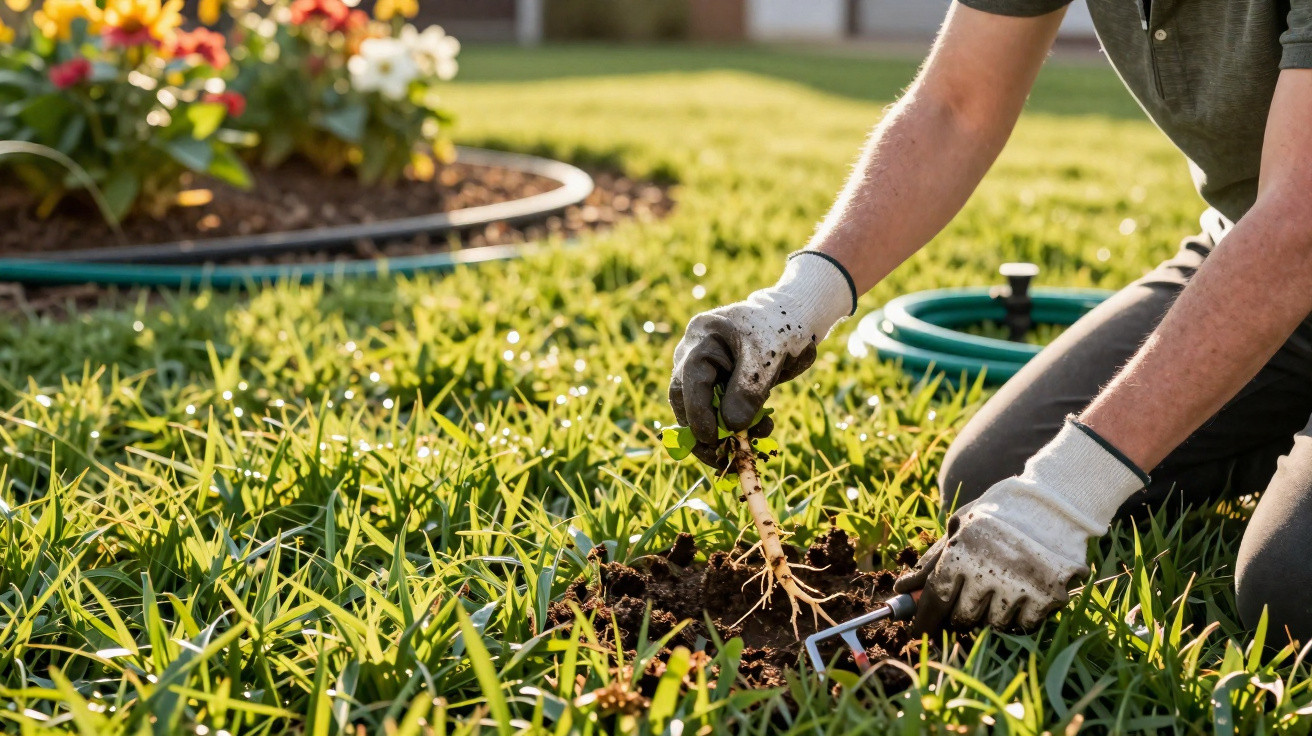
Anyone who finds nutsedge in their garden soon realises that it is no ordinary weed. Although its shoots resemble grass, they can outgrow the lawn within days, creating pale patches and making the area look untidy. The plant’s sophisticated root system, complete with underground tubers, means that simply pulling it out becomes a Sisyphean task.
What makes nutsedge so troublesome
The term nutsedge covers two very similar troublesome weeds: yellow nutsedge and purple nutsedge. Both favour wet, poorly drained soil and often appear wherever water collects, such as in low-lying areas or where lawn sprinklers are incorrectly adjusted.
Typical signs include:
- firm, triangular stems rather than rounded grass blades
- leaves that spread upwards in a V shape
- noticeably lighter, almost yellow-green foliage
- faster growth than the surrounding turf
The key difference between nutsedge and an ordinary lawn lies below ground. Nutsedge produces underground runners carrying numerous small tubers. Every one of these tubers can produce a new plant in the following season.
“Over the course of one summer, a single nutsedge plant can produce hundreds of tubers that survive in the soil for three to five years.”
Pulling off only the visible shoots leaves this underground “store” virtually untouched, which explains why the affected area can be full again just a few weeks later. This is precisely why an effective approach needs to tackle several factors at once: soil, water, lawn care and, where necessary, chemical control.
Wet soil is a warning sign: address the cause before the weed
Nutsedge is a clear indication that something is wrong with the garden’s water balance. The plant makes ruthless use of excess moisture, while lawn grasses suffer in waterlogged conditions.
Rethink drainage and watering
For long-term nutsedge control, begin by assessing the soil:
- Aerate the soil: Use an aerator or garden fork to make holes in the lawn, allowing water to drain away more effectively.
- Install drainage: In troublesome areas, consider having gravel drainage or drainage pipes installed, particularly in heavy clay soil.
- Adjust watering: Water less often but more thoroughly rather than giving the lawn a brief daily soak. Nutsedge thrives on constant surface moisture.
You can carry out a simple test yourself: if the ground remains muddy even two days after rainfall or watering, conditions are ideal for nutsedge. Improving drainage is worth the investment before moving on to further measures.
Mechanical control: dig deeply instead of pulling quickly
In flower beds, vegetable gardens or small patches in the lawn, nutsedge can be tackled mechanically. However, simply pulling at the shoots is rarely successful. The stems break off above ground, while the tuber system remains intact.
How to dig out nutsedge
- Use a narrow spade or weeding knife to cut a circle around the plant.
- Lift the complete root ball with plenty of surrounding soil; do not pull on the shoots.
- Check the area with your fingers or a fork and look for tubers.
- Do not add plant material to the compost; dispose of it with general waste instead.
This careful manual work is often the best option in vegetable beds, where herbicides should be avoided wherever possible. It requires patience, and the process must be repeated regularly as soon as new shoots emerge.
Lawn care as a defensive line against nutsedge
A dense, vigorous lawn leaves nutsedge with very little room to establish itself. Where grass is weakened by nutrient shortages, an unsuitable mowing height or compacted soil, the invader can spread.
These cultivation measures greatly slow nutsedge down
- Mow correctly: Avoid cutting too short; 4–5 centimetres is usually ideal. Longer grass shades the soil and deprives the weed of light.
- Feed strategically: Several moderate applications of fertiliser throughout the year strengthen lawn grasses without scorching them.
- Fill bare patches: Overseed thin or bare areas so that nutsedge cannot gain a foothold there in the first place.
- Relieve compaction: Regular scarifying and sanding improve soil structure.
“The denser the lawn, the fewer opportunities nutsedge has – competition is your best ally here.”
Mulch as a protective layer in beds
Perennial beds and areas beneath shrubs often lack the turf cover that could otherwise suppress nutsedge. A dense layer of mulch is helpful here. Three to four centimetres of bark mulch, woodchip or other organic material blocks light from reaching the soil. As a result, new nutsedge shoots find it much harder to reach the surface.
In especially persistent areas, weed-control membrane or landscape fabric can be laid before mulching and then covered with organic material. This noticeably restricts regrowth, particularly when combined with thorough digging out beforehand.
Chemical products: when herbicides are useful
If good maintenance and mechanical work do not achieve enough, targeted herbicide use may be considered. Specialist selective products for nutsedge are available that largely spare lawns while weakening the problem plant.
| Active ingredient | Best time to apply | Interval before repeating | Use on lawns |
|---|---|---|---|
| Sulfentrazone | Early growth stage | 3–4 weeks | Many warm-season lawn varieties |
| Halosulfuron | From the middle of the growing stage until flowering | 5–7 weeks | Widely lawn-safe |
| Imazaquin | During active growth | 4–6 weeks | Certain warm-season varieties |
These products work best when nutsedge is growing vigorously and actively photosynthesising. The active ingredient can then move into the underground runners and tubers. A single treatment is almost never enough; several applications at the recommended interval are normally required.
Broad-spectrum products for extreme cases
In completely overgrown corners or before fully re-establishing an area, some gardeners use total herbicides containing glyphosate. However, these products kill all green growth, not just nutsedge. Therefore:
- apply only to individual plants, using a spray shield or a brush to protect ornamental plants
- improve soil structure and drainage after the vegetation has died back
- only then sow a new lawn or lay turf
Anyone using chemical methods should follow the product instructions exactly regarding dosage, waiting periods and protective clothing. Incorrect quantities offer little additional benefit but increase the risk to the environment and health.
Combining strategies: how to achieve lasting nutsedge control
Success against nutsedge rarely comes within a few weeks. The aim is not a brief “blasting away” of the weed, but a habitat that remains unfavourable for the plant over the long term.
A possible plan for two to three years
- Identify wet problem areas and adjust drainage/watering.
- Improve lawn care, fill gaps and aerate the soil.
- Dig out severe patches mechanically, and mulch affected areas in beds.
- Carry out targeted herbicide treatments during the growing season.
- Inspect areas regularly and remove new shoots early.
“The combination of drier, well-maintained soil, a dense lawn and targeted measures deprives nutsedge of the conditions it needs in the long term.”
Keeping a small garden diary can also help: record when and where nutsedge appears, which products you use and how the lawn responds. This makes patterns easier to spot, such as areas where a sprinkler consistently runs for too long or heavy equipment compacts the soil.
Frequently asked questions and practical everyday advice
Many amateur gardeners wonder whether a few shoots in the lawn are really a problem. Individual plants will not ruin the garden, but they reproduce unnoticed through their tubers. Acting early avoids major restoration work later on.
Another consideration is that nutsedge is not a classic “poisonous weed”, but it is not an ideal companion for pets or children either. Its tough shoots can scratch paws, and in vegetable beds the plant competes with crops for water and nutrients.
With particularly clay-heavy soil, it is worth taking a broader approach: regularly incorporating sand, creating raised beds for sensitive crops and designing paths so that water drains away more effectively will gradually reduce the garden’s typical wet areas. In gardens like these, nutsedge appears far less often and grows less vigorously.
Anyone building a new garden or completely redesigning an existing one can take preventive action. Plan pipes and rainwater routes carefully, include soakaways and avoid compacting the topsoil too heavily. Decisions made at the outset can save years of battling moisture-loving plants such as nutsedge.




Comments
No comments yet. Be the first to comment!
Leave a Comment