
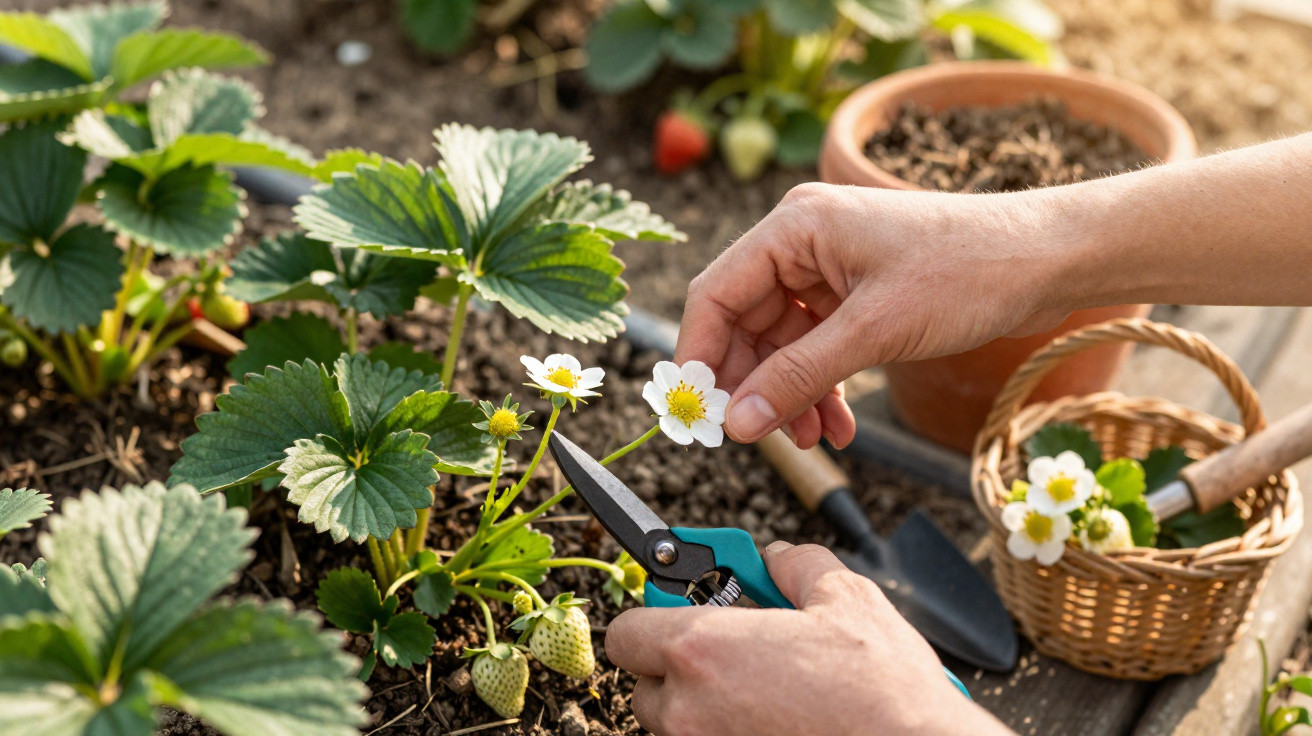
Many hobby gardeners hesitate to remove the first flowers from their strawberry plants – but those who do are often rewarded with noticeably more fruit.
Cutting off fresh strawberry flowers can initially seem counter-intuitive. After all, they signal the long-awaited harvest. Yet this small early-season measure can help plants crop far more heavily later on, produce sweeter fruit and remain productive for longer. Success depends on choosing the right moment, using a clean method and understanding what is happening within the plant.
Why early flowers can harm strawberry plants
Strawberry plants are long-distance runners rather than sprinters. When young plants flower too soon, they immediately direct their energy towards developing fruit. This uses valuable resources at precisely the stage when the plant should first be building a sound foundation.
The result can be a weak root system, limp foliage, smaller berries and a much shorter picking period. These plants are especially likely to struggle in dry or hot summers, as their roots do not reach deeply enough and they can store little water.
“Removing the first flowers forces the strawberry plant to invest in roots and leaf growth first – creating the foundation for a later XXL harvest.”
Rather than putting energy into fruit prematurely, a plant whose flowers have been removed expands its root system. It develops stronger leaves that capture more sunlight and produce more sugar. These reserves are then channelled into larger, more flavoursome berries later in the season.
What happens inside the plant
From energy-hungry flowers to an energy-storing plant
Flowers and fruit are luxury projects for a plant. They require nutrients, water and sugars. Without these “consumers”, the flow of sap is automatically redirected to other areas:
- Roots grow deeper and spread further through the soil.
- Leaves become larger and thicker.
- The stems and crown of the plant become more robust.
- The plant stores more reserves for flowering later on.
With a better root system, strawberry plants can draw more water and nutrients from the soil. This makes them less vulnerable to dry spells and fluctuations in nutrient availability. Vigorous foliage produces more sugar, which later contributes directly to fruit quality: flavour, sweetness and juiciness.
In practical terms, you give up a few early, usually small berries in return for considerably more and better fruit once the main season begins.
The right time to remove strawberry flowers
Timing determines whether this intervention is beneficial or simply damaging. Waiting too long greatly reduces its effect, while cutting too early or too aggressively can put the plant under stress.
When should the first flowers be removed?
- Young plants in their planting year: This is when removing flowers delivers the greatest benefit, particularly for plants planted in spring.
- As soon as the first flower trusses appear: Act when a flower stem rises from the centre of the plant, before the developing fruit becomes visibly swollen.
- At the latest, before fruit develops: Once small green “balls” can already be seen, the benefit decreases substantially.
Gardeners who buy plants in summer and place them in window boxes or pots can also benefit. Strawberries grown in containers are particularly prone to cooling down and drying out quickly, so strong roots are especially valuable.
How to cut off the first strawberry flowers correctly
The task itself is straightforward, but it should be done cleanly and carefully to prevent injuries and infections.
Tools and technique at a glance
- Tools: Use sharp, clean scissors, small garden snips or fine harvesting scissors.
- Where to cut: Snip the flower stem at its base, as close as possible above the crown of the plant.
- Do not pull: Never tug at flowers or stems, as this can loosen the entire plant in the soil.
- Hygiene: Clean the blades beforehand with alcohol or hot water, especially when working on several plants.
The cut should be clean, without crushing the stem. This allows the tissue to “heal” quickly and gives pathogens fewer opportunities to enter.
When does the method provide the greatest benefit?
Removing the first flowers is not suitable for every strawberry plant in every situation. Some circumstances benefit particularly strongly.
| Situation | Recommendation |
|---|---|
| Young plants in their first year | Remove the first flowers consistently and prioritise root development |
| Well-established plants (from the second year) | Usually leave the flowers in place, as the roots are already stable |
| Plants during dry periods or after transplanting | Remove flowers so the plant can recover first |
| Plants that look weak or pale | Improve soil, water and fertiliser first, then consider reducing flowers |
If space is very limited and you have only a few plants in a bed or raised bed, you can apply the method to only some of the strawberries. This makes it possible to compare the results directly.
What to expect after removing the flowers
After one to two weeks, the plants will usually appear denser, fresher and more vigorous. Their leaves stand more upright, look deep green and grow larger. Overall, the planting appears more even.
As the season progresses, stronger flower stems develop. They carry more flowers per stem, support berries more securely later on, bend less often and keep the fruit cleaner because it is less likely to rest on the ground.
“Many hobby gardeners report significantly larger berries and a longer harvest period when the plant was held back during its first flush.”
Thanks to the improved root system, plants cope for longer during summer, need fewer emergency watering sessions and handle brief heatwaves better. This produces noticeable benefits during the main season.
Common mistakes and how to avoid them
Cutting too late
If you wait until small fruits have already formed, the measure loses much of its value. At this point, the plant has already put considerable energy into the fruit. Removing it then means that energy is lost without benefiting root growth.
Further weakening stressed plants
Plants that are diseased, severely dried out or heavily affected by pests should not be subjected to extra stress. In these cases, first:
- ensure regular watering without leaving the soil waterlogged,
- provide a light boost with organic fertiliser if needed,
- remove diseased foliage and ensure air can circulate through the planting.
Once the plants have visibly regained strength, you can carefully intervene when new flowers appear.
Additional tips for more strawberries from your own garden
Removing flowers is only one factor. Anyone wanting a generous strawberry harvest should keep several aspects in mind.
- Position: Choose a sunny, sheltered spot with loose soil and no waterlogging.
- Mulch: A layer of straw or grass clippings protects the fruit and retains moisture.
- Feeding: Apply berry fertiliser or well-rotted compost in spring, but do not overdo it.
- Choice of varieties: Planting a mixture of early, mid-season and late varieties extends the season.
If you grow strawberries in pots, make sure the containers are large enough and use high-quality compost. Flower removal is often particularly noticeable in tubs, because the limited volume of growing medium can otherwise quickly restrict root development.
Why the small sacrifice is usually worthwhile
The hardest part is making the first cut: you remove what you have been looking forward to for weeks. But for young and newly planted strawberries in particular, this step is an investment in the plant’s future.
Instead of producing a handful of early berries, the plants become strong enough to crop reliably year after year. If you are unsure, try the method on only part of your planting. The difference in size, flavour and harvest quantity convinces many gardeners after just one season – turning what seems like a radical step into a regular spring ritual.


Comments
No comments yet. Be the first to comment!
Leave a Comment