
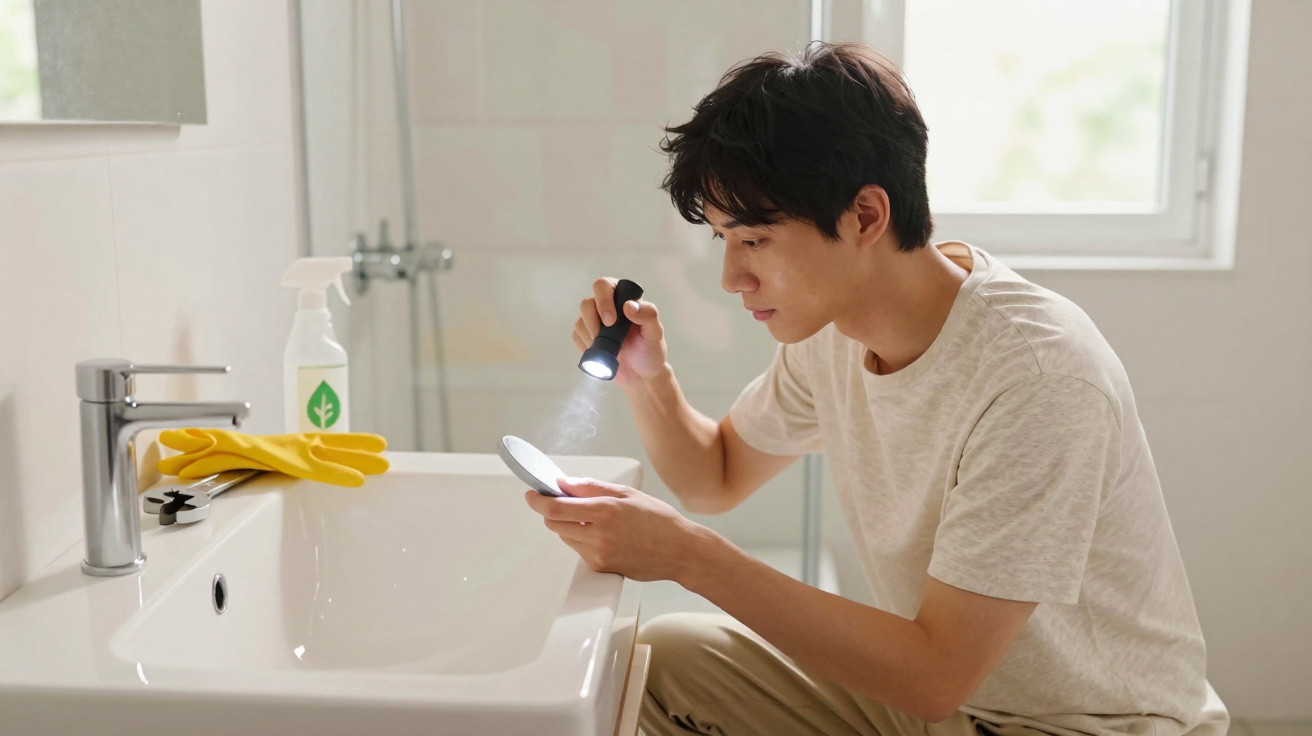
A sewage smell in the bathroom is a frequent issue in flats and older houses, although it can also arise in recently refurbished properties. Even after thorough cleaning, a drain odour can sometimes linger. In most cases, the source lies somewhere in the wastewater drainage system, pipe ventilation or straightforward sealing faults that can be checked without major building work.
What are the most common causes of a sewage smell in the bathroom?
A sewage smell in the bathroom is usually related to the way used water is carried into the drainage network. Beneath washbasins, showers and baths are curved fittings known as traps, which hold water to create a barrier against gases. If this barrier fails, smells can enter the room again.
Soap deposits, hair, toothpaste, grease and hygiene products can build up on the inside surfaces of pipes. Over time, this forms a coating that gives off a strong odour. Poor pipe ventilation, inadequate sealing around the base of the toilet and loose connections can likewise allow gases and unpleasant smells to escape.
Watch a video from the The Cat's Leap in Construction YouTube channel explaining how to identify bathroom odours caused by the trap or trapped gully, and how to solve the issue permanently:
https://www.youtube.com/watch?v=qMiwKIn0N7w
How can you identify where the sewage smell in the bathroom is coming from?
To find the source of a sewage smell in the bathroom, begin by working out where the odour is strongest: the shower drain, washbasin, floor drain or toilet. Using this as a guide, follow a simple series of checks, starting with the most likely causes before moving on to the less obvious ones.
These checks can help establish whether the issue is isolated, such as a dried-out trap, or affects the internal drainage system more widely. Pay attention to how water drains away, concealed damp patches and any unusual noises from the pipes, as these signs often point to the cause of the bad smell.
- Check rarely used drains and run water through them for a few minutes to refill the trap.
- Look inside drains and manually remove any collected hair and debris.
- Inspect the base of the toilet for gaps, movement and damp marks.
- Examine visible traps and connections beneath the basin for cracks, drips or loose threaded fittings.
- Listen for gurgling sounds and notice whether water drains slowly at more than one point in the home.
When does a sewage smell in the bathroom require professional help?
A sewage smell in the bathroom does not always require a plumber, but some signs show that the problem has gone beyond a basic fix. If the odour returns shortly after the traps have been topped up with water, or if it occurs at several drains at once, there may be a fault in the pipe ventilation or a blockage within the internal drainage system.
Leaks in walls or floors, damp patches with no apparent source, recurring blockages and continual gurgling noises may indicate damage to concealed pipework. As gases produced by organic decomposition can lead to headaches, nausea and feeling unwell, a professional inspection can locate the fault with suitable equipment and help prevent risks to both health and the structure of the property.
How can you prevent a sewage smell in the bathroom every day?
Keeping a sewage smell out of the bathroom relies on small everyday habits that maintain the water barrier in traps and limit the accumulation of debris. Using all drains reasonably regularly and taking care over what is disposed of down the basin and toilet makes a difference over time.
It is helpful to clean visible drains routinely, fit hair catchers and monitor any changes in the way water drains, as these are often the first signs that something is wrong with the pipework. By paying attention to these details, you can improve day-to-day comfort and extend the life of the plumbing installation, while avoiding unexpected and more costly work later on.




Comments
No comments yet. Be the first to comment!
Leave a Comment