
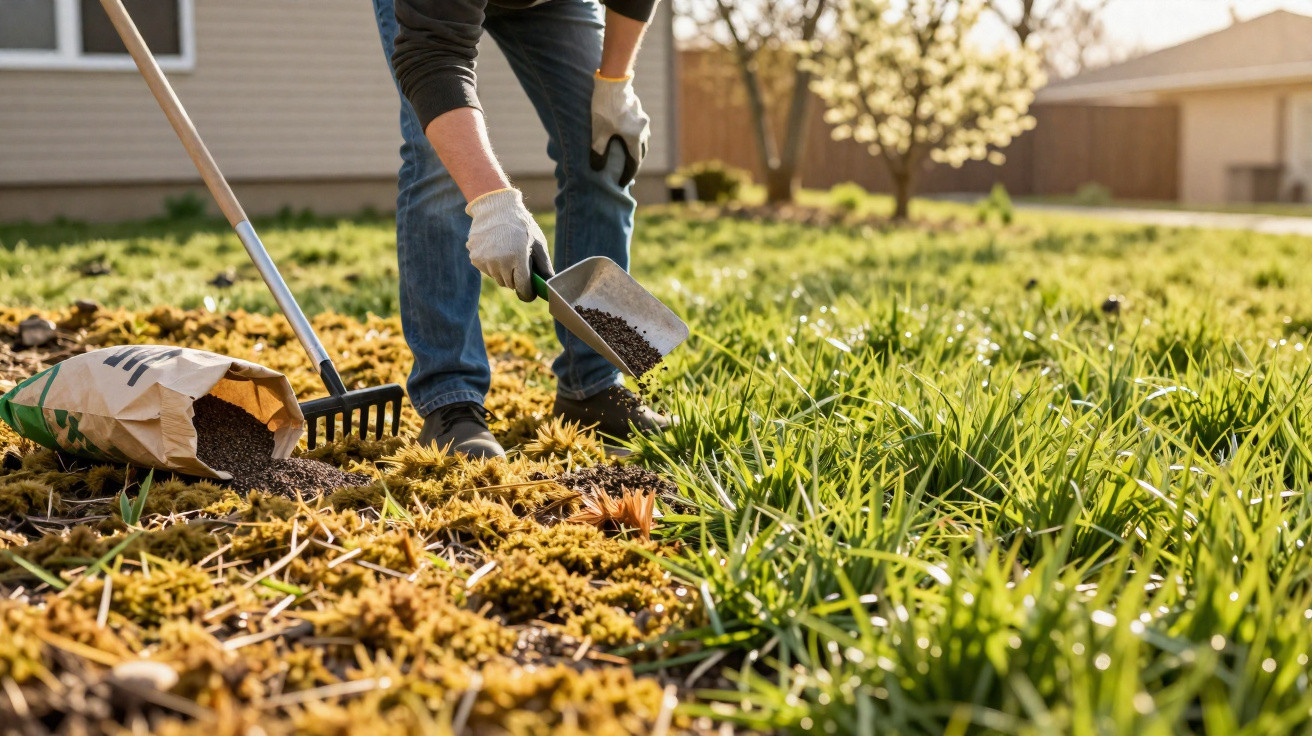
Many amateur gardeners reach first for the lawnmower or a strong fertiliser as the days start getting longer. Professionals take a different approach: they first give the lawn a targeted mineral treatment. The result can be striking – particularly when it is applied at the right time in March and in a particular powdered form that drives out moss and gives the grass a rich green colour.
Why lawns look so battered after winter
Winter takes its toll on every lawn. For weeks, the soil remains wet, sunshine is scarce and overnight frosts return repeatedly. Grass blades come under stress, growth largely stops and the plants’ reserves diminish.
At the same time, there is another issue: soil compaction. Rain, snow and occasional foot traffic compress the top layer. As a result, air and water cannot reach the roots as easily.
In these conditions, plants other than grass thrive – moss above all. It spreads through the gaps, creeps across weak patches and increasingly displaces the grass sward.
“Where moss becomes established, the lawn loses density, colour and vigour – leaving yellowish, patchy carpets in spring.”
This is precisely where treatment in March comes in. The grass begins growing again and its roots become active, but competition from moss is fierce. Taking action now gives your lawn a clear head start for the season.
Why March is the ideal time
In early spring, temperatures gradually rise without heat or drought placing additional stress on the lawn. The soil is generally slightly damp, helping nutrients to soak in. Moss is also still highly active at this time and responds noticeably to treatment.
There is a practical advantage too: the lawn is not yet in heavy use, with children’s football games and garden parties still to come. Applying a powder treatment, removing moss and overseeding afterwards can all be carried out without much disruption.
The secret ingredient: iron sulphate as a lawn treatment
Garden and landscape professionals very often use a mineral powder in early spring: iron sulphate. This product has been established in lawn care for years and performs two jobs at once.
Moss is weakened and disappears
Iron sulphate has a strong effect on moss, as well as many lichens. Soon after application, moss turns dark brown to black and dies. At the normal application rate, the grass itself is not harmed.
The effect is usually visible within a few days, and sometimes even sooner in favourable weather. Previously soft, green cushions of moss become flattened, dry and brittle. This creates the ideal conditions for removing them later from the lawn with a scarifier or a sharp rake.
The lawn becomes visibly greener
As well as controlling moss, the powder supplies an important nutrient: iron. Iron plays a key part in producing chlorophyll, the green pigment in leaves. When the lawn receives enough of it, its colour becomes deeper and more even.
“Many gardeners report that a dull, pale-green area turns into a noticeably richer-looking carpet within just a few days.”
Another advantage is that iron sulphate is comparatively inexpensive when set against specialist fertilisers or extensive soil-improvement work. Costs remain manageable for medium-sized gardens, while the visible result is often considerable.
How to apply iron sulphate correctly in March
This treatment needs some planning, but no degree in chemistry. Above all else, success depends on choosing the right time and using the correct dosage.
Step-by-step guide
- Wait until no severe frost is forecast.
- If the ground is dry, water the lawn lightly one or two days beforehand.
- Dissolve iron sulphate in water (often recommended: 20–30 g per litre).
- Spread it evenly using a watering can with a rose attachment or a sprayer.
- Do not walk on the area immediately afterwards, so that nothing is carried elsewhere.
Most manufacturers provide a precise recommended quantity per square metre. Take these instructions seriously to prevent scorching and avoid placing an unnecessary burden on the environment.
What to watch out for during application
Iron sulphate is effective, but it can also leave marks. If the solution reaches patio slabs, driveways or pool edges, it often causes rust-like stains that are difficult to remove.
Practical precautions:
- Wear old clothing, wellington boots and gloves.
- Spray edges next to paved areas as accurately as possible.
- Rinse watering cans and sprayers thoroughly with water after use.
- Remove any toys or garden furniture from the lawn.
“Schedule the treatment for a dry day when no rain is forecast for the following 24 hours – this keeps the active ingredient where it belongs.”
What matters after treatment
After around two weeks, the moss will normally have died completely and resemble a black layer of thatch within the lawn. This marks the start of the second stage: clearing the area.
Scarifying and overseeding
Use a scarifier or a sturdy rake to remove all dead material thoroughly. This often leaves visible gaps. Although it may initially look dramatic, it provides a good basis for fresh growth.
It is then worth overseeding the bare areas in a targeted way. Choose a lawn-seed mix suited to how the space is used, such as hard-wearing lawn seed for children playing or ornamental mixes for purely decorative lawns.
Finish with an organic fertiliser. It will supply nutrients for the following weeks without overwhelming the lawn. Combining moss removal, iron sulphate, overseeding and moderate fertilising can significantly improve a lawn’s condition over a single season.
Common mistakes and how to avoid them
Several misconceptions about iron sulphate persist. These three are worth knowing:
- Using too high a dosage: More powder does not produce a better result; it is more likely to damage the grass.
- Treating in strong sunshine: The risk of leaf scorch rises in the midday heat.
- Skipping aftercare: Killing moss alone is not enough; afterwards, the lawn must be able to fill in the gaps.
Following these points will mean fewer long-term problems and prevent you from having to start from scratch every spring.
When iron sulphate is not a good idea
On very chalky soils that already have pH-related issues, frequent applications can have an unfavourable effect. In these cases, a soil test is worthwhile for planning long-term measures to improve the structure, such as using sand, compost or targeted lime applications at other times.
Gardens with young children or pets also require a clear rule that the lawn must not be used for a few hours after treatment. Once everything has soaked in and dried, there is normally no further issue.
More practical tips for a rich green lawn in spring
The March powder treatment is only one part of a wider care plan. Anyone wanting to get the most from their lawn should also follow a few simple routines:
- For the first cut, do not mow too short; work gradually towards the desired height.
- Water regularly but deeply rather than constantly giving the surface a light sprinkle.
- Remove leaves and dead plant debris thoroughly in spring.
- Do not store heavy objects permanently on the lawn.
Combining these measures with the targeted use of iron sulphate in March gives your lawn a clear advantage. Moss has fewer opportunities, bare patches close more quickly and the lawn looks noticeably better cared for in spring – without every weekend turning into hard gardening work.



Comments
No comments yet. Be the first to comment!
Leave a Comment