
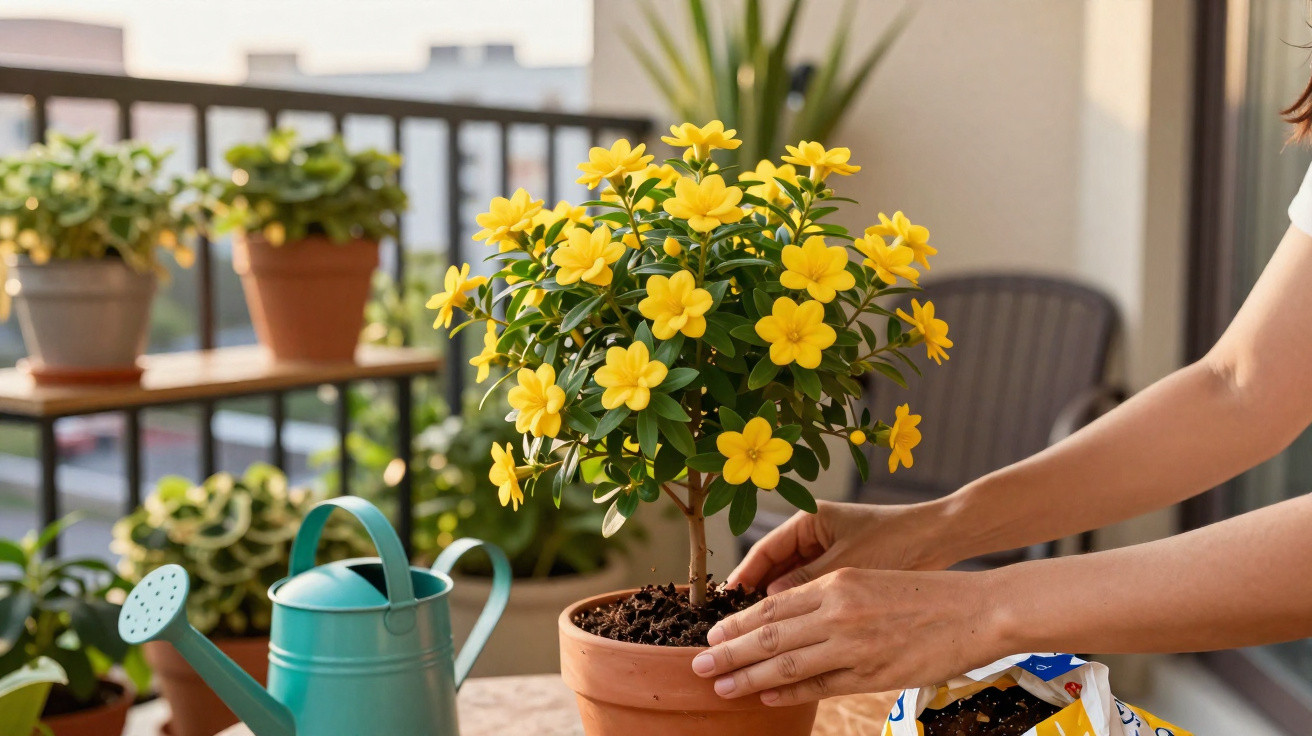
For anyone looking to enhance a balcony with minimal effort, one plant stands out for its sweet fragrance and vivid colour. Manageable in size, easy to grow in pots and visually striking, it combines a gentle honey-like scent with yellow flowers appearing throughout the year. As a result, it is often found on apartment balconies and the small terraces of urban homes.
Balcony plant with a honey fragrance and yellow flowers?
This type of balcony plant is particularly well suited to homes without a garden or outdoor ground space, as it adapts to pots of various sizes and performs well in compact areas. Its key appeal lies in its near-continuous flowering, sweet scent and straightforward upkeep, making it suitable for people with busy routines.
Often, just one well-placed pot can change how the space feels, creating a contrast against the grey tones common in built-up settings. Its delicate fragrance is also more noticeable during the cooler parts of the day, making the balcony a more pleasant and welcoming place to relax.
Watch a video on the YouTube channel Vida no Jardim about growing flowering plants in balcony planters and the care needed to keep them thriving:
https://www.youtube.com/watch?v=kS1z6T6_tO4
Why do the honey fragrance and yellow flowers enhance a balcony?
The plant known for releasing a honey-like scent generally produces flowers in clusters, giving off a light perfume linked to the presence of nectar. This attracts bees and other pollinators, subtly bringing wildlife to the balcony, even in high-rise and densely built urban areas.
The display of yellow flowers makes a strong visual impression, standing out against pale walls, metal structures and cool-toned flooring. On larger balconies, several pots can be grouped together to create a dense flowering display, almost like a plant curtain, which may also help soften heat reflected by hard surfaces.
Essential care: pot, growing medium, light and watering
For this species to grow well, selecting the right pot and growing medium is essential, along with managing light exposure and watering. On small balconies, medium-sized pots with adequate depth are enough; in larger spaces, bigger containers can create the effect of a shrub or clump, provided they have suitable drainage holes.
These requirements can be organised into a few straightforward steps, making the routine easier and helping to avoid common mistakes, especially for those new to growing plants in flats.
- Add a layer of small stones or expanded clay to the base of the pot to improve drainage.
- Make a light growing medium using topsoil, organic compost or humus, plus coarse sand or perlite.
- Keep the pot somewhere with good indirect light or a few hours of direct sunshine.
- Water only when the surface of the growing medium feels slightly dry, avoiding waterlogging.
- Feed every 30 to 60 days with products intended for flowering plants.
How to create a fragrant, low-maintenance balcony
A practical way to make the most of this plant is to pair it with other low-maintenance varieties, such as aromatic herbs and green foliage plants. On small balconies, two or three pots set at different heights create a layered effect, keeping the yellow flowers prominent while spreading the fragrance around the area.
In larger spaces, it can serve as a focal point, surrounded by neutral-coloured plants or contrasting foliage to form a living display throughout the year. With the right pot, a suitable growing medium and basic attention to light, watering, feeding and light pruning, the balcony can retain consistent colour and fragrance without demanding a complicated routine or much daily time.


Comments
No comments yet. Be the first to comment!
Leave a Comment