
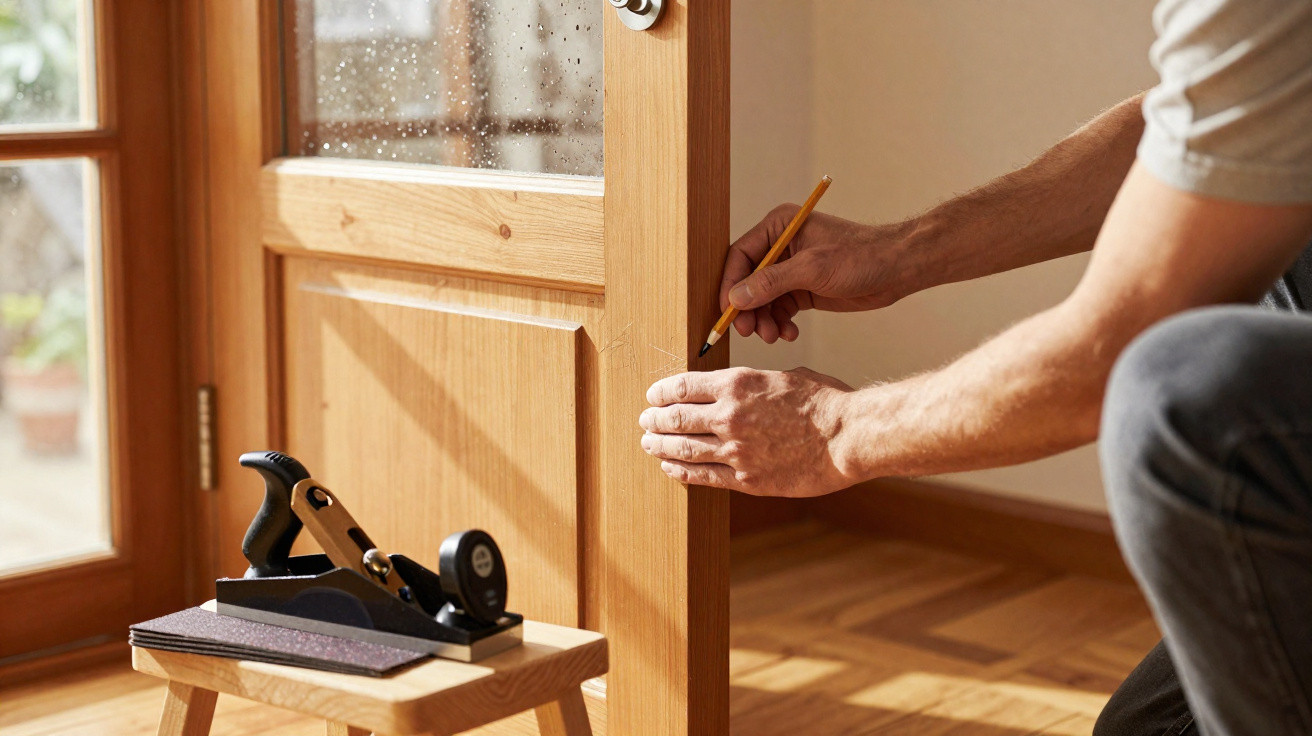
A swollen wooden door will often stick because timber takes in moisture from the air, expands and loses the clearance that should remain between the door leaf and frame. Before sanding or cutting anything, establish whether swelling, loose hinges, built-up paint or unsealed edges are causing the issue.
Why does timber swell in humid conditions?
Timber is hygroscopic, meaning it absorbs and releases moisture as its surroundings change. During wet spells, in poorly ventilated bathrooms, humid kitchens or on inadequately sealed external doors, the leaf can expand enough to rub against the frame or floor.
This movement is often seasonal. If the door sticks only on damp days and operates normally in dry weather, deal with moisture and sealing first rather than removing timber without locating the exact point of contact.
How can you find where the door is sticking?
Close the door slowly and note the first place where it makes contact. Shiny patches, scraped paint, timber dust, localised squeaking and resistance near the handle can all reveal the area with insufficient clearance.
- Top of the door: may point to swelling or a misaligned frame.
- Lock side: commonly occurs when the timber has expanded across its width.
- Bottom edge: may mean the door is dropping because of loose hinges, or touching a damp floor.
- Hinge side: normally requires the screws to be adjusted before sanding.
- Marked door frame: identifies the rubbing point more accurately than the door leaf itself.
What simple repair should you try before sanding timber?
Start by inspecting the hinges. Tighten the screws, check that the door leaf has not dropped, and look for movement in the frame. A slightly misaligned door can look swollen but may close properly again after a straightforward adjustment.
Where there is only slight rubbing, clean the edge and apply a thin coating of clear wax or dry soap to the contact point. This will not fix severe swelling, but it can temporarily reduce sticking while the timber dries and you decide whether material needs to be removed.
When should you sand or plane a swollen wooden door?
Sand only once you have marked the exact rubbing area and confirmed that the door still sticks after the room has dried out and the hinges have been adjusted. Taking off too much timber will create gaps once the dry season returns.
- Mark the rubbing point with a pencil before taking down the door.
- Use medium-grit sandpaper only on the affected section, working with the grain.
- Remove a small amount at a time, testing the fit before proceeding.
- If the sticking is severe, planing must be minimal and carefully controlled.
- Once sanding is complete, seal the exposed timber with varnish, paint or timber sealer.
A swollen wooden door stops swelling only when the timber is protected
The permanent repair does not end with sanding. The newly exposed edge needs a protective finish, especially the top and bottom of the door, which are often left unvarnished and absorb moisture quickly.
To prevent the issue returning, keep humid rooms ventilated, repair leaks, use appropriate seals on external doors, and reapply varnish or paint when the finish becomes worn. With correctly adjusted clearance, secure hinges and sealed timber, the door will no longer stick whenever the season changes.






Comments
No comments yet. Be the first to comment!
Leave a Comment