
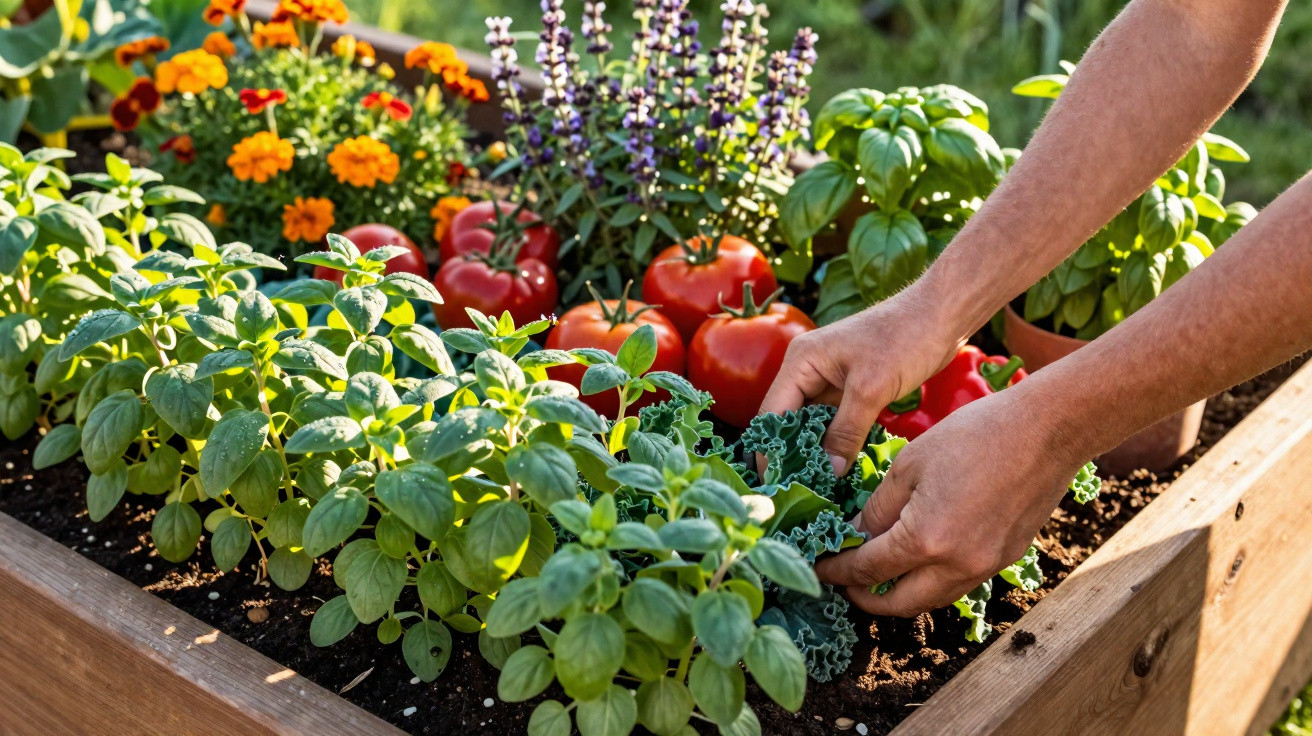
Used wisely, oregano brings more than flavour to the kitchen: it also creates a reliable line of defence against pests in the garden. This Mediterranean perennial thrives in sunshine, lean soil and dry roots, making it an excellent match for many popular vegetables, herbs and flowers. Here is which neighbours benefit oregano, which plants it protects, and where it is better to leave some space.
Why oregano is such an effective companion plant
Oregano is one of those herbs that does far more than season pizza. In the vegetable patch, its essential oils act as a quiet bodyguard.
“Oregano’s aromatic compounds confuse pest insects, attract beneficial insects and protect the soil – all without chemicals.”
Its key benefits include:
- Pest deterrence: Its intense scent masks the trail of vulnerable vegetable plants.
- Soil protection: Its low-growing habit covers bare ground, suppresses weeds and helps retain moisture in the soil.
- Attracting beneficial insects: Oregano in flower is highly attractive to bees, hoverflies and parasitic wasps.
- Antimicrobial properties: The plant produces compounds that can slow fungal diseases in the surrounding area.
The more suitable its position is – sunny, well-drained and relatively low in nutrients – the more pronounced these effects will be.
The best vegetable companions for oregano
Tomatoes: a classic pairing with added protection
Tomatoes and oregano work together in the bed almost as naturally as they do on the plate. The herb’s fragrance masks the scent of tomato plants, which would otherwise attract aphids and tomato hornworms.
Placing oregano around the base of tomato plants creates a kind of scented barrier. During high summer, oregano also benefits from a little shade beneath dense tomato foliage.
“Oregano around the tomato plant can reduce fungal problems in the soil and lessen infestations of sap-sucking insects.”
Peppers and chillies: more fruit through pollinators
Sweet peppers and hot chillies perform especially well beside compact herbs. Oregano does not deprive them of light, yet it attracts insects that improve pollination of their flowers. This can noticeably increase fruit set.
At the same time, its essential oils deter spider mites and aphids, which often appear on peppers during warm summers.
Brassicas: protection from hungry caterpillars
Crops in the cabbage, or brassica, family – including white cabbage, broccoli, cauliflower and Brussels sprouts – are frequently troubled by cabbage white caterpillars. They can strip whole leaves in a short time.
Oregano scattered between brassicas disrupts these butterflies when they are laying eggs. The combination of cabbage and herb scents makes suitable host plants harder to locate. Oregano flowers also draw parasitic wasps, which lay their eggs in cabbage white larvae – biological pest control directly in the bed.
Cucumbers and cucurbits: scented protection against beetles
Cucumbers, courgettes and pumpkins are popular targets for cucumber beetles and squash bugs, which can spread disease and destroy young plants. Oregano planted nearby confuses these pests with its scent.
It is best positioned along the edge of the bed rather than among the trailing stems, so the plants do not compete for space.
| Vegetable companion | Main benefit of oregano | Recommended spacing |
|---|---|---|
| Tomatoes | Protects against caterpillars and aphids | 30–45 cm from the plant base |
| Peppers & chillies | Attracts pollinators, keeps mites away | 25–40 cm apart |
| Cucumbers | Fewer beetle infestations, better flavour | 45–60 cm apart |
| Courgettes & pumpkins | Confuses squash bugs | 60–75 cm from the trailing stems |
Strong herb and flower companions for oregano
Basil: kitchen favourites grown together
Basil and oregano are considered a dream team in the kitchen, and they also grow well together in a bed despite having somewhat different watering preferences. Basil likes consistently moist conditions, whereas oregano prefers drier soil.
When growing them side by side, targeted watering solves the issue: direct water close to the basil and only water the oregano sparingly. In return, you get a double harvest and a varied mix of beneficial insects attracted by both herbs’ flowers.
Thyme: a Mediterranean partnership against pests
Thyme and oregano have almost identical requirements: plenty of sun, free-draining soil and little fertiliser. Together, they form a fragrant herb carpet that is unappealing to slugs and avoided by many harmful insects.
“A combination of oregano and thyme works like a natural protective carpet – decorative and practical at the same time.”
Visually, the fine thyme foliage contrasts attractively with oregano’s broader leaves. The pairing is ideal for herb spirals, dry-stone walls or sunny bed edges.
Marigolds: double protection above and below ground
Marigolds have long played a leading role in mixed planting schemes. Combined with oregano, they reinforce the protective effect: while oregano drives away above-ground pests, marigolds target nematodes in the soil.
Beneficial insects such as hoverflies and lacewings are also attracted, and their larvae consume huge numbers of aphids. Planting this pair around sensitive vegetables creates a noticeable safety zone.
Nasturtiums: a trap crop for aphids
Nasturtiums act as living bait. Aphids prefer attacking their leaves rather than lettuce, cabbage or beans. Oregano planted nearby attracts ladybirds and other beneficial insects, which then feed on the concentrated aphid colonies on the nasturtiums.
This creates a simple but effective system: nasturtiums redirect the infestation, while oregano supports the pests’ natural enemies.
Plants that should keep their distance from oregano
Fennel: chemical competition in the soil
Fennel is generally a difficult companion in mixed planting. It releases compounds into the soil that inhibit the growth of neighbouring plants, including oregano. When positioned too closely together, oregano remains small and thin and loses flavour.
“A distance of at least 1.20 metres between fennel and oregano prevents growth inhibition caused by root compounds.”
Lettuce and other thirsty plants
Leaf lettuces, rocket and many herbs such as chives prefer even moisture. Planting them beside oregano quickly creates a watering conflict: either the oregano rots, or the lettuce bolts early and develops a bitter taste.
A better approach is to group beds according to water needs. Place oregano with drought-tolerant vegetables, and grow lettuces in a separate, well-watered bed.
Getting the most from oregano with the right care
Control growth and boost flavour
Oregano spreads through underground runners and can take over entire areas over the years. Regular cutting keeps it compact and stops it from smothering weaker neighbours.
Frequent harvesting also encourages fresh, aromatic shoots. If oregano is allowed to flower continuously, it directs its energy into seeds, leaving the leaves smaller and less flavoursome.
Position it wisely: edging rather than a central block
Oregano is ideal as a framing plant:
- at bed corners, to define growing areas visually
- along paths, where its scent is released as people walk past
- beneath fruit trees, to suppress weeds and attract insects
- near the compost area, to reduce flies and odours
- in rock gardens, where the soil is naturally well drained
These locations make use of oregano’s protective qualities without allowing it to crowd sensitive vegetables in the middle of the bed.
Soil and nutrients: less is more
In very heavy clay soils, oregano can quickly end up sitting in water. A mix of sand and compost opens up the soil and allows excess water to drain away. High-dose nitrogen fertilisers are unsuitable here: although they quickly produce plenty of leaf growth, the flavour is significantly weaker.
“Lean, well-drained soil produces more intense flavour and stronger natural defences in the plant.”
Keeping herb beds deliberately a little “poorer” encourages the production of essential oils – precisely the compounds that matter when oregano is used as both a seasoning and a companion plant.
Practical combinations for small and large gardens
For balcony gardeners, a large planter containing tomatoes, peppers and one or two oregano plants around the edge is a good option. This creates scented zones that help keep pests away, while the herbs remain within easy reach for cooking.
In a traditional row bed, plant strips of oregano along the long sides, with cabbage, peppers or cucumbers between them. Adding marigolds and nasturtiums at selected points creates a resilient, colourful mixed planting scheme with several lines of defence against pests – all centred on a plant many people still know only from the pizza box.
Comments
No comments yet. Be the first to comment!
Leave a Comment