
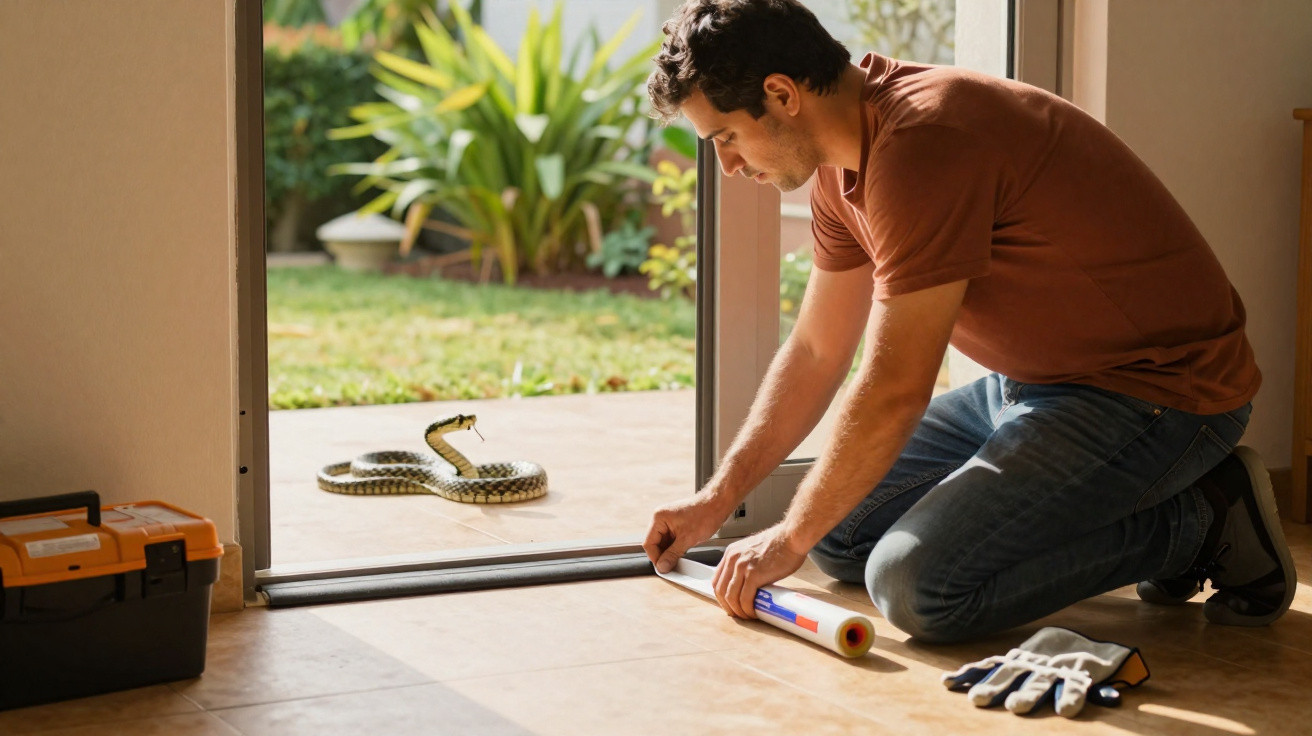
Have you ever considered that a narrow gap beneath a door could be all a rattlesnake needs to get into your home? It may sound like a nightmare, but experts warn that this situation is becoming increasingly common, and residential protection begins with details most people overlook.
Why snakes are moving closer to our homes
Venomous snakes, particularly rattlesnakes, are seeking shelter in homes more often. Climate change is the main reason: prolonged droughts and intense heat drive these reptiles towards cooler, more humid places. Without you realising it, your home may offer exactly the conditions they are looking for.
Doors without a rubber sweep, windows with gaps around their frames and overlooked spaces at skirting-board level are silent invitations. A lack of preventative maintenance on doors and windows can leave any property vulnerable, whether it is in a town or the countryside.
- Heat and drought: Extreme temperatures force snakes to seek cooler places, including the inside of homes.
- Unsealed doors: The lack of a rubber sweep at the bottom of doors is one of the main entry points.
- Gaps around windows: Worn seals on aluminium or timber frames can create almost imperceptible routes inside.
- Open drains and ducts: Damaged mesh and unprotected drainage outlets make it easier for reptiles to enter.
- Accumulated clutter: Stacked materials around the property provide hiding places close to entry points.
The detail nearly every homeowner overlooks
When thinking about home security, most people focus on walls, gates and locks, yet completely forget the space between the floor and the door threshold. An opening of just two centimetres is enough for a young rattlesnake to slip through with no difficulty, especially at night, when these animals are more active.
The same applies to sliding windows, which can gradually become misaligned and develop side gaps that are virtually impossible to notice. Carrying out a periodic inspection of these areas at least twice a year is a simple habit that can prevent very serious risks for the entire family.
Three practical measures that make a real difference
Making sure doors and windows are firmly shut is a first step, but it is not enough on its own. Efficient sealing requires physical improvements to the structure of the home to remove the gaps reptiles use to gain access. Fortunately, most solutions are inexpensive and straightforward to fit.
How to seal your home against snakes
Three accessible and effective measures:
Fit adhesive draught excluders to every sliding window and along the base of external doors. Available from DIY shops at low cost, these products close off the principal gaps reptiles use to get indoors.
Install sturdy metal mesh over drains, drainage outlets and ventilation ducts. As well as preventing snakes from passing through, this mesh also stops other venomous animals, such as scorpions and spiders, from entering, improving the property’s overall protection.
Keeping the land around the home tidy is another essential step. Long grass, woodpiles placed against walls and accumulated rubbish are favoured spots for venomous snakes before they move into homes. Removing these outdoor shelters greatly reduces the likelihood of snakes coming close.
What to do if you find a snake inside your home
Even after taking every precaution, a rattlesnake may still enter the property. Should this happen, the number-one rule is not to try to remove it yourself. Any attempt to handle the animal without suitable training may trigger a strike and lead to a serious accident.
The correct action is to isolate the room where the animal was seen, making sure nobody enters it, and immediately contact the fire and rescue service or a specialist wildlife removal professional. These teams have the training and equipment required to remove the animal safely.
When wildlife comes to your door
The rise in snakes in homes is not an isolated occurrence; it directly reflects climatic pressure on natural habitats. As temperatures increase and green spaces shrink, wild animals are travelling ever closer to urban centres and inhabited rural areas. Understanding this context helps people respond with greater preparation and less panic.
Effective residential sealing is both a personal safety measure and a way to live more consciously alongside nearby wildlife. Small changes to the home’s structure, together with regular maintenance of the surrounding area, form a genuine barrier against unwanted intrusions without major building work or high costs.
If this information surprised you, share it with someone who lives nearby. Knowing this could make an enormous difference to many people’s safety.



Comments
No comments yet. Be the first to comment!
Leave a Comment