
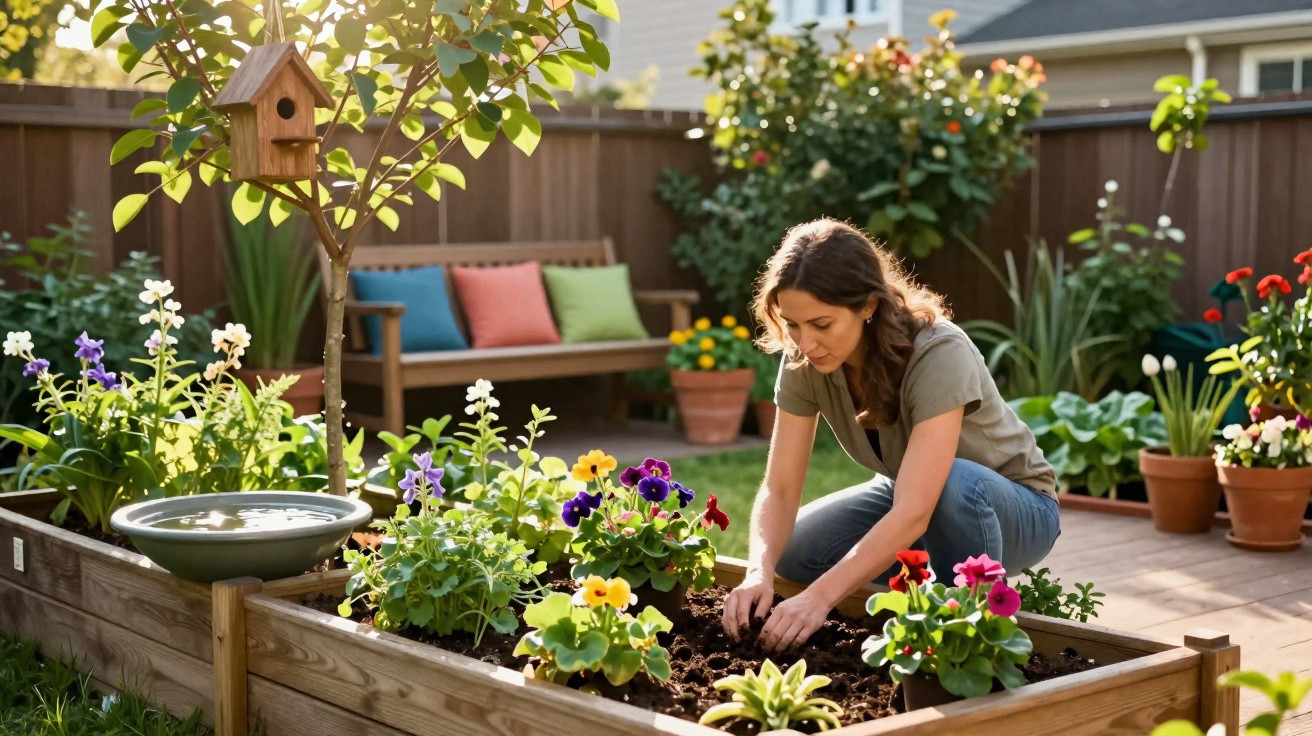
Colourful bird feeders can be seen in gardens everywhere, yet many bird species ignore them or visit only briefly. A closer look soon reveals why: birds stay only where they can find everything essential to survival – shelter, food and water. With a few carefully chosen plants and simple additions, any garden can become a small bird paradise, without relying on high-tech solutions or expensive equipment.
Why artificial feeding stations often disappoint
Seed feeders and silos appear convenient: hang one up, fill it with seed and wait for birds to arrive. In practice, however, visits are often sporadic. Once the food has gone or the seed has spoiled, the garden falls quiet again. What is more, seed mixes mainly attract only a small number of species, while insect-eating birds and those that favour berries are left without suitable food.
"A natural garden provides varied food throughout the year – without constant refilling, but with far greater biodiversity."
Many native species prefer to forage directly on branches, among shrubs or on the ground. They feed on berries, seeds, insects and spiders – precisely the resources offered by a thriving garden. Simply putting out feeders addresses a symptom rather than the underlying issue: a lack of habitat.
Three berry shrubs that turn every garden into a bird buffet
Living food instead of plastic feeders
The most effective measure is to plant berry-producing shrubs. Even three well-selected species can transform a small garden into a genuine restaurant for birds. As well as providing food, they offer cover and places to nest.
Birds such as tits, robins, blackbirds and many others are particularly fond of:
- Rowan (mountain ash): Bright red berries in late summer and autumn, as well as flowers that support insects.
- Black elder: A magnet for insects in spring, followed by heavy clusters of berries for birds in late summer.
- Dog rose: Rose hips provide winter food, while its thorny branches create a protected refuge.
Privet, hawthorn, Cornelian cherry and firethorn are also established favourites that have proved their worth. The more native species you combine, the wider the food supply will be across the seasons.
How birds use shrubs throughout the year
A thoughtfully planned shrub border works like a natural annual calendar. In spring, flowers attract insects, which in turn provide protein for young birds. The first berries ripen in summer, followed by an abundant fruit supply in autumn. The fruits of many varieties remain on the plants well into winter.
| Season | Benefit for birds |
|---|---|
| Spring | Insects on flowers, nesting sites within dense branches |
| Summer | Insects, spiders, the first berries and cover for young birds |
| Autumn | Plenty of berries as an energy reserve before cold weather and migration |
| Winter | Late fruit, buds and sheltered winter quarters among the branches |
When shrubs are not cut back too severely, they develop dense areas full of hiding places. These are exactly the spots where birds retreat during danger or poor weather.
Birds will not stay without a safe retreat
Why a dense hedge is vital for survival
Food may draw birds in, but they will remain only if they feel secure. Cats, birds of prey and martens are just some of their many predators. A thick hedge or an untidy area along the edge of the plot can serve as a refuge island.
"A hedge strip that appears impenetrable is to birds what a bunker would be to people: a refuge in an emergency."
Deliberately leave one part of the garden a little "untidy":
- Do not cut shrubs back radically every year.
- Include thorny shrubs such as blackthorn or dog roses.
- In autumn, leave some fallen leaves in place rather than raking everything away.
This creates a layered habitat of low branches, medium-height shrubs and taller boughs. Birds value this arrangement because they can move quickly between different levels, while attackers find it difficult to get through.
A winter refuge in your own garden
Winter reveals whether a garden is genuinely bird-friendly. Bare fences and cleared beds provide hardly any protection from wind, damp and cold. A densely grown hedge acts like an insulating wall, with milder temperatures inside it.
Birds crowd into sheltered spaces, fluff up their feathers and conserve energy. Sparrows, tits and robins make particular use of these "sleeping places". Showing a little restraint when pruning in late summer effectively gives them a kind of natural bedroom.
No life without water: the simple bird bath
Drinking and bathing – essential but risky
When considering bird protection, many people think first of food but overlook the second basic necessity: water. Birds need to drink and maintain their plumage. Regular bathing cleans their feathers, removes parasites and preserves their insulating properties.
A shallow dish is entirely sufficient:
- A diameter of around 25–35 centimetres
- Water no deeper than five centimetres
- A few stones or a rough surface to provide secure footing
Position it where birds have a clear view, so predators cannot creep up unnoticed, while still keeping it close to shrubs so they can retreat rapidly if threatened.
Care with little effort
"Clean water saves more birds than any expensive designer bird bath – provided it stays clean."
Algae, droppings and leftover food can encourage disease-causing organisms. It is better to empty the dish regularly, scrub it with a brush and refill it with fresh water. Chemical cleaners have no place in a bird bath. In most cases, a simple rinse with clean water is enough.
During hot spells, topping it up daily is worthwhile. On frosty days, lukewarm water helps; although it will freeze quickly, it gives birds at least a short opportunity to drink – never use salt or antifreeze products.
How the elements combine to create a bird paradise
Three components, one powerful result
By planting berry shrubs, allowing a dense hedge to develop and providing a simple water source, you meet the basic needs of most garden and urban birds: food, shelter and water. This combination is what encourages birds not merely to visit briefly, but to choose the garden as a regular long-term location.
- Food: Berries, seeds and insects on native plants
- Safety: Hedges, shrub islands and untidy corners
- Water: A shallow, clean dish for drinking and bathing
Once this foundation is in place, you can still offer supplementary food at specific times, such as during severe frost. The garden will not become dependent on bought seed, however, as it functions largely on its own.
More life in the same space
A natural garden benefits more than birds alone. Where berry shrubs grow, insects establish themselves; hedgehogs find food among fallen leaves; and lizards use sunny stone edges. The area functions as a small ecosystem whose elements support one another.
For children and adults alike, this creates a lively place to learn: in spring, they can watch the first insects appear; in summer, young birds beg from within the bushes; and in autumn, whole flocks gather on berry shrubs. The garden suddenly feels larger and more varied, without needing any additional space.
Practical tips to get started
Build a bird-rich garden step by step
Anyone who does not want to change everything at once can begin on a small scale:
- Plant two or three native shrubs along an existing section of fence.
- Choose one corner where fallen leaves and dead wood can remain.
- Put out a sturdy dish as a water source and check it regularly.
Within just one year, you may notice more species appearing and staying for longer. Every additional shrub and each unpruned corner makes the garden more appealing to feathered visitors.
If you are unsure which plants will thrive in your local area, seek guidance from local nurseries or conservation organisations. They know which site-appropriate species are hardy, need little maintenance and are highly valued by birds.


Comments
No comments yet. Be the first to comment!
Leave a Comment