
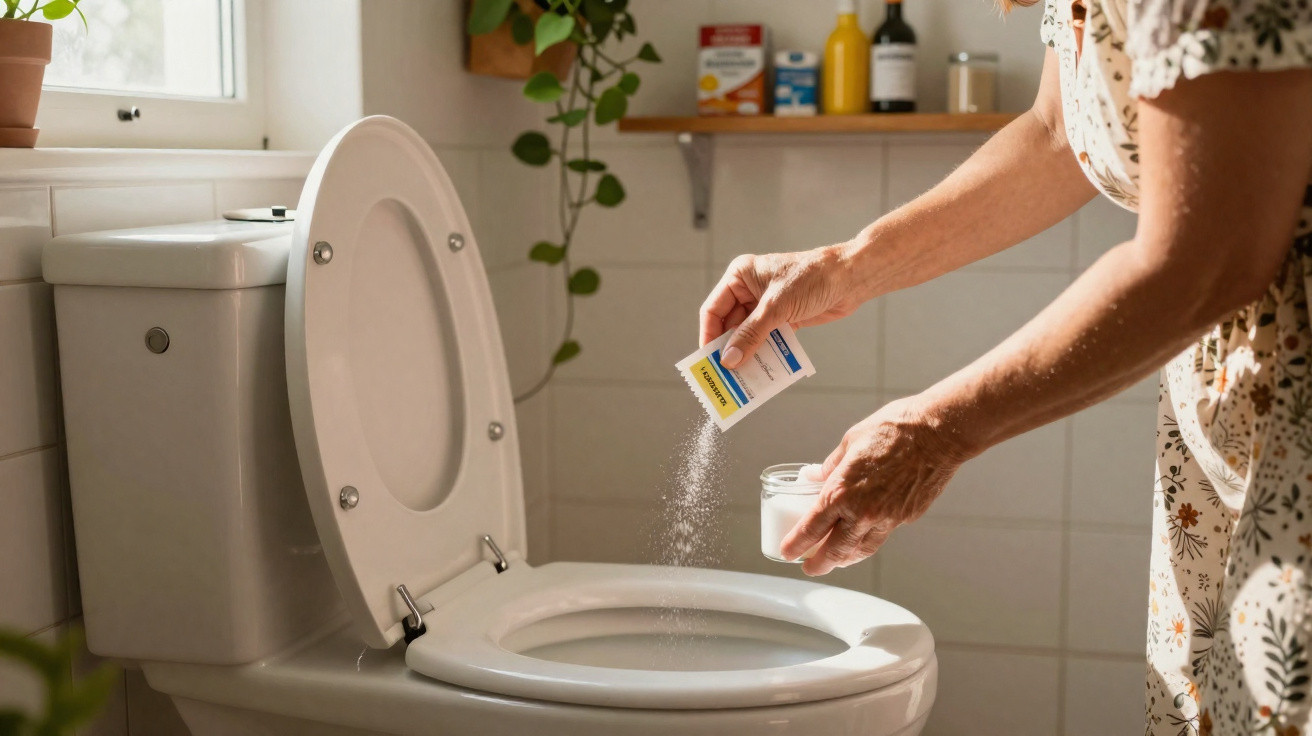
Those stubborn white marks in the toilet bowl, which seem impossible to shift even with plenty of effort, have a surprising enemy straight from the kitchen. This granny trick using baker’s yeast and sugar works overnight, making limescale easier to remove without vigorous scrubbing.
Where the stubborn white crust comes from
Limescale in the toilet bowl comes directly from the mains water supply. It contains dissolved minerals such as calcium and magnesium, which are left behind when water evaporates or repeatedly runs over surfaces. Over time, these deposits create a hard white coating that is almost cemented onto the ceramic.
In areas with what is known as “hard” water, which has a high mineral-salt content, the issue is even more pronounced. Ordinary cleaning with standard products often removes only the top layer. Older deposits remain trapped in tiny cracks in the ceramic, explaining why the stain quickly returns even after cleaning.
- Baker’s yeast: place half a cube directly in the toilet bowl, without dissolving it first
- Sugar: add two teaspoons to activate the yeast microorganisms
- ⏰ Contact time: leave it to work overnight for the best result
- Finishing step: use a nylon brush in the morning, then flush to rinse
- Eco-friendly method: no harsh chemicals and safe for the plumbing
What happens in the toilet bowl overnight
The secret lies in fermentation. Once baker’s yeast meets the sugar in the toilet water, the microorganisms in the yeast begin feeding and release carbon dioxide along with mildly acidic compounds. This reaction reaches the tiny cracks where the limescale is lodged, gradually loosening the crust from the ceramic.
Unlike harsh chemical products, which act immediately and only on the surface, this biological process works slowly and deeply. That is why time is the method’s most important ingredient. The longer the mixture remains in contact with the limescale, the more layers it can loosen, making manual cleaning much easier the next morning.
The cleaning method granny knew before industrial products
This homemade trick predates the age of modern chemical cleaners. Yeast and sugar were already being used for household cleaning long before supermarkets had entire aisles devoted to bathroom products. The method has endured because it simply works.
Granny’s method, step by step
Simple, inexpensive and with no need to get your hands dirty.
Before going to bed, put half a cube of baker’s yeast directly into the toilet bowl, without first dissolving it in water. Then sprinkle two teaspoons of sugar over it. Do not stir or scrub. Leave the mixture to work all night, for at least six to eight hours.
The following morning, lightly brush the inside walls of the bowl with a stiff nylon-bristle brush. Never use a metal brush, as it could scratch the ceramic. The loosened limescale should come away with far less effort than usual. Then simply flush, and the job is done.
For very old, deep stains, the treatment may need to be repeated for two or three consecutive nights. It does not replace routine cleaning with conventional products, but it works particularly well as a restorative clean when the limescale has become ingrained and difficult to remove.
Other cupboard allies in the fight against limescale
White vinegar, mixed in equal parts with water, is another effective classic. The vinegar’s acidity dissolves mineral limescale deposits and, when sprayed onto the inner walls of the bowl, works well on newer marks. Meanwhile, bicarbonate of soda combined with vinegar produces a foaming reaction that helps lift lighter residue while also neutralising unpleasant smells.
Powdered citric acid, available from health-food shops, is another highly practical option. Simply dissolve a few spoonfuls in warm water, pour it into the toilet bowl and leave it to work for several hours. It has a stronger effect than vinegar without the sharp smell. Each approach has its own advantage, and combining preventative routines with these natural techniques is the best strategy for keeping the ceramic clean.
Prevention stops limescale becoming a chronic problem
Limescale returns because water continues to evaporate and leave minerals behind. A quick weekly clean using any of these natural methods can greatly reduce build-up. The less time the crust has to harden, the less effort will be needed to remove it later. Ultimately, consistency in the bathroom-cleaning routine is the most effective trick of all.
The good news is that keeping the toilet bowl clean does not have to rely on expensive products or lots of physical effort. With simple kitchen ingredients and a little patience, it is possible to restore shine to the ceramic without any fuss. Granny knew that a long time ago.
Did you like this homemade tip? Share it with someone who battles stubborn bathroom limescale every weekend.


Comments
No comments yet. Be the first to comment!
Leave a Comment