
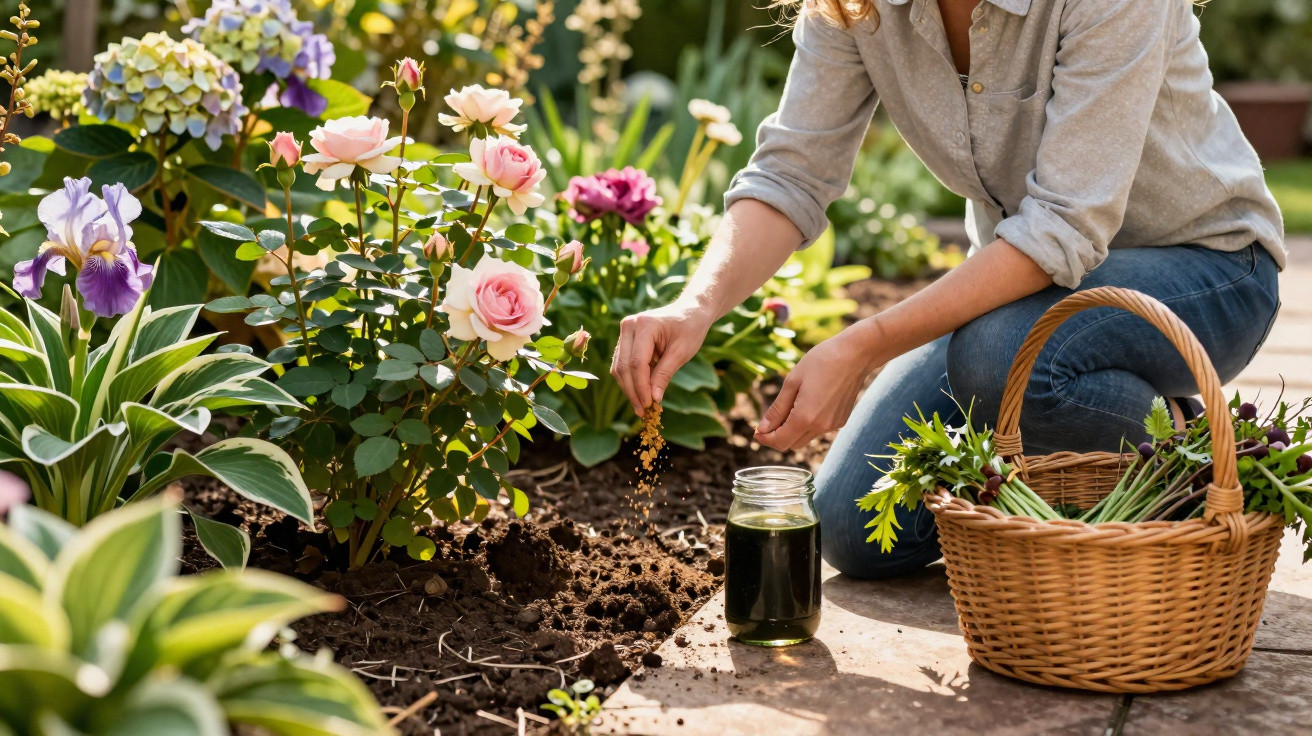
The buds are swelling, the first bulbs are pushing through the soil – while some perennials remain disappointingly subdued. The reason is often simple: they are short of nutrients. Fertilising deliberately in March lays the foundation for robust, vigorous plants and far more abundant flowering – especially among certain long-flowering perennials that could now really get going.
Why March is the crucial month for perennials
After winter, the soil thaws and becomes looser and better aerated. At this point, perennials produce new fine roots that absorb nutrients particularly effectively. Fertiliser applied to the soil now does not disappear without effect; it reaches the plant’s “supply line” fairly directly.
“Those who fertilise their perennials between late February and early April are feeding them at precisely the point when the plants shift into top gear.”
Organic fertilisers and slow-release products work for three to six months. In other words, apply them once in March and plants will often benefit well into high summer. The ground should no longer be frozen and should be slightly moist, but neither waterlogged nor bone dry.
These 11 perennials need particular attention now
Almost every perennial welcomes a spring feed. However, some respond especially strongly, producing more vigorous shoots and visibly fuller flowers. They include:
- Roses
- Peonies (Paeonia)
- Dahlias
- Delphiniums
- Garden phlox (Phlox paniculata)
- Coreopsis
- Bearded irises
- Hostas
- Daylilies (Hemerocallis)
- Hydrangeas
- Astilbes
Roses, phlox, delphiniums, coreopsis and peonies
These garden favourites respond very directly to a balanced nutrient blend. A complete fertiliser with a ratio of around 10-10-10 or 12-12-12 – meaning comparable amounts of nitrogen, phosphorus and potassium – is ideal; these are often sold as rose fertilisers.
- Roses: apply the first main feed in March, working it into the soil around the root area; at most, give another application later in summer.
- Phlox paniculata: appreciates the same blend; without fertiliser, flowering is markedly less abundant and growth is more susceptible to powdery mildew.
- Delphiniums: thrive in nutrient-rich soil, responding with longer flower spikes and sturdier stems.
- Coreopsis: flowers for a long time anyway, but a spring feed makes its display noticeably denser and more continuous.
- Peonies: do not apply fertiliser too close to the buds; instead, work it into the surrounding soil so they produce plenty of sturdy flowering stems.
Dahlias and bearded irises: less nitrogen, more flowers
Dahlias and bearded irises are sensitive to excessive nitrogen. Too much encourages lots of soft green growth but few buds. For these plants, use mixtures that focus on phosphorus and potassium, such as 5-10-10.
“Less nitrogen means less leaf growth and more flower power for dahlias and bearded irises.”
Apply it once the ground is frost-free and, for dahlias, when the tubers are planted or just beginning to shoot. With bearded irises, do not place fertiliser directly on the rhizomes; work it into the soil beside them instead.
Hostas and daylilies: strong foliage, strong buds
Hostas are considered undemanding, but a light starter feed in March rewards them with denser foliage and improved resistance to drought.
- A slow-release fertiliser combined with a little well-rotted compost is usually sufficient.
- Do not overdo it: heavy feeding encourages slug damage because the tissue becomes very soft.
Daylilies (Hemerocallis) cope extremely well with a slightly more generous initial feed, particularly one that emphasises phosphorus and potassium.
A second, lighter application in summer keeps flowering going for longer, particularly in modern, floriferous varieties.
Hydrangeas and astilbes: special cases for shade and partial shade
Hydrangeas, especially blue varieties, react strongly to both the nutrient balance and the soil pH. To maintain reliable blue tones, choose a fertiliser relatively low in phosphorus, such as 12-4-8, on a slightly acidic growing medium.
Those growing white or pink hydrangeas can use a standard hydrangea fertiliser, but should likewise avoid excessively high phosphorus levels so growth does not become overly lush.
Astilbes are real nutrient enthusiasts. They favour humus-rich, moist sites and benefit from a steady supply of nutrients.
- Use a balanced fertiliser in spring to get them started.
- Give a second application in autumn, ideally combined with compost, to build reserves for the following season.
How to make March fertiliser work at its best
Success depends not only on the product but also greatly on how it is applied. A few straightforward steps make all the difference:
| Step | Effect |
|---|---|
| Lightly rake the soil surface | Improves uptake and allows fertiliser to reach the root area |
| Spread fertiliser around the plant | Feeds roots evenly and avoids scorching |
| Water thoroughly | Dissolves nutrients and carries them into the active root zone |
“A quick rake, spread the fertiliser, water – this three-step routine gets many perennials growing noticeably faster.”
One major mistake remains common: tipping fertiliser directly onto the crown or scattering it over parched or frozen soil. This can scorch roots and buds, produce weak, soft foliage, and still result in few flowers.
Do not throw away weeds: turn them into free fertiliser
In March, wild plants usually still have shallow, weak roots. Pulling them out by hand is therefore much easier than it will be later in the year. Yet these plants do not necessarily need to go on the compost heap – they can be made into a simple liquid fertiliser.
Making liquid fertiliser from wild plants
The method is straightforward:
- Put freshly pulled, finely chopped weeds into a bucket.
- Add water until everything is well covered.
- Leave it for several weeks until a strongly smelling liquid develops.
- Before using it, dilute roughly 1 part liquid with 10 parts water.
- Water the root area of the perennials with it every two weeks.
Many gardeners report that tired-looking beds appear visibly more vigorous within a few weeks as a result – especially when they also receive a solid base feed in March.
Key terms explained briefly
Organic fertiliser is made from natural raw materials such as plant residues or animal products. It works more slowly, but often supports more stable soil life and carries a lower risk of over-fertilising.
Slow-release fertiliser releases nutrients gradually over weeks or months. It is ideal for anyone who does not want to fertilise continually or cannot keep an eye on their beds while away on holiday.
Complete fertiliser contains the three main nutrients: nitrogen, phosphorus and potassium. The numbers on the packet (for example, 10-10-10) indicate their percentage distribution.
How much is enough – and what happens if you use too much?
For perennials, the rule is: apply moderately but regularly. Overdosing quickly leads to:
- soft foliage that is prone to disease
- increased pest infestations
- few short-lived flowers
- nutrients leaching into groundwater
If in doubt, follow the lower end of the manufacturer’s recommendation and watch the plants. If growth remains weak and foliage pale, a light extra application can still be made in May.
The combination of a sound base feed in March and organic additions such as compost or homemade plant liquid is particularly effective. Many gardens benefit from this approach: plants receive a powerful early boost, while the soil becomes looser, richer in humus and more alive over the long term – the best foundation for beds that flower reliably not just this year, but for many years to come.




Comments
No comments yet. Be the first to comment!
Leave a Comment