
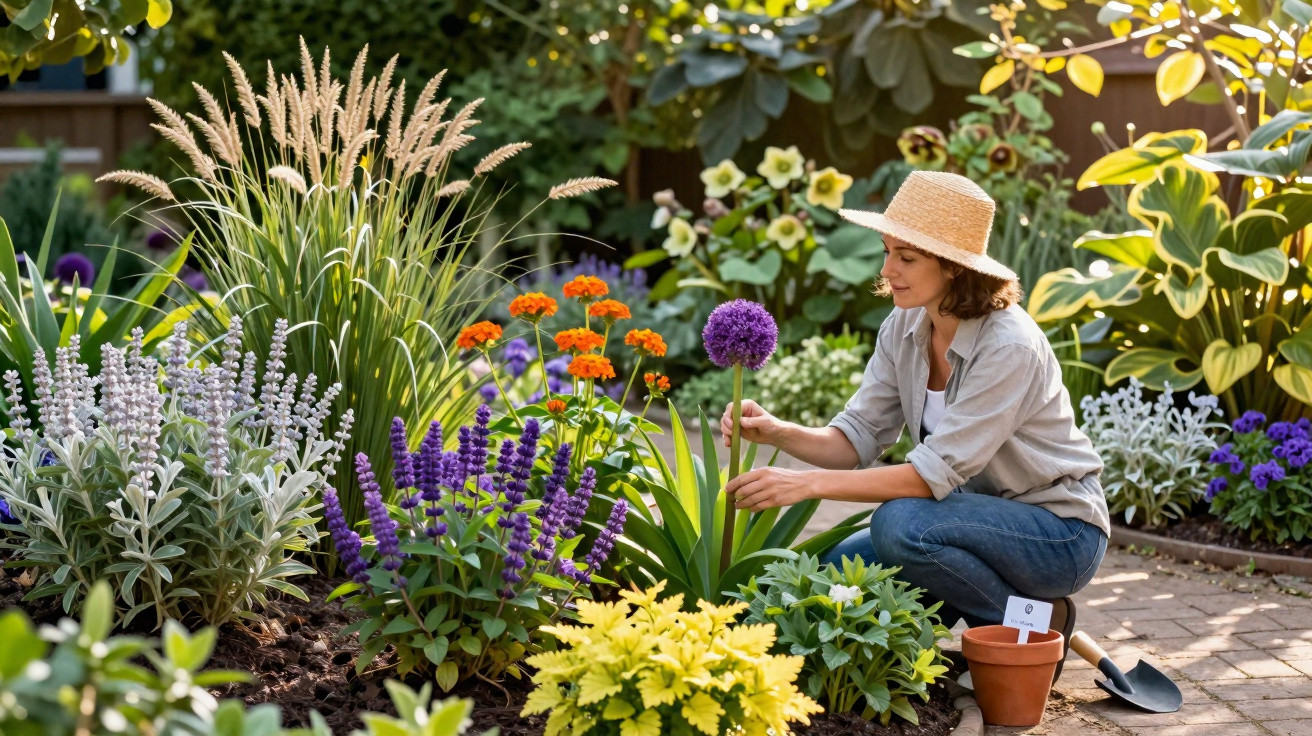
Many plants become hugely fashionable, only to disappear from borders again a few years later. These perennials are different: each has been named a “Perennial Plant of the Year” and has proved in real gardens that it is here to stay. Anyone wanting to fill a border for the long term without continually replanting will find dependable, long-lasting performers here.
Why these 15 perennials are so reliable
Every species featured has been assessed against clear criteria: sturdy growth, low maintenance needs, disease resistance, adaptability to different soil types and genuine longevity. They suit people with limited time just as well as keen gardeners who value structure and interest throughout the seasons.
These 15 perennials provide colour and structure for many years without needing constant watering, feeding or staking.
For each plant, you will find its typical height, preferred light conditions, soil requirements and flowering period. Following these key details avoids disappointment and costly planting mistakes.
Silver, blue and structure: perennials for sunny borders
Russian sage – silvery clouds for dry sites
Latin name: Salvia yangii (syn. Perovskia atriplicifolia)
Height: 60–120 cm
Position: full sun
Soil: well-drained, including poor, dry soils
Flowering: July to September, often into October
Russian sage forms open, silvery, shimmering shrubs covered in countless blue-purple flower panicles. It thrives in lean ground, copes well with heat and needs very little attention. It is ideal for front gardens, stony borders and anyone who occasionally forgets to water.
Feather reed grass ‘Karl Foerster’ – the upright backbone of the border
Latin name: Calamagrostis × acutiflora ‘Karl Foerster’
Height: 120–170 cm
Position: sun to partial shade
Soil: free-draining; also tolerates clay soils
Flowering: early-summer plumes that remain standing into winter
This ornamental grass does not overshadow other plants, yet stays narrow and upright. It adds calm and definition to mixed perennial borders, suits contemporary gravel gardens and remains decorative in winter with its straw-coloured stems. Cutting it back in spring is all that is needed.
Catmint ‘Walker’s Low’ – a flowering cloud for months
Latin name: Nepeta × faassenii ‘Walker’s Low’
Height: 60–90 cm
Position: sun to partial shade
Soil: well-drained and drought-tolerant
Flowering: June to September
‘Walker’s Low’ flowers so consistently that many gardeners call it a “flowering machine”. Its soft, scented stems arch gently and make wide cushions. Bees and bumblebees adore it, while slugs tend to avoid it. It is perfect beside paths, in front of roses or within naturalistic planting schemes.
False indigo and coneflower relatives for lasting colour
Baptisia australis is slow to establish, but eventually forms impressive clumps up to 1.5 metres tall. Its blue flower spires in early summer, followed by ornamental seed pods, bring a wild-perennial feel to the garden. It can remain in the same spot for decades and requires virtually no care.
Rudbeckia ‘American Gold Rush’ starts flowering in July and continues into autumn. Compact growth, golden-yellow blooms and resilient foliage make it a variety that lasts through hot summers. Combined with ornamental grasses, it creates a late-summer border that almost looks after itself.
An orange showstopper: butterfly weed
Latin name: Asclepias tuberosa
Height: 60–90 cm
Position: full sun
Soil: dry, poor and well-drained
Flowering: early to midsummer
Vivid orange flowers and countless butterflies make this perennial especially effective in hot, dry spots where other plants give up. Its deep taproot makes it exceptionally tough, although it dislikes being moved. Once planted, it is best left in place.
Colour for shade and partial shade
Lenten roses – flowers while everything else is still grey
Latin name: Helleborus × hybridus
Height: 15–60 cm
Position: partial shade to shade
Soil: fertile and well-drained
Flowering: March to June
Lenten roses often open their flowers while snow is still lying in the garden. They enjoy undisturbed positions beneath trees and shrubs, becoming more beautiful year after year. Once established, they should rarely be relocated. Their evergreen foliage copes surprisingly well with dry shade.
Variegated Solomon’s seal – elegant ribbons beneath trees
Latin name: Polygonatum odoratum ‘Variegatum’
Height: 50–70 cm
Position: partial shade to shade
Soil: fresh, humus-rich and well-drained
Flowering: late spring
With white-edged leaves and hanging, fragrant bells, this perennial brightens gloomy corners. It spreads gradually by rhizomes and, over time, forms continuous colonies – ideal for permanently covering challenging shaded areas.
Japanese spikenard ‘Sun King’ – golden foliage in the dark
Latin name: Aralia cordata ‘Sun King’
Height: 100–200 cm
Position: partial shade to shade
Soil: fresh and free-draining
Flowering: June to July
Its bright yellow-green leaves act like a spotlight in dark corners of the garden. ‘Sun King’ is excellent as a focal point in a shaded border or at the edge of shrubs and trees. A thick mulch layer keeps the soil cool and moist, reducing watering to a minimum.
Long-flowering perennials and ground cover that save work
Cranesbill ‘Rozanne’ and ‘Biokovo’
Geranium ‘Rozanne’ has a loose, trailing habit and produces blue-violet flowers from early summer until autumn. It works well at the front of a border, beneath roses or for filling gaps among other perennials.
Geranium x cantabrigiense ‘Biokovo’ stays lower, forms dense carpets and reliably suppresses weeds. Its delicate white-and-pink flowers appear in late spring, while the aromatic leaves remain attractive throughout the season.
Mountain mint – a scented magnet for insects
Latin name: Pycnanthemum muticum
Height: 60–100 cm
Position: sun to partial shade
Soil: fresh to moist, including heavier soils
Flowering: July to September
Mountain mint has a strong scent, irresistibly attracts hoverflies, solitary bees and other beneficial insects, and produces flower heads with a silvery cast. It can spread vigorously, making it particularly suitable for naturalistic schemes or larger spaces.
Ornamental onion ‘Millenium’ – robust purple spheres
Latin name: Allium ‘Millenium’
Height: 40–50 cm
Position: full sun
Soil: free-draining, without waterlogging
Flowering: July to August
Unlike many traditional ornamental onions, ‘Millenium’ does not collapse after flowering. Its round flower heads hold for weeks, while the grass-like foliage stays fresh. A useful rule for planting in drifts: the effect is far stronger when planted in groups.
Betony ‘Hummelo’ – clean flower spikes that stay upright
Latin name: Stachys monieri ‘Hummelo’
Height: 45–60 cm
Position: sun to partial shade
Soil: well-drained
Flowering: late spring to summer
‘Hummelo’ develops firm clumps that do not flop apart. Its upright pink-purple flower spikes give borders definition and combine beautifully with grasses, catmint or coneflowers.
Ornamental grasses as a framework: Northwind & Co.
Panicum virgatum ‘Northwind’ is an upright switchgrass that remains attractive throughout winter. It copes with both dry ground and temporarily damp soils, and works well at the back of a border or as an informal screening hedge.
Paired with feather reed grass ‘Karl Foerster’, it creates a year-round framework into which flowering perennials such as Rudbeckia, Nepeta and Geranium can be freely “scattered”. The result is a garden that still feels designed in autumn and winter rather than stripped bare.
Quick guide: which perennial suits which position?
| Position | Suitable perennials |
|---|---|
| Full sun, very dry | Russian sage, Asclepias tuberosa, Nepeta, Baptisia |
| Average garden soil, sun/partial shade | ‘Karl Foerster’, ‘Hummelo’, ‘Rozanne’, Rudbeckia ‘American Gold Rush’ |
| Shaded area beneath trees | Lenten roses, Polygonatum ‘Variegatum’, Aralia ‘Sun King’ |
| Wetter or heavier soils | ‘Northwind’, mountain mint, Geranium ‘Biokovo’ |
Practical tips: how these perennials really last for decades
- Look closely: Check the light levels and soil type before planting.
- Improve less: Do not plant species for poor soils, such as Russian sage, into heavily fertilised ground.
- Mulch: A layer of organic mulch cuts watering needs and reduces weed pressure.
- Leave perennials undisturbed: Do not keep moving deep-rooted plants such as Baptisia or Asclepias.
- Water more wisely: Water deeply but less often, rather than applying small amounts every day.
Terms such as “hardy” are often used rather generously. What matters is the frost zone where you live, as well as whether the soil is more likely to be wet or dry in winter. Many robust perennials survive severe sub-zero temperatures but fail in wet, heavy ground.
The real interest begins when these long-lasting performers are combined: a border of ‘Karl Foerster’, Rudbeckia ‘American Gold Rush’, Nepeta ‘Walker’s Low’ and Allium ‘Millenium’ provides colour and structure from early summer into autumn – while needing only a few jobs each year.
Anyone who starts by trying one or two of these proven varieties will soon discover that a thoughtfully planned perennial border can achieve far more than any annual summer-flower mix – while saving time, water and money in the long run.


Comments
No comments yet. Be the first to comment!
Leave a Comment