
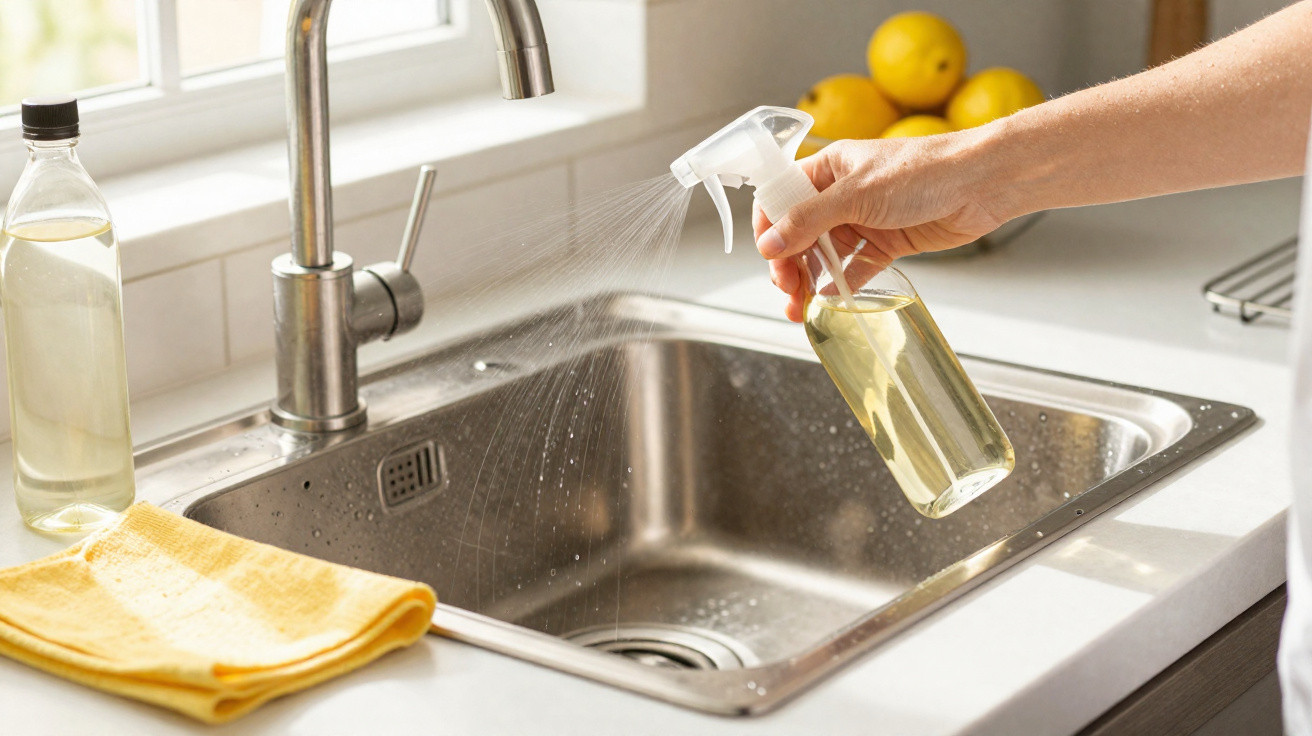
Spraying vinegar on the kitchen sink can help loosen soap residue, light grease and water marks. The acetic acid in the product works on superficial mineral deposits, while rubbing with a sponge or cloth lifts the grime that builds up during food preparation.
What is the purpose of spraying vinegar on the sink?
Diluted white vinegar can make day-to-day cleaning easier on compatible surfaces, particularly where dull marks have formed around the tap. Its acidity helps break down some of the minerals in water and release residues that leave the sink bowl looking lacklustre.
Using white vinegar to clean the sink may also lessen surface odours caused by food remnants. However, it will not resolve bad smells caused by grease trapped in the pipework, faults in the trap or issues with the drainage system.
- Loosens light grease and soap residue;
- Helps remove water marks;
- Reduces superficial mineral deposits;
- Restores some of the sink bowl's shine;
- Makes food-related odours easier to remove.
How should the solution be prepared and applied correctly?
Combine equal amounts of white vinegar and water in a spray bottle, remove any food debris, then apply the mixture to the sink. Leave it in place for 10 to 15 minutes, scrub using the soft side of a sponge, rinse with water and dry the surface to prevent further marks.
- Clear away crumbs and solid debris before applying it;
- Spray only enough solution to dampen the surface;
- Do not use metal scouring pads, which may scratch the sink bowl;
- Rinse thoroughly once scrubbing is complete;
- Finish with a clean, dry cloth.
Does vinegar really disinfect the kitchen sink?
Vinegar can assist with cleaning, but it should not be regarded as a dependable disinfectant in every situation. Cleaning removes dirt and some micro-organisms through water, soap and friction; disinfecting requires an approved product used for the contact time stated on its label.
After the sink has come into contact with raw meat, chicken, fish or their juices, use a sanitiser suitable for the surface and follow the manufacturer's directions. Surfaces exposed to raw food need particular care to prevent micro-organisms from being transferred to utensils and other food.
Which materials should not be cleaned with vinegar?
This acidic solution is unsuitable for marble, limestone, travertine and other sensitive natural stones. It may also damage deteriorated grout and specialist finishes, so check the manufacturer's guidance and test it on an inconspicuous area before treating the whole sink.
- Do not use it on marble or limestone;
- Take care with unsealed granite;
- Avoid painted surfaces or those with worn finishes;
- Do not leave the solution on the surface for extended periods;
- Never mix vinegar with bleach.
Why does drying the kitchen sink matter after cleaning?
Drying the kitchen sink prevents droplets from evaporating and depositing calcium and other minerals on the surface again. The cloth also removes traces of solution that could remain around the tap, along the sink bowl edges and near the drain.
Vinegar is most effective as part of light maintenance, after solid dirt has been removed and followed by rinsing. If the sink has thick grease, stubborn marks or contamination from raw food, washing-up liquid and products made for the material provide a more suitable clean than repeated applications of acid.





Comments
No comments yet. Be the first to comment!
Leave a Comment