
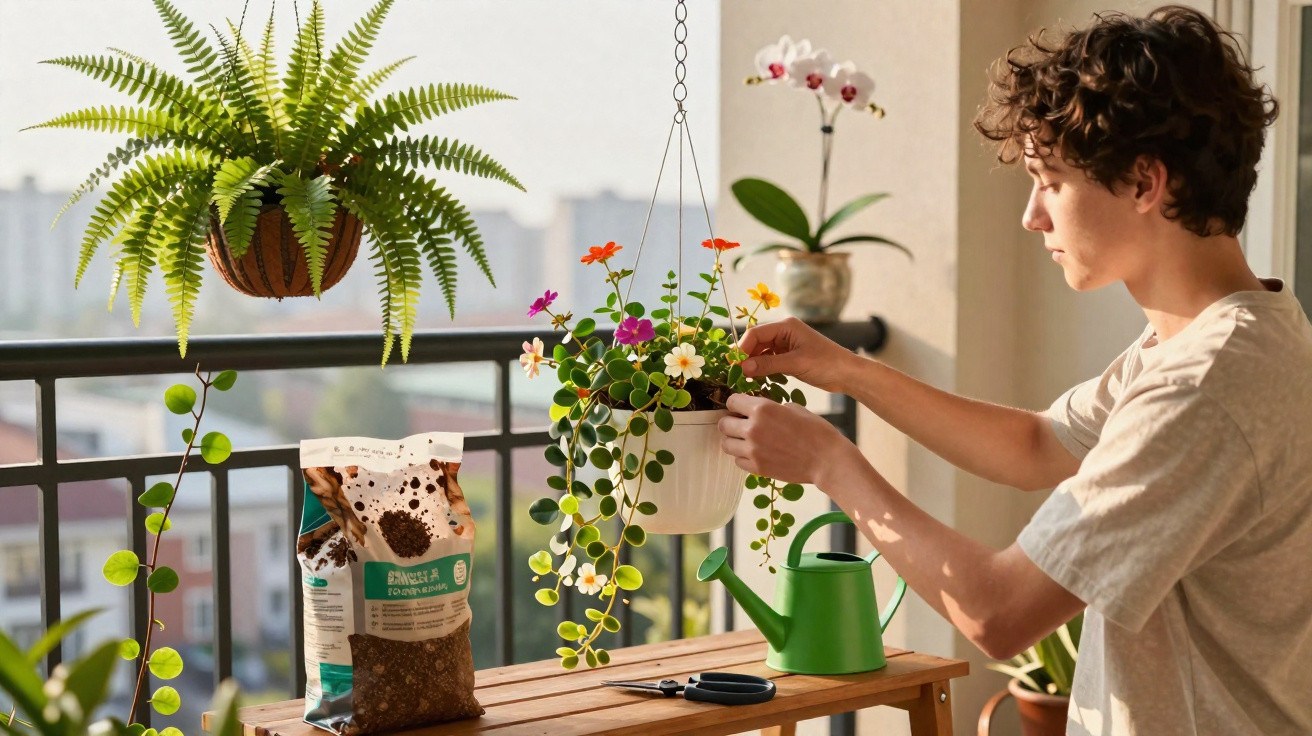
Among the many species used to decorate balconies, one hanging plant in particular has become increasingly popular because it can create a genuine green “curtain” in a short time. Unlike ferns and orchids, it combines dense foliage, easy adaptation to hanging pots and relatively straightforward maintenance, making it a practical choice for anyone seeking a more natural setting without complicated care.
Its growth habit is one of its main attractions: the stems lengthen and trail downwards, producing the feel of a vertical garden even when only a few pots are used. It copes well with the light conditions typically found on balconies, provided there is plenty of brightness and some control over direct sunlight, making it versatile for flats.
Compared with ferns, it has the advantage of being more resilient to changes in humidity and wind. Next to orchids, it stands out for its thick foliage, which keeps the display full throughout the year rather than relying on slower flowering cycles or extended periods without blooms.
What are its advantages over ferns and orchids?
This hanging plant is more forgiving of minor watering mistakes than delicate ferns or orchids mounted on tree bark. As long as it is not left waterlogged for prolonged periods, its foliage generally recovers well after slightly drier or wetter spells, which is helpful for people with busy routines.
Another benefit is its fast growth, allowing a balcony to take on the appearance of a “green corner” within a few months. In urban flats, many growers report that it adjusts well to seasonal temperature shifts, retaining an attractive appearance even when the weather changes slightly.
Watch a video on the Horta do Ditinho YouTube channel about vigorous trailing species, such as pothos and ivy, which grow in cascades and form a lush green screen:
https://www.youtube.com/watch?v=rX_jY8dK2aM
How should you choose a hanging pot and prepare the substrate?
For a hanging plant to develop a full, healthy appearance, the choice of pot makes a considerable difference. Bowl-shaped pots or hanging planters that are wider than they are deep encourage the roots to spread and the stems to fall evenly, while wire baskets need good lining to prevent excessive drying.
The best substrate should be light, free-draining and high in organic matter. A simple, effective potting mix can include the following components:
- Sieved topsoil to provide structure for planting;
- Well-rotted organic compost to feed the plant;
- Pine bark, coconut coir or perlite to improve drainage;
- A layer of expanded clay pellets or gravel at the base to prevent water building up.
How the pot is suspended directly affects both the visual result and air circulation. Ceiling hooks or wall brackets should take account of eye level and where people walk; on small balconies, three pots at different heights create a balanced display without using much room.
What care keeps the foliage attractive and ensures good placement?
The main care requirements are light, watering and regular feeding. It prefers bright conditions and filtered sunshine, so light curtains or shade netting can be useful on balconies receiving very strong afternoon sun, preventing scorched leaves and sudden wilting.
Keeping the substrate slightly moist is ideal: simply check with a finger around 2 cm below the surface, then water until it runs through the drainage holes and discard any surplus from the saucer. Organic fertiliser every 30 to 45 days during the growing season, together with gently cleaning the leaves, helps retain an intense green colour. For decoration, placing pots near sliding doors, railings or glazing creates a “living curtain” that softens the outside view and acts as a natural filter between the indoor area and the street.

Comments
No comments yet. Be the first to comment!
Leave a Comment