
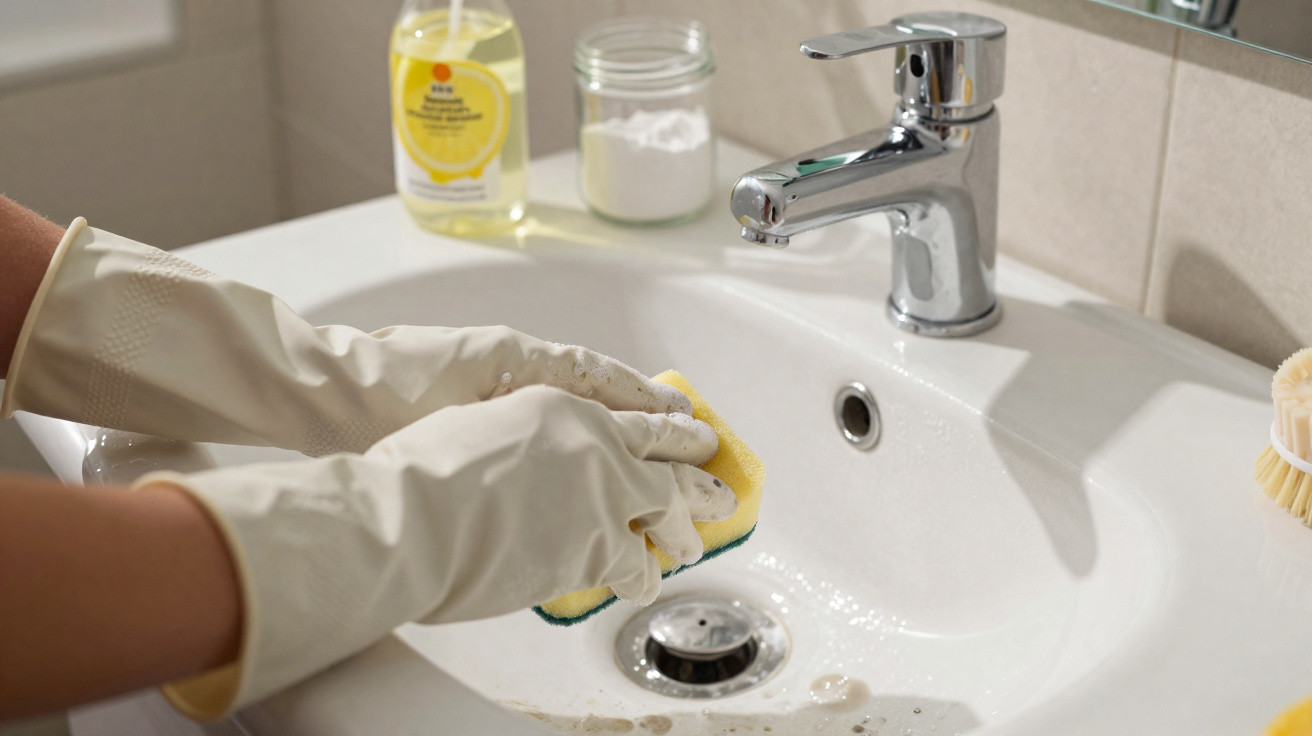
The bathroom sink is one of the areas in a home where dirt builds up most easily. Before long, householders may spot limescale around the tap, dark marks near the plughole and a dull film caused by soap residue. As well as affecting the room’s appearance and hygiene, this build-up can make the bathroom seem permanently grimy, even straight after cleaning.
What causes limescale, dark stains and soap residue on the bathroom sink?
Limescale on the bathroom sink develops from mineral salts in the water, including calcium and magnesium. In areas with “hard” water, these minerals settle around the tap, plughole and basin edges, leaving whitish or yellowish marks that can gradually turn into stubborn crusts.
Dark stains may result from accumulated dirt, fungi in damp spots or oxidation on metal components near the plughole. Soap residue, meanwhile, is created when soap reacts with skin oils and minerals in the water. This produces a cloudy coating that leaves the surface looking greasy and dull.
Watch a video from the Organise Sem Frescuras YouTube channel explaining how to remove cloudy soap film and water marks from the basin and bathroom fittings:
https://www.youtube.com/watch?v=J3mCbyE8nco
How to remove limescale from the bathroom sink safely
To tackle limescale without harming ceramic or metal surfaces, mildly acidic products at a low concentration are commonly used. White distilled vinegar is often helpful because it breaks down mineral deposits without the need for harsh scrubbing, although it should first be tested in an inconspicuous area.
The following method offers a straightforward way to reduce everyday limescale, retain the sink’s shine and make future cleaning easier:
- Dry the sink thoroughly with a clean cloth.
- Combine equal parts white vinegar and water in a spray bottle.
- Spray the solution over areas marked by limescale and leave it to work for 5 to 10 minutes.
- Rub gently using a soft sponge or microfibre cloth.
- Rinse thoroughly under running water, then dry the surface again.
How to remove dark stains and soap scum from the bathroom sink
Dark marks and soap “slime” require a more degreasing approach. A combination of bicarbonate of soda and washing-up liquid helps break down grease and loosen stuck-on dirt. When applied with a soft sponge, it is gentler than powdered cream cleaners.
Where there are signs of fungi in grout, small amounts of bleach may be used, provided the room is properly ventilated and prolonged contact with metal is avoided. Thoroughly removing soap residue reduces moisture held on the surface, making it harder for these micro-organisms to multiply.
How often should the bathroom sink be cleaned?
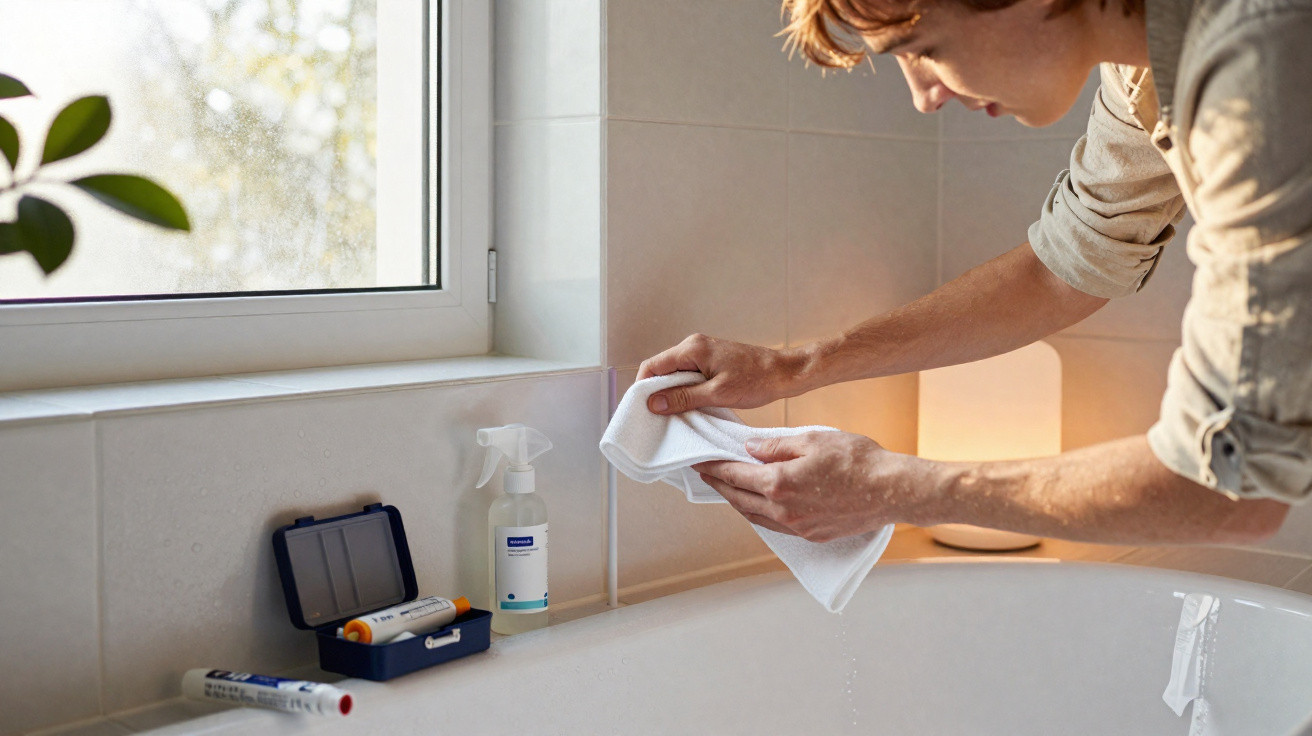
The right cleaning frequency depends on how often the bathroom is used, how many people live in the household and the water quality. In heavily used bathrooms, rinsing the basin after use and drying it at the end of the day with a soft cloth can prevent limescale and residue from building up and becoming fixed over time.
For a more thorough clean, once a week is generally enough. This can be increased to twice weekly in areas where the water is rich in minerals. A few small habits also help the bathroom stay looking clean for longer: avoid leaving bar soap directly on the basin, wipe away toothpaste splashes immediately after use and keep the room well ventilated to reduce constant dampness.





Comments
No comments yet. Be the first to comment!
Leave a Comment