
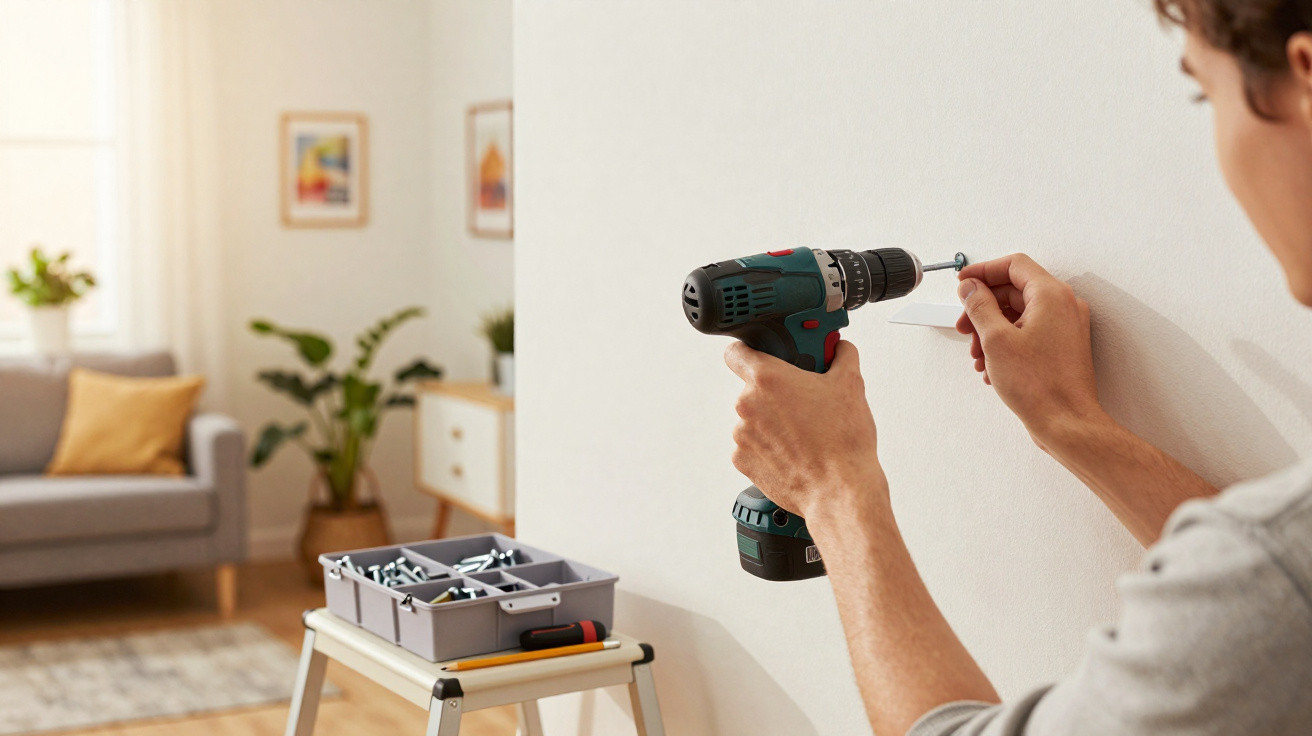
Securing a screw in drywall calls for more care than fixing into masonry, as the board is hollow and the load is concentrated over a small area. Before relying on a makeshift method, establish where there is genuine structural support and when the right wall plug is essential.
Why does drywall need special care when fixing items?
A screw driven straight into the board grips only the plasterboard, a lightweight material used for internal walls and ceilings. It may seem secure with light loads, but tearing can occur under sustained weight.
For this reason, the safest first step is to find the studs behind the board, which are usually metal sections or timber framing. Fixing into them gives the screw a proper support point, spreads the load and lowers the risk of it pulling free.
Before drilling, keep the following in mind:
- Board: do not regard drywall as a solid masonry wall.
- Stud: locate the framework behind the board before fitting anything.
- Wall plug: use a type designed for hollow walls where no support is available.
- Weight: check the supported limit before hanging any item.
- Makeshift fixes: household tricks are suitable only for very light reinforcement.
What is behind a drywall wall?
As described for gypsum board used in internal walls, drywall consists of gypsum pressed between sheets of paperboard. This construction is why the board alone should not carry a high load.
The material is normally screwed to galvanised steel sections, which support the system and allow internal services to be installed. Locating these sections before drilling therefore greatly improves safety and helps prevent damage to the board.
How do you fix into drywall where there is no stud?
If no stud can be found, the proper option is a hollow-wall plug, such as a toggle, spring or expansion type. It opens behind the board and distributes the force, preventing the screw from tearing through the gypsum easily.
Fixing into a hollow wall
Support behind the board makes all the difference
The correct wall plug spreads the load across a larger area and reduces the risk of tearing. For heavy items, choose studs, internal reinforcement or a professional assessment before installation.
Household solutions, such as filling gaps with a toothpick or filler, should only be used for minor adjustments to small holes, never for shelves, televisions or cabinets. Before hanging anything, allow the reinforcement to dry and check its firmness.
Select the fixing to suit the situation:
- use a stud where structural framing is present at the required point;
- use a toggle, spring or expansion wall plug in hollow areas;
- avoid screwing directly into the board for objects with constant weight;
- do not use makeshift methods as a structural drywall solution.
Which objects can be fixed safely to drywall?
Lightweight pictures, small decorations and simple hooks can use more discreet solutions, provided the manufacturer states that the weight is suitable. Heavy objects, on the other hand, require a stud, internal reinforcement or a suitable wall plug, because drywall does not withstand structural makeshift fixes in everyday use.
Daily movement should also be considered, rather than only stationary weight. A pulled towel, a hanging bag or a slamming door adds stress at the fixing point, causing the board to give way over time if the fixing is weak.
Before fitting the item, carry out these checks:
- confirm the object's weight and the recommended load rating of the wall plug;
- check whether there is a stud at the precise drilling point;
- avoid fitting heavy items to the board alone;
- test the firmness before allowing the item to take its full weight.
When should you call a professional to fix into drywall?
Anyone who has learned how to install a wall hook safely should use the same principle with drywall: understand the base before drilling. The best approach is to select the suitable anchoring, observe the limits and test gradually.
If you are unsure about the weight, pipework or electrical wiring behind the board, stop before drilling and seek a professional assessment. A correct fixing costs less than repairing tears, replacing boards and dealing with falling objects later.





Comments
No comments yet. Be the first to comment!
Leave a Comment