
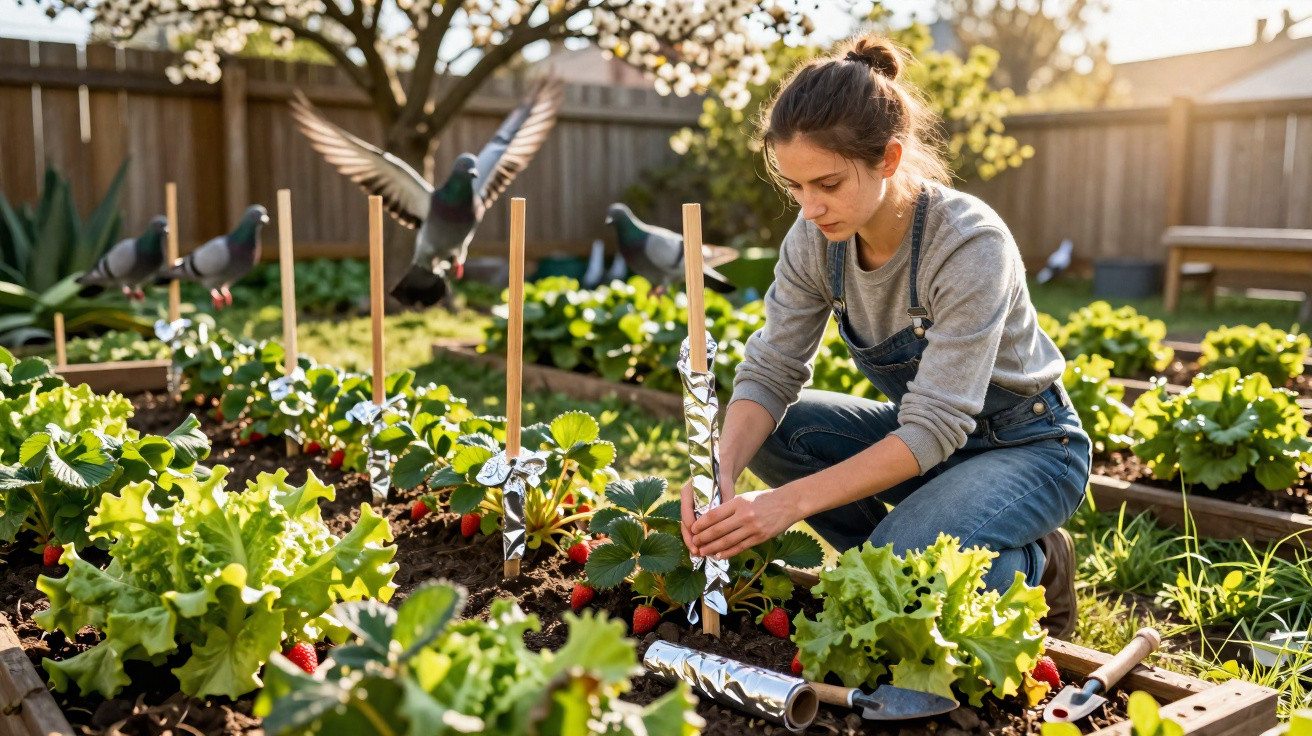
Many keen gardeners will recognise the situation: no sooner has the soil been loosened, the first lettuces planted and the deckchair cleaned than an entire flock of pigeons arrives in the garden. Within days, the carefully prepared greenery can resemble a public car park for birds, complete with feeding damage and stubborn stains. Yet an ordinary kitchen household item can offer surprisingly effective help: plain aluminium foil.
Why pigeons suddenly appear everywhere in the garden in spring
As temperatures rise, several things begin happening for pigeons at once: they look for food for their young, secure places to land and elevated vantage points. Typical home gardens provide all of this in abundance, from vegetable beds and roofs to balcony railings.
Pigeons are especially attracted to:
- level, sturdy surfaces where they can perch and keep watch
- open beds containing young plants or newly sown seed
- water sources such as bird baths or uncovered water butts
- sheltered spots beneath canopies and on window ledges
As creatures of habit, they repeatedly return to the same locations. Once they have effectively been given the run of a garden, persuading them to leave can be difficult.
Pigeon droppings are highly corrosive, damaging paintwork, metal and stone – and can attract further pests.
Their droppings end up on patio slabs, garden furniture, play equipment and cars. It is not only the appearance that suffers: the acid attacks paint and metal, joints become dirty, and outdoor eating areas suddenly seem far less inviting. At the same time, remnants in the droppings can draw in other pests, including rats searching for easy food.
Aluminium foil as a quiet pigeon deterrent: how the trick works
Many people dislike spiked metal strips, nets or harsh gels. They often look unattractive, cost comparatively more and do not suit the appearance of a wildlife-friendly garden. This is where aluminium foil comes in, making ideal use of two qualities: light reflection and an unpleasant feel for birds.
Dazzling reflections make pigeons uneasy
A basic piece of aluminium foil can be scrunched into small balls or long strips. When these are hung freely from string and move in the breeze, the following happens:
- Sunlight is reflected brightly and irregularly.
- The foil shifts erratically, particularly in windy conditions.
- From a pigeon’s perspective, it resembles something threatening nearby.
Pigeons are highly sensitive to sudden flashes of light and flickering movement. The silvery pieces give them the impression that danger may be present in that area. This is usually enough to make them seek out somewhere quieter.
An unpleasant sensation beneath beak and feet
A second effect takes place directly on the ground. Laying strips or small pieces of aluminium foil around particularly vulnerable plants creates a kind of “no-contact zone” for pigeons.
When the birds touch the foil with their beaks or feet, they experience:
- a smooth, unfamiliar surface
- quiet crackling noises as they step on it
- slight movement beneath their claws
Pigeons dislike this combination. Unlike soil or bark mulch, foil does not offer secure footing. After one or two attempts, many birds simply turn away and look for another buffet.
Aluminium foil deters pigeons without harming them – a clear advantage for anyone who wants to garden in a wildlife-friendly way.
The best places for aluminium foil in the garden
For this method to work properly, it is not enough to hang up a few pieces at random. The key is to identify the pigeons’ favourite locations and target them specifically.
Secure pigeon hotspots first
Watch the garden closely for a day or two: where do the birds land first, where do they remain longest, and which spots do they use to survey everything? Common hotspots include:
- window ledges and balcony railings
- crossbars on pergolas and carports
- the edges of raised beds
- supports around patios and fences
These are the best places to hang strings of crumpled aluminium balls. They do not need to look attractive; they simply need to be clearly visible and able to move slightly. Keeping short gaps between the balls increases the effect.
Give vegetable beds, lettuce and berries extra protection
In a productive garden, it makes sense to add further protection around foods that pigeons particularly favour. These include:
- young lettuce plants
- freshly sown rows of spinach, carrots or radishes
- ripening strawberries and other berries
- low fruit bushes and young trees
A combination of hanging and ground-level foil pieces works well here. One simple example is:
| Area | Use of aluminium foil |
|---|---|
| Lettuce row | Lay narrow strips across the gaps between plants |
| Strawberry bed | Attach crumpled balls to short stakes above the plants |
| Young fruit tree | Hang shiny bands loosely in the lower branches |
| Raised-bed edge | Fold aluminium foil into strips and secure it to the outside |
How to keep the aluminium foil trick effective over time
Pigeons are not foolish. If nothing changes, they will also become accustomed to unfamiliar stimuli. The aluminium foil trick therefore works best when small adjustments are made regularly.
- Move the foil pieces slightly every few days.
- Add new strips, remove old ones or reposition them.
- Try different shapes, including balls, flags and spirals.
This mild unpredictability keeps the birds unsettled. It is also important to collect the foil again when it is no longer needed. That way, it does not end up in the soil or compost and can instead be recycled.
Anyone who uses aluminium foil selectively and for a limited period protects both their harvest and the environment.
Chemical-free protection suits a wildlife-friendly garden
Many garden owners prefer to avoid aggressive sprays or poisonous bait. Using aluminium foil fits well with a natural gardening approach because it:
- contains no toxic substances
- does not injure pigeons, but merely disturbs them
- can be put up and removed flexibly
- remains inexpensive and works with materials already at hand
Anyone wishing to combine methods can also grow plants that pigeons find less appealing, such as strongly scented herbs around the edge of a bed. Nets over especially vulnerable crops can likewise be used alongside aluminium foil to reinforce the startling effect.
What else to know about aluminium foil in the garden
Aluminium foil is not perfect; it is an aid with a few considerations to bear in mind. In strong winds, strips that are too light can blow away. It is therefore worth securing them firmly or shaping them into slightly larger, heavier forms. At the height of summer, strongly concentrated reflections against a very hot south-facing wall can stress sensitive plants nearby, so leave some distance.
Anyone concerned about the environmental impact of aluminium should ideally reuse clean, previously used foil in the garden before putting it into household recycling. Many small strips are made from offcuts that would otherwise go straight into the bin.
Conveniently, this trick does not work only on pigeons. Other curious birds and even cats often avoid areas where something is constantly flashing and rustling. A simple kitchen product can therefore create a relatively broad protective barrier around beds, balconies and patios, without specialist equipment or much effort.

Comments
No comments yet. Be the first to comment!
Leave a Comment