
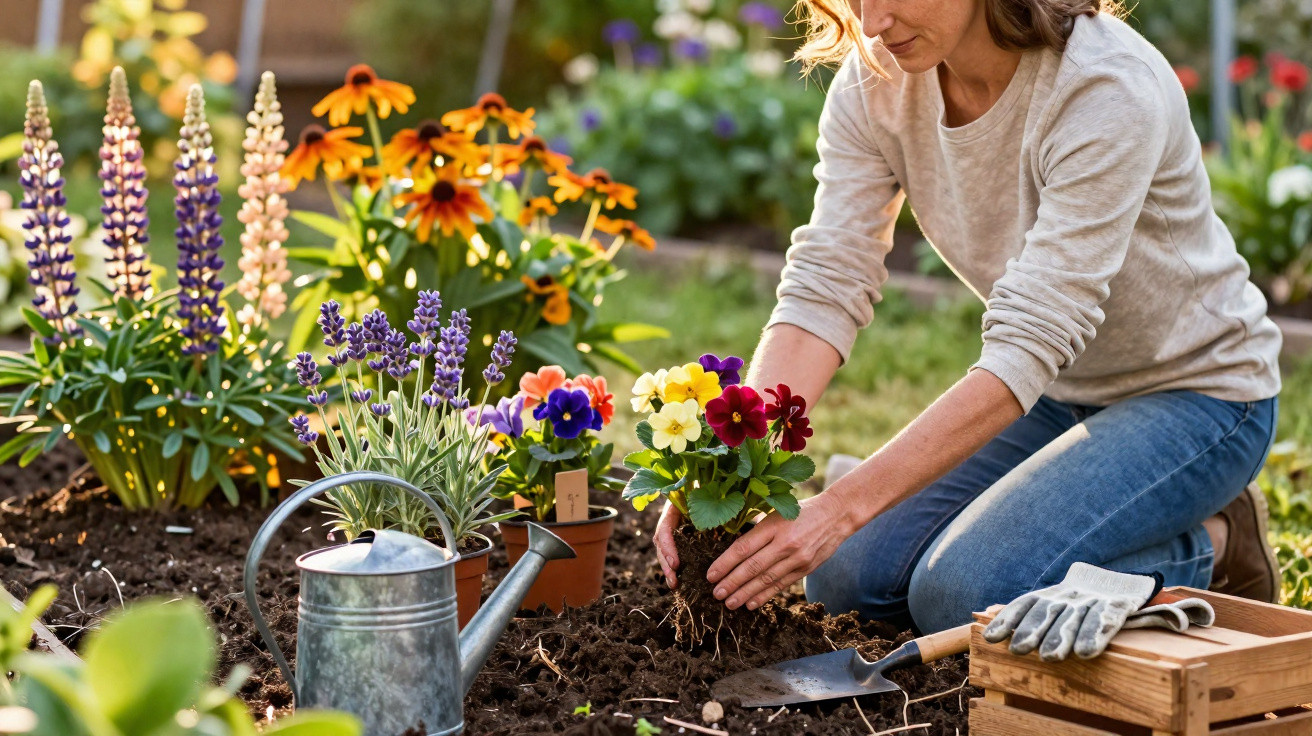
At the beginning of June, many gardens move into a transitional period: some flowers have already passed their best, while others are only beginning to emerge. Garden enthusiasts often use this time to rearrange borders, refresh containers and plan the look of the coming seasons, favouring perennial plants that return year after year and help create a more dependable, economical garden.
Why choose perennial plants to plant in June?
Choosing perennial flowers rather than annual varieties gives a garden more structure, consistency and reduces the need for repeated planting. Over time, these plants create fuller clumps and can be paired to provide colour for much of the year.
June brings longer days and warmed soil, creating favourable conditions for young plants to establish their roots. Their root systems can strengthen before more extreme temperatures arrive, encouraging more vigorous regrowth in later seasons and improving resistance to pests and diseases.
Watch a video on the Vida no Jardim YouTube channel about the gardening calendar, choosing hardy perennial species and the right planting care for the middle of the year:
https://www.youtube.com/watch?v=kS1z6T6_tO4
How can you vary size and colour with perennial plants in June?
The range of heights, textures and shades available among perennial plants makes it possible to create highly dynamic borders without losing a sense of continuity. Taller choices suit the back of a border, medium-sized plants work well in the middle, and compact varieties are ideal for edging or containers.
By combining early-, mid- and late-flowering species, the garden changes throughout the months while retaining visual interest. Perennials can also be interplanted with a few colourful annuals, adding instant focal points without sacrificing the permanent framework.
Perennial plants to plant in June for flowers year after year
Several plants stand out for their hardiness, easy cultivation and ornamental value, and are widely used in home gardens and public spaces. The following list can provide a starting point for creating a long-lasting, lively June garden.
- Hardy hibiscus – Forms substantial shrubs with large flowers in white, pink or red shades. It needs full sun and fertile, slightly moist soil.
- Asclepias tuberosa – Produces orange or yellow blooms that attract butterflies and other pollinators. It adapts well to sandy, free-draining soils.
- Russian sage – Produces bluish flower spikes in late summer and is often visited by bees. Once established, it copes well with dry spells.
- Blanket flower (gaillardia) – Well suited to warm areas, it flowers for extended periods and tolerates poor soil, provided drainage is good.
- Daylily – A versatile choice for borders and containers; each bloom lasts for just one day, but the plant sends up many flower stems over the season.
- Aster – Provides colour towards the end of the year, when many borders are already becoming bare. It prefers sunshine and well-drained soil.
- Turtlehead (Chelone) – Suitable for damp or slightly waterlogged areas, with flowers resembling small closed mouths.
- Zinnia – Usually grown as an annual, but it can self-seed readily, remaining present year after year if the border is disturbed very little.
- Sunflower – Also an annual, though it often spreads through seed and creates striking displays every summer.
Do essential perennial plant care tasks in June pay off later?
For flowers planted in June to become established, it is important to choose the right position, prepare the soil properly and maintain a watering routine. In general, flowering species require several hours of direct sunlight each day; in very hot areas, they may benefit from partial shade during the strongest hours.
A few basic measures make a considerable difference to how well young plants adapt and increase the likelihood that they will return strongly in subsequent years:
- Soil preparation: Loosen the soil thoroughly, remove larger stones and incorporate organic matter such as compost or humus.
- Initial watering: During the first few weeks, keep the soil moist without allowing it to become waterlogged, adjusting the frequency according to the weather.
- Feeding: Apply a balanced fertiliser at the start of spring or soon after planting to support rooting and future flowering.
- Pruning and tidying: Remove faded flowers and dry stems to encourage fresh growth and keep the border healthy.
Checking regularly for yellowing or wilted leaves, as well as blemishes, helps identify stress early and allows watering, drainage or sun exposure to be corrected. With this modest level of attention, a June garden gains not only immediate beauty but also a solid foundation for many flowering cycles to come.




Comments
No comments yet. Be the first to comment!
Leave a Comment