
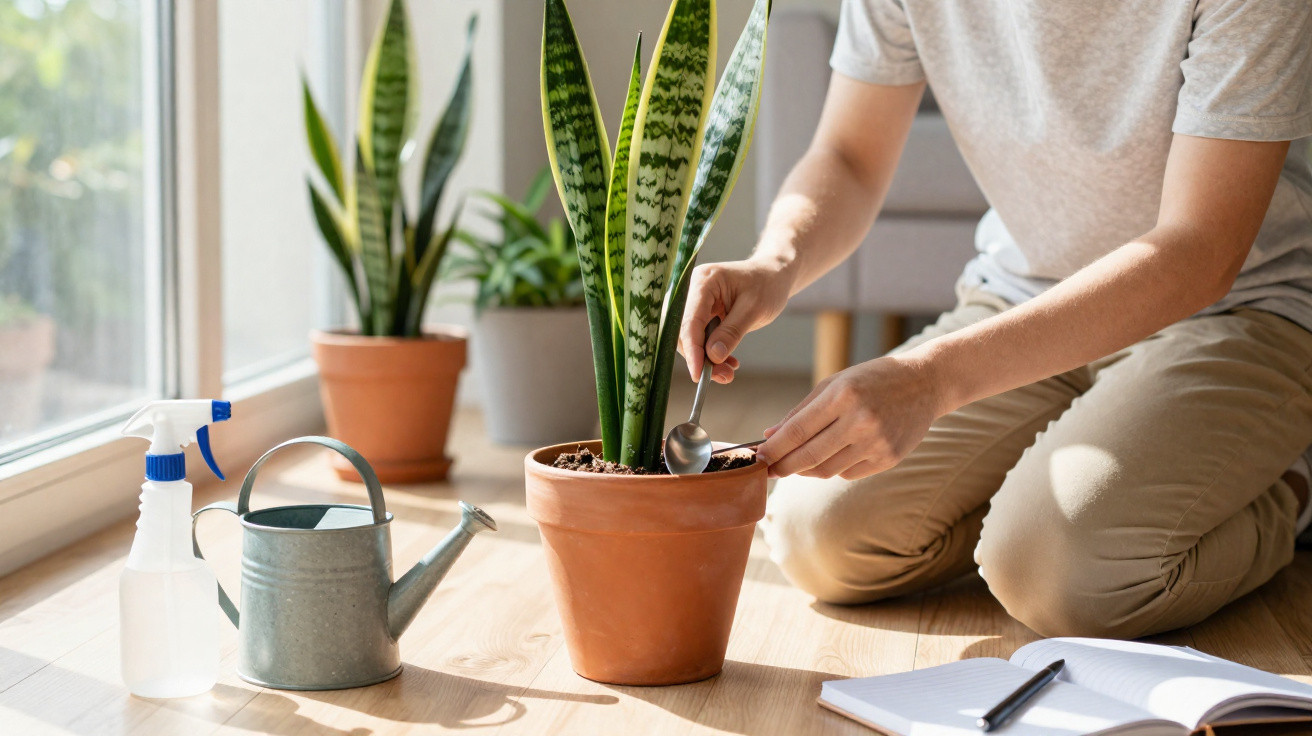
Mother-in-law’s tongue, also called snake plant or Sansevieria, is among the most popular houseplants because it adapts well to varied settings and needs very little attention. Even so, overwatering remains one of the most frequent mistakes. Simple tricks, such as using metal utensils to assess soil moisture, therefore appeal to people hoping to keep their pot healthy for many years.
What is the spoon technique for mother-in-law’s tongue?
Mother-in-law’s tongue is a succulent that holds water in its leaves and cannot cope with waterlogged conditions, so basic household tools can help prevent watering mistakes. The metal spoon technique involves pushing the utensil into the potting mix to a suitable depth, then removing it to inspect the soil clinging to the metal.
If the spoon comes out with damp soil attached, there is still enough moisture in the lower layers and it is best to wait before watering again. When the metal emerges almost clean and dry, the potting mix is dry through much of its depth, making it a more suitable time to water. This provides a straightforward visual guide for anyone who is not yet confident using their fingers to judge moisture.
Watch a video on the YouTube channel Life in the Garden covering specific care for the snake plant, drainage advice and simple ways to keep the soil in ideal condition:
https://www.youtube.com/watch?v=kS1z6T6_tO4
How does a spoon measure moisture in the potting mix?
In effect, the spoon acts as an improvised probe, reaching soil layers that cannot usually be seen but directly affect the sensitive roots of mother-in-law’s tongue. The surface of the pot may look dry while the interior is still wet, increasing the likelihood of fungal growth and rot at the plant’s base.
Some people adapt this approach with similarly shaped metal items, including blunt knives or narrow spatulas. They should always be inserted, left for a few moments and removed to check the moisture adhering to them. This more accurate reading of the soil makes it less likely that you will water a potting mix that is still saturated, and it can complement moisture meters or the traditional finger test.
What basic care keeps mother-in-law’s tongue healthy?
Alongside occasionally using a spoon to check moisture levels, several general care measures are important for keeping mother-in-law’s tongue in good condition, as it copes better with too little water than with too much. The choice of pot, potting mix and lighting, as well as the watering routine, makes a major difference day to day and helps prevent yellowing, wilting and rot at the base.
These measures can be followed as a short checklist, helping even gardening beginners keep the plant attractive and stable indoors for many years.
- Suitable drainage: use pots with holes in the base and, where possible, add a layer of gravel or expanded clay.
- Light potting mix: combine topsoil, sand and organic matter to encourage water to drain away.
- Moderate watering: allow the soil to dry almost completely between waterings, avoiding waterlogging.
- Appropriate light: choose spots with good indirect light, without strong direct sunshine for many hours.
- No standing water in the saucer: remove excess water collecting beneath the pot so the roots do not remain waterlogged.
How can you create a simple mother-in-law’s tongue care routine?
For anyone wishing to manage mother-in-law’s tongue more effectively, a straightforward observation routine makes it easier to spot issues early, before the roots are affected. This basic sequence reduces reliance on tricks and makes everyday plant care more intuitive and relaxed.
Regularly check the light levels, the appearance of the leaves and moisture deeper in the pot using either a spoon or your finger. Water only when the soil is dry through most of the pot, and remove any water gathered in the saucer. With controlled watering, effective drainage and suitable light, mother-in-law’s tongue is likely to remain healthy and decorative in houses and flats while requiring little maintenance.



Comments
No comments yet. Be the first to comment!
Leave a Comment