
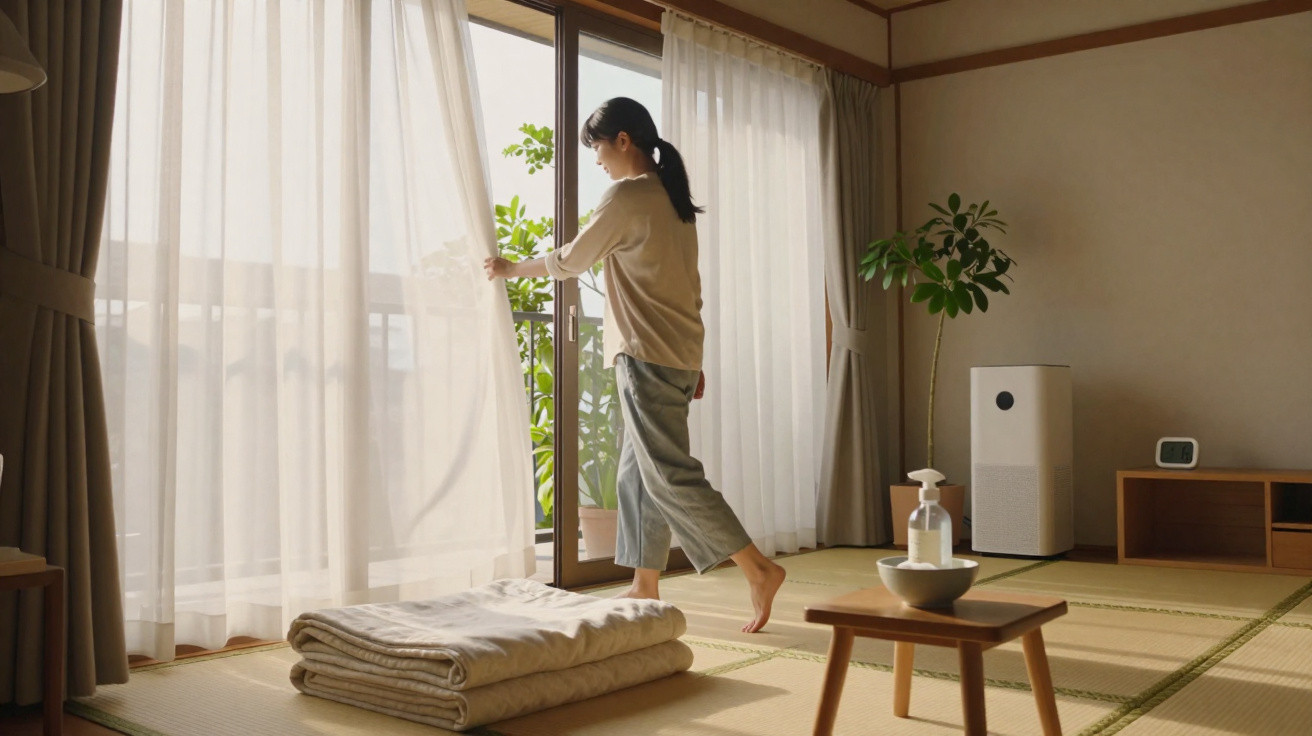
In many Japanese homes, airing rooms each day is regarded as an essential chore, just as important as making the bed or washing the dishes. Small actions repeated daily help refresh the air, disperse smells, manage humidity and keep interiors feeling light, even in small properties surrounded by other buildings.
How do small Japanese habits keep the home well aired?
One of the foundations of Japanese homes is mawari mado, the practice of circulating air by opening windows on opposite sides for a few minutes. Even on cold days, many families set aside 5 to 15 minutes to create a quick through-draught, enough to replace the indoor air without cooling the rooms excessively.
Another important principle is dealing with unpleasant smells at their source rather than merely masking them. Rubbish bags are carefully sealed, bins are washed regularly, and wet areas such as the shower enclosure are dried immediately after use, helping to reduce mould, mildew and lingering odours.
Watch a video on the Health of the Mind YouTube channel about the psychological and physical benefits of keeping rooms well ventilated, bright and supplied with refreshed air every day:
https://www.youtube.com/watch?v=N3b8K2m_L4o
Which habits help control odours and humidity in well-aired Japanese homes?
To keep rooms consistently ventilated, many Japanese households combine brief airing sessions with strict humidity control. Simple tools are used, including dehumidifiers, activated charcoal to absorb smells, quick-drying mats and indoor drying racks placed near windows.
These everyday measures can be arranged into small practical tasks that are easy to repeat and adapt to different routines and home sizes:
- Dry the shower enclosure, tiles and bathroom floor after bathing to reduce accumulated steam.
- Seal food waste securely and take it out regularly, particularly in hot weather.
- Avoid storing large amounts of fabric and paper in unventilated places, such as the corners of cupboards.
- Use activated charcoal in shoe cabinets and wardrobes to minimise strong smells.
How can habits from well-aired Japanese homes be adapted for modern flats?
Even in compact flats or homes with few windows, some of these practices can be adopted. Establishing a ventilation routine at set times, such as in the morning and late afternoon, already improves indoor air, especially when internal doors are left open while windows are fully opened.
A few straightforward adjustments can make ventilation more effective and lessen the feeling of stuffiness, including in humid and heavily built-up areas:
- Do not obstruct windows with tall furniture or very heavy curtains.
- Use fans to push air outdoors on windless days.
- Position drying racks near windows or in well-ventilated utility areas.
- Switch on the cooker hood or extractor fan before frying or grilling food.
How can fresh air be maintained in different seasons?
In summer, rooms are generally aired very early, before the heat becomes intense, alongside light curtains that let daylight in without allowing as much warmth to build up. Basic dehumidifiers and containers of activated charcoal help limit smells and the sensation of mugginess, particularly in kitchens and bathrooms.
In winter, many families shorten the time windows remain open but do not stop refreshing the air: they air the home quickly on waking, close the windows afterwards and only then heat the rooms. At any time of year, regularly cleaning rugs, curtains and cushions helps the air feel lighter and allows the home to retain a subtle freshness throughout the day.



Comments
No comments yet. Be the first to comment!
Leave a Comment